COVID-19 has spread beyond a worldwide health issue into the social and economic realm. International organizations are updating the world’s economic prognosis regularly during the crisis. Revisions deteriorate rapidly in the early stages, and they may deteriorate even faster if economic activity rebounds soon.
Mining Feels the Impact of COVID-19
The mining industry has not escaped the impact of COVID-19 outbreaks, much like other economic sectors. Tight working conditions on mine sites place employees in harm’s way, leaving miners in a more precarious position from a health and safety standpoint.
Labor Shortages Drive Up Costs
Western Australia’s abundance of iron ore and gold gives it the world’s highest demand for truck drivers. Some mining firms are meeting that need by employing troops and pilots on leave, and by offering gourmet meals and Olympic-sized swimming pools to attract additional drivers. Wage competition is driving prices up, adding to the burden on working families and supporting metal prices. Miners who can’t find enough employees are postponing projects meant to satisfy the next wave of commodity demand.
COVID-19 could push as many as 305 million full-time employees into unemployment globally by the second quarter of 2020.
Lower-income countries may bear a disproportionately larger burden than higher-income countries. Subpar health institutions, weak sanitation standards, a larger informal workforce, irregular migrants, and employees working outside their country of origin all compound the risk. At the same time, demand for metals is rising worldwide, including in Canada and Mongolia, where metals companies are struggling with an inadequate supply of employees, especially drillers.
A Reluctant Global Workforce
Mining executives say that even in nations with open borders, like the United States, some employees are reluctant to relocate from Australia, which only recently survived the worst of the epidemic. COVID-19 exposes where global labor markets are weakest. Mining firms of all sizes are delaying or halting operations to save money while employees stay home. Modern technology and internet connectivity make remote work possible for many, but not every industry or business can offer it. The benefits of remote work are not evenly distributed across all professions.
You might be interested in
- Despite Covid-19, Rwanda’s mining sector boomed.
- Covid-19: Unsung mining heroes brave odds to produce coal, keep power plants running.
- Rio Tinto targets M&A opportunities amid COVID-19 uncertainties
- Assore chrome mine in South Africa shuts after worker diagnosed with COVID-19
- Hearst-area mining company has strategy to contain the spread of Covid-19
Underground Mines Face Unique Risks
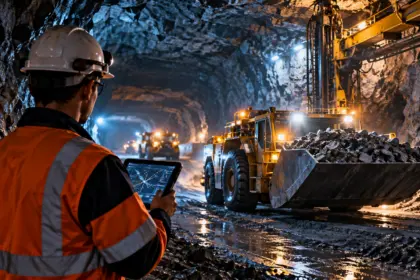
Jobs in underground mining pay better wages, but they carry greater danger. Packed elevators carrying large crews down into the mines can turn underground mines into a gateway for faster viral transmission. South Africa required all underground mining operations to go on care and maintenance, believing this would help safeguard workers. Poland took similar action, closing underground mines as a preventative measure when it found cases at mining sites.
A Long Road to Recovery
The mining industry is intertwined with other sectors and their employees, so full recovery will take time. The sector won’t reach maximum output and employment potential until more workplaces become safe.