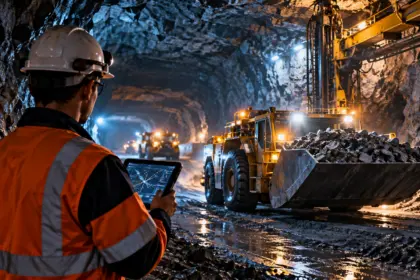

As Earth’s orbit becomes increasingly cluttered with space debris—ranging from defunct satellites to spent rocket stages—policymakers are searching for solutions to prevent catastrophic collisions and ensure long-term sustainability. Surprisingly, an answer may come from an unexpected field: deep-sea mining. The regulatory frameworks emerging to manage mining on the ocean floor could offer valuable insights into tackling the growing crisis of space debris.
The Growing Threat of Space Debris
The danger posed by space debris is far from hypothetical. In January 2025, a fragment from a defunct rocket made an uncontrolled descent, crashing into a rural area of Kenya. While the likelihood of such debris striking a person remains low, the greater risk lies in the potential for collisions that could disrupt critical satellite infrastructure. A direct hit could knock out GPS systems, disrupt telecommunications, and even compromise national security.
Despite the vastness of space, low-Earth orbit is becoming alarmingly crowded. Elon Musk’s Starlink constellation alone consists of 7,500 satellites, with thousands more planned by companies like Amazon and OneWeb. According to Joe Pelton, dean emeritus of the International Space University in France, there are already 30,000 objects larger than 10 cm orbiting Earth, and that number is expected to increase dramatically in the coming years.
Related News
- Capricorn Metals Expands WA Exploration with Mummaloo Acquisition
- Keystone Project Nevada: U.S. Gold Corp.’s High-Stakes Bet in the Cortez Trend
- Resources Top 5: Fortescue Splashes Cash on $254M Takeover of Red Hawk
- The Hidden Cost of Critical Minerals: How Rwanda’s Exploitation of Eastern Congo Fuels a 20-Year Crisis
The Kessler Syndrome: A Chain Reaction of Destruction
The real threat of space debris extends beyond isolated satellite damage. Scientists warn of an escalating cycle of destruction known as Kessler Syndrome—a phenomenon first theorized in 1978 by NASA scientist Donald Kessler.
This scenario occurs when two objects collide in orbit, producing thousands of smaller fragments. Each fragment then becomes a high-speed projectile capable of striking additional satellites, creating even more debris. If left unchecked, this chain reaction could make entire orbital regions unusable, jeopardizing future space missions and commercial satellite operations.
Despite these risks, there are currently no binding international regulations requiring countries or companies to clean up their debris. While some voluntary guidelines exist, enforcement mechanisms are largely absent.
Deep-Sea Mining: A Model for Space Debris Management?
A surprising parallel exists between deep-sea mining and the problem of space debris. Both involve unregulated frontiers where commercial and national interests often outpace international legal frameworks.
Deep-sea mining, which involves extracting minerals from the ocean floor, has sparked controversy due to its potential for environmental harm—just as unchecked satellite launches contribute to orbital pollution. However, the regulatory efforts surrounding deep-sea mining could offer a blueprint for managing space debris.
The International Seabed Authority (ISA), a global regulatory body, oversees deep-sea mining operations, requiring companies to conduct environmental impact assessments, implement mitigation plans, and follow shared international guidelines. If a similar framework were applied to space, it could introduce:
- Mandatory cleanup obligations for satellite operators.
- “Orbital use fees” to discourage overcrowding.
- Strict liability laws holding nations accountable for the debris they generate.
- International oversight bodies, similar to the ISA, to monitor compliance and enforcement.
The Path Forward: Regulating Space Like the Deep Sea
While deep-sea mining regulations are far from perfect, they demonstrate the importance of proactive governance before environmental damage becomes irreversible. The same lesson applies to space debris—waiting for a crisis before taking action could be disastrous.
The United Nations has introduced Long-Term Sustainability Guidelines for Outer Space Activities, but without enforcement mechanisms, these remain largely symbolic. Meanwhile, private companies are beginning to step up. Swiss startup ClearSpace has secured a contract from the European Space Agency to launch the world’s first debris-removal mission in 2026. Other companies, including Astroscale and Northrop Grumman, are developing technologies to deorbit or capture space junk.
However, these initiatives are piecemeal solutions to a growing systemic problem. Without global coordination and clear regulatory frameworks, space will continue down a path of congestion and potential conflict.
A Crucial Lesson from Deep-Sea Mining
The lessons from deep-sea mining are clear: regulation must come before crisis-driven intervention. As the space economy accelerates—with ambitions to mine asteroids, establish lunar settlements, and expand military activity—humanity must decide whether to treat space as another frontier for exploitation or as a shared resource requiring responsible stewardship.
The stakes, quite literally, are sky-high.