For several of Alaska’s firms, it’s been a rough year, but one industry is doing well-mining.
The prices of metals are up and the cost of fuel is down, which means good profits for the handful of mines made in Alaska.
With the happy outcome that more gold is found and demand is growing, a few mining companies are pouring more funds into exploration.
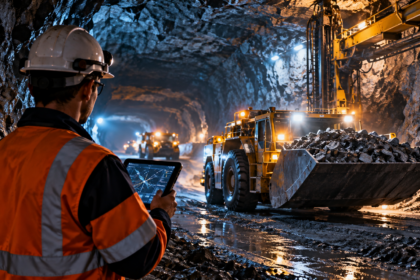
At Pogo, an underground mine near Delta Junction east of Fairbanks, one example is. Northern Star Resources Ltd., an Australian company operated by Pogo, has raised the mine’s reserves to an estimated 6.7 million ounces at 0.29 ounces per ton of ore, the mine’s record amount of gold.
This also gives Pogo one of the highest-grade mining properties in the world with an ore body larger than 5 million ounces. Overall, the “endowment” of Pogo gold is now estimated at 11 million ounces, combining the existing 6.7 million ounce reserve with over 4 million ounces extracted from the mine so far.
Under the estimated 6.7 million-ounce reserve, 3.1 million ounces are in the ‘measured and indicated’ category of higher confidence and 3.6 million ounces are in the ‘inferred’ category’.
This is jargon from the mining industry. Measured and indicated resources are those in which the quality and quantity of the mineral is known and well defined, usually through drilling test holes that obtain core underground ore samples.