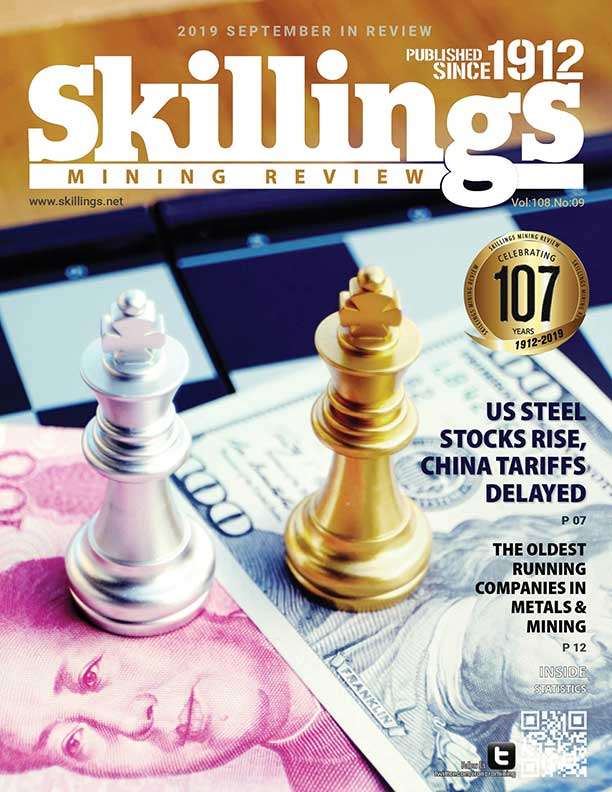
Skillings Mining Review September 2019 : September 2019 highlighted the delicate balance between optimism and risk in the global mining sector. The cover story charted how U.S. Steel stocks rose as China delayed tariffs, offering a temporary reprieve to an industry under trade war pressures. Yet that optimism was tempered by analyst downgrades, as market volatility left steelmakers vulnerable to demand shocks.
The issue also revisited industry heritage, profiling the oldest running companies in metals and mining—a reminder of the resilience and continuity that underpins the sector. At the same time, forward-looking developments pointed toward transformation. Rio Tinto’s chief acknowledged a “loss of prospects” despite China’s slowdown, underscoring the fragile link between commodity demand and global economic health.
In the Iron Range, labor and permitting disputes persisted. Twin Metals pledged to use union labor in its copper-nickel project, while PolyMet defended its water permits amid mounting legal challenges. Minnesota’s courts and regulators continued to face pressure over balancing environmental concerns with economic growth.
Elsewhere, North American Palladium posted a 51% net income surge, driven by the Lac des Iles mine and the Sunday Lake PGM project, providing a sharp contrast to declining fortunes in iron ore and steel. Innovation also featured strongly: Cleveland-Cliffs launched its first new environmental initiative, reflecting broader ESG momentum in mining finance.
Global trends showed cautious resilience. Rio Tinto’s seaborne iron ore market remained stable through 2019, though China’s industrial slowdown left long-term prospects uncertain. Meanwhile, companies sought to expand their role in the steel supply chain, with new investments in sector infrastructure.
The September 2019 edition captured an industry straddling the old and the new: heritage companies enduring, commodity markets swinging between growth and contraction, and mining firms exploring environmental and labor commitments to shape the decade ahead.