Vale’s Komatsu MC51 Hard Rock Cutter Spotted at Garson Mine, Sparking Big Industrial Buzz
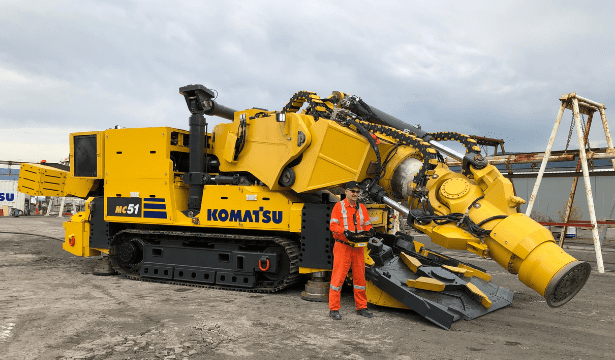
Vale just launched a game-changing 400-meter trial using Komatsu’s MC51 mechanical rock excavator at Garson Mine — and this could redefine underground mining efficiency. The Komatsu MC51, a cutting-edge hard rock cutting machine, joined Vale Canada’s operations to push boundaries in rock excavation.
In February 2020, Charsley, Vale’s Project Lead and Principal Mining Engineer for Technology Innovation, partnered with Komatsu, one of the globe’s largest industrial machinery manufacturers, to deploy two commercial mechanical rock excavators (MREs). Designed and prototyped in Wollongong, Australia, these machines completed successful underground tests by end of 2020. Each unit is operated by a single person and enables continuous rock cutting to boost productivity. Throughout the trial, dedicated technical and engineering teams are on standby to troubleshoot and optimize performance.
After the initial Australian success, Komatsu’s second MC51 was shipped in components to the Garson Mine in early 2021. Installation is underway, with the machine expected to start rock cutting by April, according to Charsley.
The MC51’s mechanical rock excavator can cut roughly 3.5 meters of rock with each pass. At that pace, the 400-meter trial will run approximately nine to twelve months, stretching into 2022. Charsley, a 20-year Vale veteran, will supervise operations alongside the Garson team as they explore new frontiers in mining technology.
How Vale and Komatsu’s Mechanical Excavator Is Transforming Garson Mine’s Underground Operations
The collaboration between Vale and Komatsu marks a major leap in applying mechanical rock excavation technology underground. The MC51 prototype machines offer continuous cutting capability controlled by a single operator, streamlining processes previously reliant on less efficient methods. After proven success in Australian mines, Komatsu’s transition to Canadian operations aims to validate the system’s scalability and productivity over the 400-meter Garson trial.
Vale’s Garson Mine trial will provide critical data on operational throughput and machine reliability under Canadian hard rock mining conditions. With an expected rock cut of 3.5 meters per machine move, this initiative could shorten mining cycle times dramatically while enhancing safety and reducing manpower requirements.
What’s Next for Komatsu’s MC51 Trial at Vale’s Garson Mine?
Installation of the second MC51 is set to conclude by April 2021, with active rock cutting immediately following. The nine to twelve months trial will extend through 2022 and help define new standards in mechanized underground mining. Success here could accelerate adoption of Komatsu’s MRE technology globally, positioning Vale and Komatsu at the forefront of mining innovation.