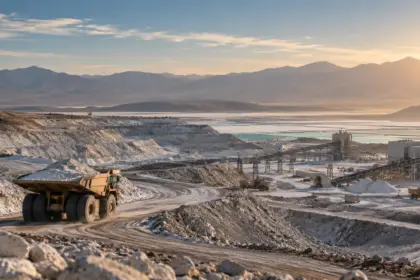
China has instituted stringent new regulations to tighten control over its rare earth elements (REE) industry, a move that is anticipated to have significant repercussions for global supply chains. The nation, which accounts for the production of approximately 60% of the world’s rare earths and the refining of nearly 90%, is striving to strengthen its strategic control over these essential minerals.
The Ministry of Industry and Information Technology (MIIT) and the Ministry of Natural Resources have jointly announced the initial wave of rare earth mining and processing quotas for 2024. The mining quota is 135,000 metric tons, while the smelting and separation quota is 127,000 metric tons. In comparison to the initial cohort of 2023, these figures indicate a 12.5% and 10.43% year-over-year increase, respectively.
Related News
- American Rare Earths Secures $7.1M Grant to Advance Cowboy State Mine in Wyoming
- What Caused Newmont Corporation (NEM) Stock to Decline While Market Rallied?
- Rivian’s Path to Profit: Streamlining EV Production and Cutting Costs
- U.S. Department of Labor Allocates $10.5M for Mine Safety and Health Training
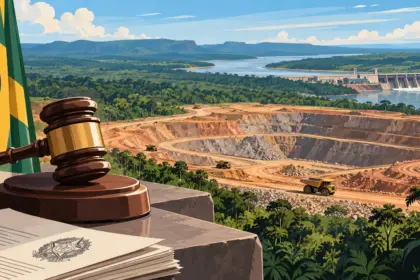
The new regulations in China are intended to address illegal mining activities, optimize resource allocation, and ensure that the country’s rare earth production meets strategic and economic requirements. This regulatory tightening encompasses enhanced supervision and closer monitoring of rare earth mining, refinement, and processing operations.
In the context of global supply chain vulnerabilities, these measures are particularly relevant for industries that rely on rare earth elements to manufacture sophisticated technologies, such as electric vehicles, wind turbines, and various defense applications. In response to a supply glut and weaker-than-anticipated demand, which have exerted downward pressure on rare earth prices in recent months, the increased quotas and regulatory supervision have also been implemented.
Additionally, China’s decision to prohibit the export of rare earth processing technologies in December 2023 serves as a testament to its determination to preserve its competitive advantage and establish its dominance in the industry. Countries such as the United States, which significantly rely on China for rare earth processing, are particularly concerned about this ban.
The international community is closely monitoring these developments, as China’s policies on rare earth management continue to have a significant impact on global market dynamics and geopolitical relations. The objective of the tightening of control over rare earths is to underscore the critical role of these minerals in the changing global technological and defense landscapes, in addition to solidifying China’s strategic position.