Researchers have disproved the conventional wisdom that oxygen on Earth is produced mainly by photosynthesis by discovering that polymetallic nodules on the deep seafloor are manufacturing oxygen even when it is entirely dark outside.
A fascinating revelation
In 2013, Andrew Sweetman, a deep-sea ecologist at the Scottish Association for Marine Science, made an intriguing discovery during his research in the Clarion-Clipperton Zone (CCZ) of the Pacific Ocean. Sweetman and his team were surprised by the unexpected increases in oxygen levels at depths where sunlight cannot reach. They initially suspected that there might be an issue with the sensors. After almost ten years of rigorous testing and validation, the team has finally confirmed the authenticity of the oxygen production, ruling out any possibility of it being a result of photosynthetic processes.
Related News
- De Beers Prepares for Independence After Anglo American’s Decision
- Toronto Stock Exchange Edges Up Despite Critical Minerals Sector Slump
- Rio Tinto Reports Q2 2024 Mixed Results with Notable Copper Gains
- Cleveland Port’s Iron Ore Conveyor System to Undergo $5M Modernization
Exploring the Enigma of ‘Dark Oxygen’
The research, published in Nature Geoscience, uncovers the fascinating process of oxygen production through electrochemical reactions involving polymetallic nodules. These nodules are rich in metals like manganese, cobalt, and nickel. These nodules serve as natural “geo batteries,” producing electricity that separates water molecules into hydrogen and oxygen. This process, called seawater electrolysis, happens at voltages as low as 0.95 volts, which is comparable to the voltage of an AA battery.
Franz Geiger, a researcher at Northwestern University who conducted electrochemistry experiments, shed light on a fascinating discovery. According to Geiger, these findings indicate the existence of an unexplored oxygen source in the depths of the ocean. This revelation could potentially revolutionize our knowledge of how aerobic life originated on our planet.
Exploring the Impact of Deep-Sea Mining
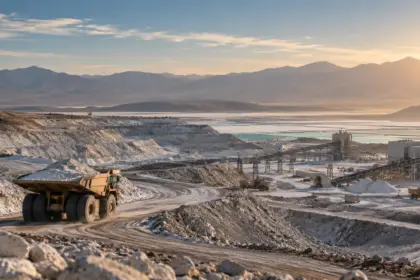
The discovery is particularly significant given the increasing interest in deep-sea mining. The CCZ holds a wealth of polymetallic nodules, which are in high demand for their valuable contribution to sustainable technologies like electric vehicle batteries and solar panels. Scientists and environmentalists have expressed concerns about the potential environmental impact of mining these nodules. The International Seabed Authority (ISA) is currently engaged in discussions regarding regulations for deep-sea mining. A significant number of nations, 27 to be precise, are advocating for a moratorium or ban on these activities.
Sweetman highlighted the importance of considering the discovery of ‘dark oxygen’ in environmental assessments, acknowledging that it introduces another layer of complexity without necessarily aiming to halt mining activities. “This does not signify the end of deep-sea mining, but it is an important aspect that should be considered in decision-making,” he stated.
Future Research
The team is committed to further investigating the impact of oxygen produced by these nodules on deep-sea ecosystems. It is crucial to comprehend the implications of oxygen production on the biodiversity and functioning of these ecosystems, particularly with the increasing emphasis on deep-sea mining. This exciting discovery paves the way for further exploration into the beginnings of life and the possibility of similar phenomena occurring on other planets.