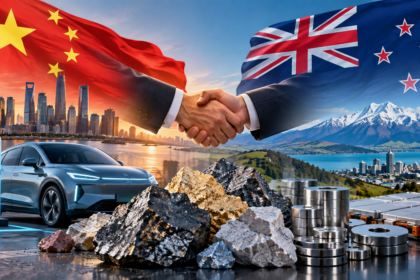
This move is part of a broader strategy by Beijing to maintain its dominance in the critical minerals sector, which has become increasingly geopolitically significant as nations transition to clean energy technologies.
Surge in prices of Antimony
Antimony, used in various military and industrial applications, has seen a surge in prices this year, underscoring its strategic importance. China’s decision to restrict exports of this mineral is seen as a response to Western efforts to reduce dependency on Chinese-controlled supply chains. The West, particularly the United States and Europe, has been actively seeking to diversify sources of critical minerals, essential for technologies like electric vehicles and renewable energy systems, to mitigate the risks associated with China’s dominant position.
You might be Interested In
- Chinese copper smelters cut first-quarter copper price forecasts as supply outlook tightens
- China’s total iron ore imports from Australia may fall below 60% in 2022
- North American Graphite Miners Push for Tariffs on China-Sourced EV Material
China’s export controls on antimony are part of a series of similar measures affecting other critical minerals, such as graphite, gallium, and germanium. These minerals are crucial for the production of semiconductors, batteries, and other high-tech applications. The restrictions are perceived as a strategic maneuver by China to leverage its control over these resources in the face of escalating trade tensions with the West.
China Tightens Export of Antimony
The geopolitical implications of China’s actions are significant. Western countries, particularly the United States, have been implementing policies to counter China’s influence in the critical minerals market. The U.S. Inflation Reduction Act, for instance, aims to boost domestic production and processing of critical minerals, thereby reducing reliance on Chinese imports. Similarly, legislative efforts in the U.S. Congress are focused on fostering alternative supply chains and encouraging international collaboration to secure critical mineral resources.
China’s strategic positioning in the critical minerals market is not merely a result of its geological resources but also a consequence of long-term investments in global mining operations and refining capabilities. This has allowed China to establish a near-monopoly in the processing of many essential minerals, thereby creating a chokepoint in global supply chains.