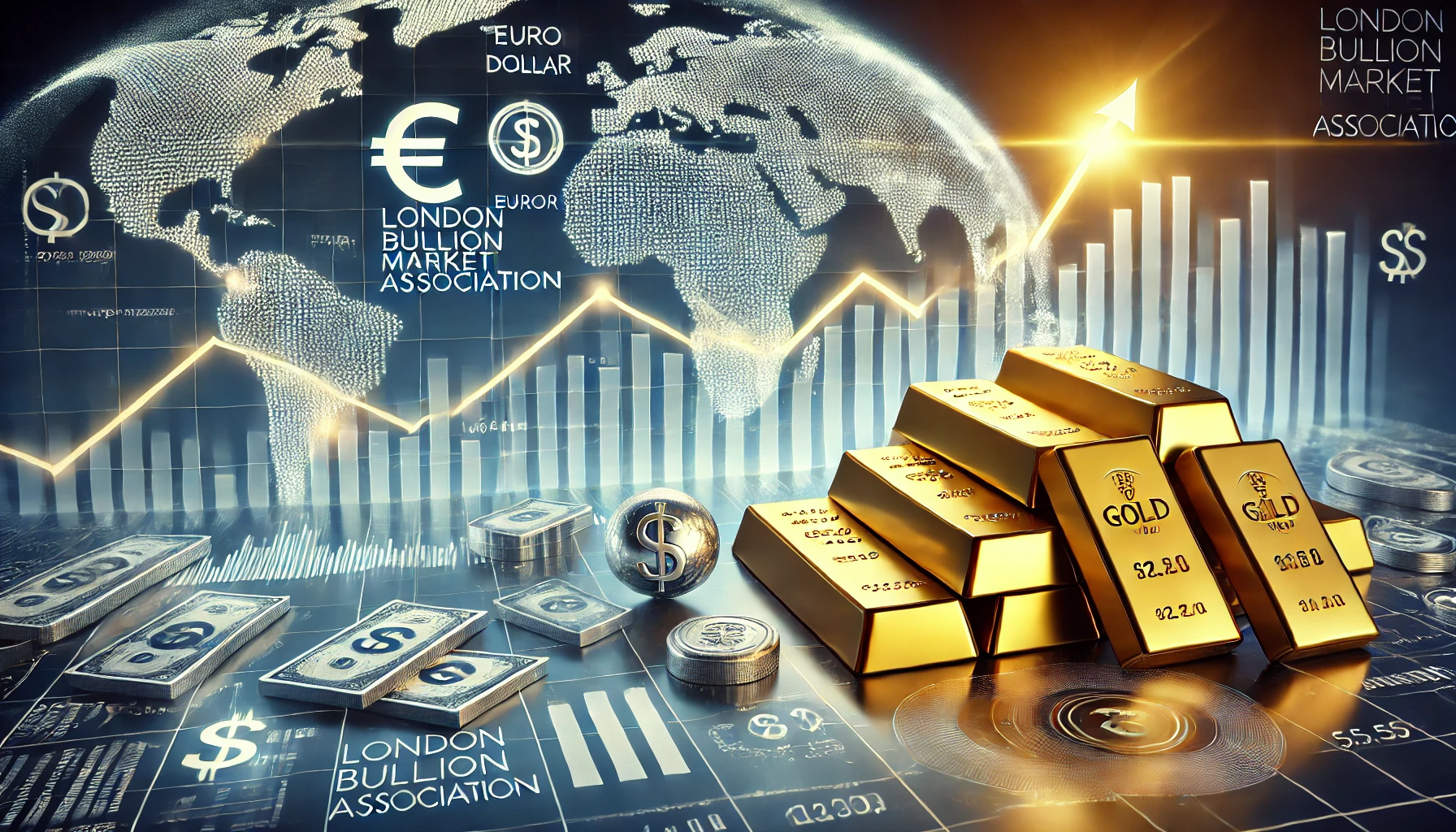
The European Central Bank (ECB) delivered a widely expected 25-basis-point rate cut today, sending ripples through financial markets. Gold, already at record highs against the euro, surged further. Across the Atlantic, the precious metal flirted with $2,700 per ounce, buoyed by the latest U.S. jobless claims data. The rally underscores broader investor sentiment that gold remains a critical hedge in today’s volatile economic climate.
These developments follow the 2024 London Bullion Market Association (LBMA) Conference in Miami, where attendees expressed optimism about gold and silver. Despite gold trading sideways recently, market watchers and LBMA members are confident in its long-term prospects.
A Case for Gold: Why $3,000 Isn’t Far Off
While some investors may question gold’s recent sideways movement, many experts at the LBMA Conference view the current price action as a brief pause before the next rally. Several market strategists predict gold could hit $3,000 by year’s end, citing several tailwinds: central bank easing, geopolitical tensions, and inflationary pressures.
According to Michael Widmer, Head of Metals Research at Bank of America, the continued dovish stance of global central banks, including today’s ECB decision, strengthens the gold case. “With real yields likely to stay suppressed, gold should benefit as investors seek out safe havens,” Widmer remarked during the conference.
Moreover, persistent concerns over global economic growth, compounded by geopolitical uncertainties in the Middle East and rising inflationary pressures, have further boosted gold’s appeal as a store of value.
Silver Steals the Spotlight for 2025
Although gold typically garners the most attention, silver emerged as the star of this year’s LBMA Conference. The LBMA’s annual delegate survey revealed that 45% of attendees believe silver will outperform other precious metals in 2025, while only 37% think gold will be the top performer in the precious metals sector.
Several factors underpin Silver’s optimistic outlook. The metal’s dual role as an industrial commodity and a store of value positions it to benefit from economic recovery and inflation hedging. Analysts also pointed to growing demand for silver in green technologies—particularly in solar energy production and electric vehicles—as key drivers of future price appreciation.
An independent metals analyst, Ross Norman, emphasized that silver’s relatively low price compared to gold makes it an attractive buy. “Silver is trading at a fraction of the price of gold, yet it has enormous upside potential, especially as green technology demand picks up,” Norman said.
Why Investors Are Holding Tight to Precious Metals
Despite some short-term price stagnation, investors remain bullish on precious metals, particularly gold and silver, for several reasons:
- Central Bank Policies: Ongoing rate cuts, such as today’s ECB decision, are bullish for gold as they reduce the opportunity cost of holding non-yielding assets like precious metals.
- Inflation Concerns: With inflation running hot in many parts of the world, gold remains a key hedge for those seeking to preserve purchasing power.
- Geopolitical Uncertainty: Escalating tensions in the Middle East and uncertainty around future US fiscal policy continue to drive demand for safe-haven assets.
- Industrial Demand for Silver: The increasing importance of silver in renewable energy and electronics provides a strong foundation for future price gains.
The Road Ahead: Gold vs. Silver
Market participants remain divided over which precious metal will offer the greatest upside. For those focused on gold, the path to $3,000 seems achievable, with many pointing to continued central bank accommodation and geopolitical risks as critical catalysts.
Meanwhile, silver enthusiasts are eyeing the metal’s role in the green energy transition. Silver is essential in technologies like solar panels and electric vehicles, so it is poised to benefit from long-term structural demand. LBMA delegates overwhelmingly echoed this sentiment, nearly half expecting silver to outperform over the next 12 to 24 months.
Precious Metals Poised for Growth
As today’s ECB decision reverberates through financial markets, the outlook for both gold and silver remains strong. While gold prices have traded sideways, there’s little indication they’ve peaked. Investors are holding firm, betting on further gains driven by central bank policies, inflation concerns, and geopolitical risks. At the same time, silver’s industrial applications and relative affordability make it a compelling investment for 2025 and beyond.
With both metals offering unique advantages, the question isn’t whether to invest in precious metals but which will outperform in the months ahead.