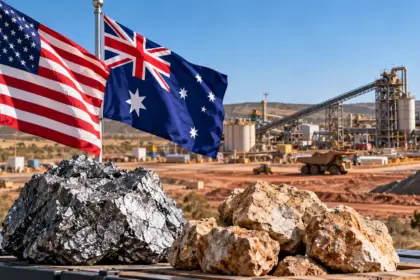
The government has cancelled the auction of 11 critical mineral blocks in the fourth round following a tepid response from bidders. This setback for India critical mineral auctions highlights the challenges in attracting investor interest for these vital resources.
Tepid Response to India Critical Mineral Auctions
Four blocks, including tungsten and glauconite located in Chhattisgarh and Arunachal Pradesh, received no bids, while the remaining seven mines attracted fewer than three technically qualified bidders, according to the annulment notice.
“Since there were nil bids received…the auction process for four mineral blocks stands annulled,” the notice stated. Similarly, for the seven blocks with insufficient bidders, the auction process was also scrapped.
Critical minerals like cobalt, copper, lithium, nickel, and rare earths are vital for clean energy technologies, including wind turbines and electric vehicles. The limited response to India critical mineral auctions is part of a recurring trend, as earlier rounds also faced similar challenges: three critical mineral blocks were canceled in the third round, and 14 each in the first and second rounds were scrapped due to lack of interest.
Related News
- Zimbabwe Mining Sector Faces Revenue Decline Despite Higher Sales Volumes
- British Columbia Mining Groups Call for Regulatory Reform Amid Criticism of Delays Report
- Decarbonization in Mining: CEFC’s $75M Investment in Critical Mineral Supply Chain
- American Rare Earths Secures Wyoming Facility to Drive Halleck Creek Development
Government’s Strategic Response to India Critical Mineral Auctions
In response to these persistent challenges, the government is gearing up to launch a Critical Mineral Mission next year. This initiative will focus on securing vital resources for green energy and technology through collaborations among government, industry, and research entities.
The mission prioritizes acquiring overseas assets, particularly lithium and cobalt from Australia, while boosting domestic mining through enhanced India critical mineral auctions and global roadshows. By doing so, India aims to attract international investors and carve a significant place on the global mining map.
The Global Context and Opportunities for India Critical Mineral Auctions
Global competition for critical minerals is intensifying. A World Bank report estimates a 500 percent surge in mineral production by 2050 to meet clean energy demands. Similarly, the International Energy Agency predicts that the demand for minerals like lithium and cobalt could rise 30-fold by 2040, driven by the electric vehicle and battery storage boom.
Critical minerals also underpin the semiconductor industry. As India aspires to become a global hub for semiconductor manufacturing — a sector projected to hit $1 trillion globally by 2030 — a stable supply of materials like silicon, cobalt, and rare earth elements becomes indispensable.
Semiconductors, essential for smartphones and electric vehicles, are central to the 21st-century economy, and the success of future India critical mineral auctions will be crucial to support this ambition.