
As the global push for decarbonization accelerates, the mining industry is navigating a critical dual mandate: scaling up production of essential minerals for electrification while meeting ambitious sustainability targets. Industry events like the FT Mining Summit and MINExpo International in Las Vegas have highlighted the urgency of these challenges, with fleet electrification and operational efficiency taking center stage in the sector’s transformation.
Fleet Electrification: The Path to Sustainable Mining
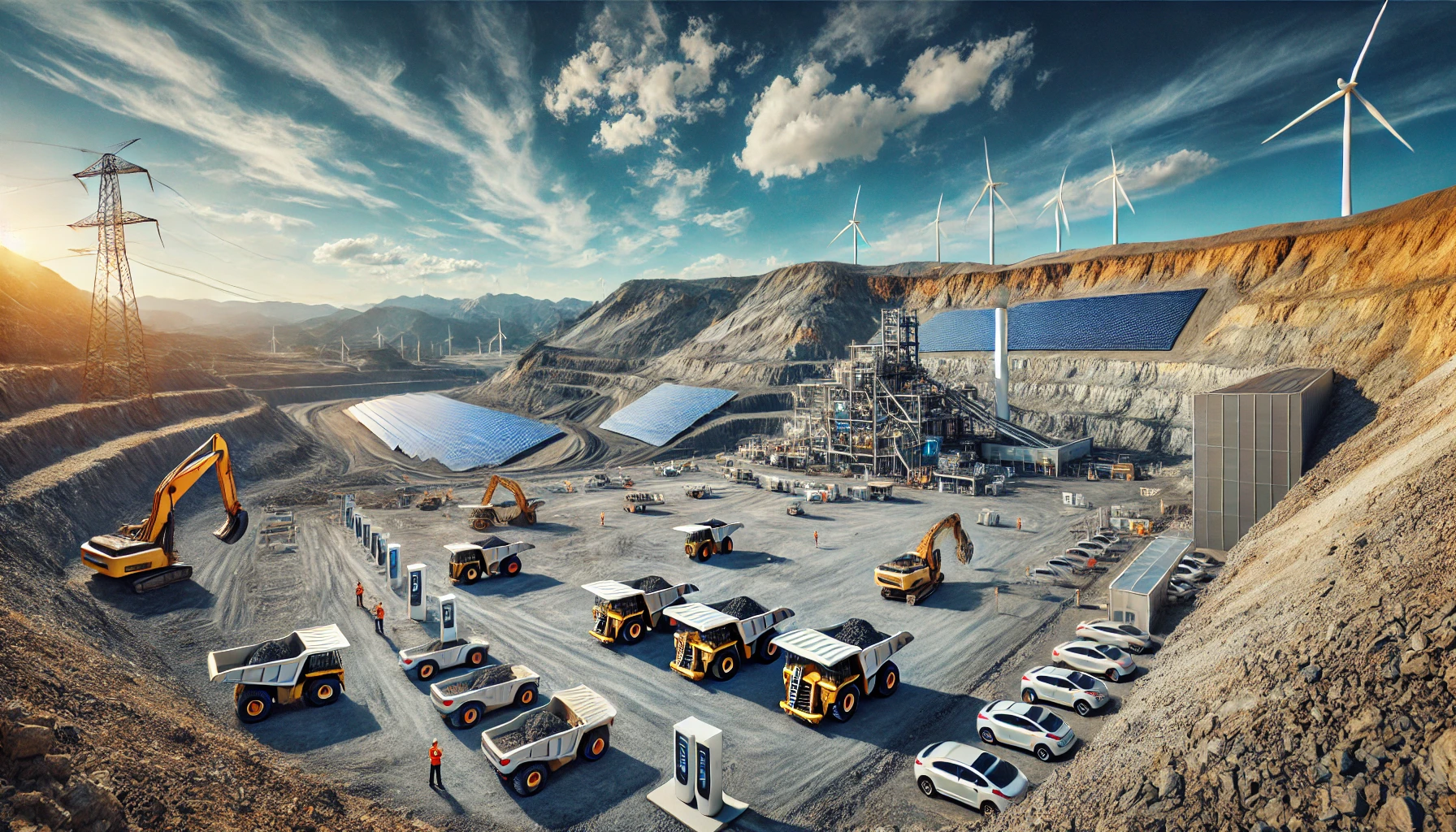
Governments worldwide are driving sustainability mandates, prompting mining companies to electrify their off-highway vehicle fleets. While promising, this transition poses significant challenges. The capital required to replace diesel-powered fleets with electric alternatives is considerable, further strained by costs for engineering, maintenance, training, and installing charging infrastructure in remote areas.
A critical decision involves choosing between owning or leasing electrified fleets. Ownership requires substantial upfront capital expenditure (capex), while leasing incurs operational expenditure (opex), each with distinct financial and tax implications.
Additionally, the sector’s unique scale and safety requirements complicate the shift. Electrification technologies for large mining vehicles are still in their infancy, with limited products tailored to industry-specific needs. Overcoming these barriers necessitates robust supply chain collaborations to drive innovation and reduce the risks of supply disruptions.
Related News
- Saudi Mining Innovation Program: Transforming Saudi Arabia’s Industrial Future
- Underground Mining Transition Drives Focus on Workforce Reskilling
- Conflict Minerals: A High-Stakes Legal Battle Between DRC and Apple
- Mining Trends in 2024: Transformative Forces Shaping the Industry
Circular Economy Principles: A Key to Sustainability
The mining industry’s role in advancing the circular economy has grown increasingly relevant amid concerns over potential shortages of critical minerals like lithium, cobalt, and rare earth elements. These materials are vital for renewable energy systems and electric vehicles.
To address rising demand sustainably, mining companies must adopt recycling initiatives and integrate secondary resource utilization into their operations. This not only conserves finite resources but also reduces reliance on new extractions, aligning with environmental, social, and governance (ESG) objectives.
Data analytics and artificial intelligence (AI) are pivotal in these efforts, enhancing regulatory compliance, forecasting energy production, and optimizing grid performance. However, mining firms must address the carbon footprint of AI infrastructure by adopting renewable energy sources to power data centers.
Mergers, Acquisitions, and Strategic Portfolio Recalibration
As technology evolves and market demands shift, mining companies increasingly rely on mergers and acquisitions (M&A) to streamline operations and recalibrate their portfolios. Divesting non-core assets allows firms to focus on priority projects, while partnerships foster innovation in areas like electrification and green technology development.
The geopolitical landscape also plays a crucial role. While China dominates clean technology manufacturing, trade restrictions and tariffs pose risks to progress. Collaborative strategies with global stakeholders are essential to maintaining momentum toward net-zero goals.
The Road Ahead
The mining industry’s journey toward decarbonization is both a challenge and an opportunity. By adopting advanced technologies, embracing circular economy principles, and forming strategic alliances, companies can spearhead the green transition while meeting the surging demand for critical minerals.
Although upfront investments in sustainability initiatives may delay immediate returns, the long-term benefits—lower carbon emissions, improved operational efficiency, and a more resilient supply chain—are undeniable. As the industry enters this transformative era, the potential for greener, cleaner operations is well within reach.