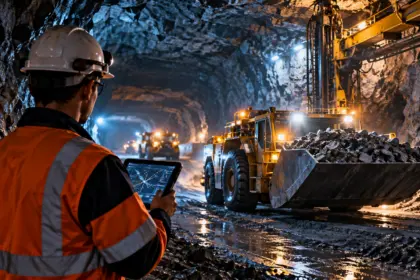

Rio Tinto and Glencore’s Merger Talks: A New Era for Mining?
The mining sector could be on the brink of a seismic shift as Rio Tinto and Glencore’s merger talks gain attention. Early discussions between these mining heavyweights suggest a possible merger that, if finalized, could transform the industry. Although it remains unclear whether these discussions are ongoing, the implications of such a deal would be monumental for the mining world.
A Strategic Move Toward Copper Dominance
The primary driver behind Rio Tinto and Glencore’s merger talks is the surging global demand for copper, a vital resource in the transition to renewable energy and electrification. Copper’s role in powering infrastructure for solar panels, wind turbines, and electric vehicles has cemented its status as a cornerstone of the energy transition.
If the merger becomes a reality, the combined copper production of Rio Tinto and Glencore could rival BHP, the world’s largest mining company by market value. Currently, Glencore’s 2024 copper production guidance stands at approximately 1 million metric tons (Mt), while Rio Tinto’s output is expected to reach up to 720,000 metric tons. Together, this would significantly strengthen their market position in copper.
Related News
- The Dark Side of Job Recruitment: Exposing Fake Jobs in the Mining Industry
- Death Toll Reaches 87 in South African Illegal Mining Standoff
- Trump Administration Could Spur Deep-Sea Mining Boom Amid Controversy
- Greenland Mining and Closer U.S.-Greenland Relations
Market Dynamics and Valuation
Rio Tinto and Glencore’s merger talks highlight the changing dynamics of the mining sector. Rio Tinto, the world’s second most valuable mining company, boasts a market capitalization of $103 billion, standing alongside BHP, which is valued at $125 billion. In comparison, Glencore holds a market capitalization of $55 billion, ranking sixth globally.
If successful, this merger would create a mining titan surpassing Rio Tinto’s current valuation and potentially overtaking BHP in both market value and copper output. However, the industry has faced declining valuations since their 2022 peak, reflecting macroeconomic headwinds and evolving investor sentiment.
Lessons from Past Deals
Rio Tinto and Glencore’s merger talks evoke comparisons to previous high-profile mining mergers. For instance, BHP’s failed bid to acquire Anglo American last year centered around copper but fell through due to challenges in negotiations. Similarly, Glencore’s unsuccessful 2023 attempt to acquire Teck Resources illustrates the risks and complexities of mergers in the sector.
A potential Rio Tinto-Glencore merger would likely encounter significant regulatory scrutiny, particularly given its potential to reshape market competition in key commodities like copper.
Implications for the Industry
The prospect of a merger between Rio Tinto and Glencore would have profound implications for the mining industry. A combined entity would not only challenge BHP’s dominance but could also spark a wave of strategic reassessments among competitors.
Moreover, such a deal would underline the rising importance of copper as mining pivots toward materials essential for the energy transition. Governments and corporations worldwide are pushing for net-zero emissions, which is expected to fuel surging demand for copper, lithium, and other critical minerals. This shift may lead to further consolidation within the sector.
Challenges and Uncertainties
While Rio Tinto and Glencore’s merger talks are noteworthy, the path to such a deal is riddled with challenges. Integrating two massive and complex organizations would require aligning operations, corporate cultures, and strategic priorities. Regulatory authorities in key jurisdictions like Australia, the UK, and the US would likely subject the merger to intense scrutiny.
Investor skepticism also poses a challenge. Large-scale mergers often face doubts about their ability to deliver promised synergies and long-term shareholder value. Rio Tinto and Glencore would need to make a compelling case to secure investor support and confidence.
A merger between Rio Tinto and Glencore would signify one of the most significant transformations in the mining industry in decades, creating a dominant player in the copper market. While the discussions remain in early stages and face considerable uncertainties, this development underscores the growing strategic importance of copper and the sector’s pivot toward critical minerals.
The outcome of Rio Tinto and Glencore’s merger talks could set the stage for further consolidation in the mining industry, influencing competition and shaping its trajectory for years to come.