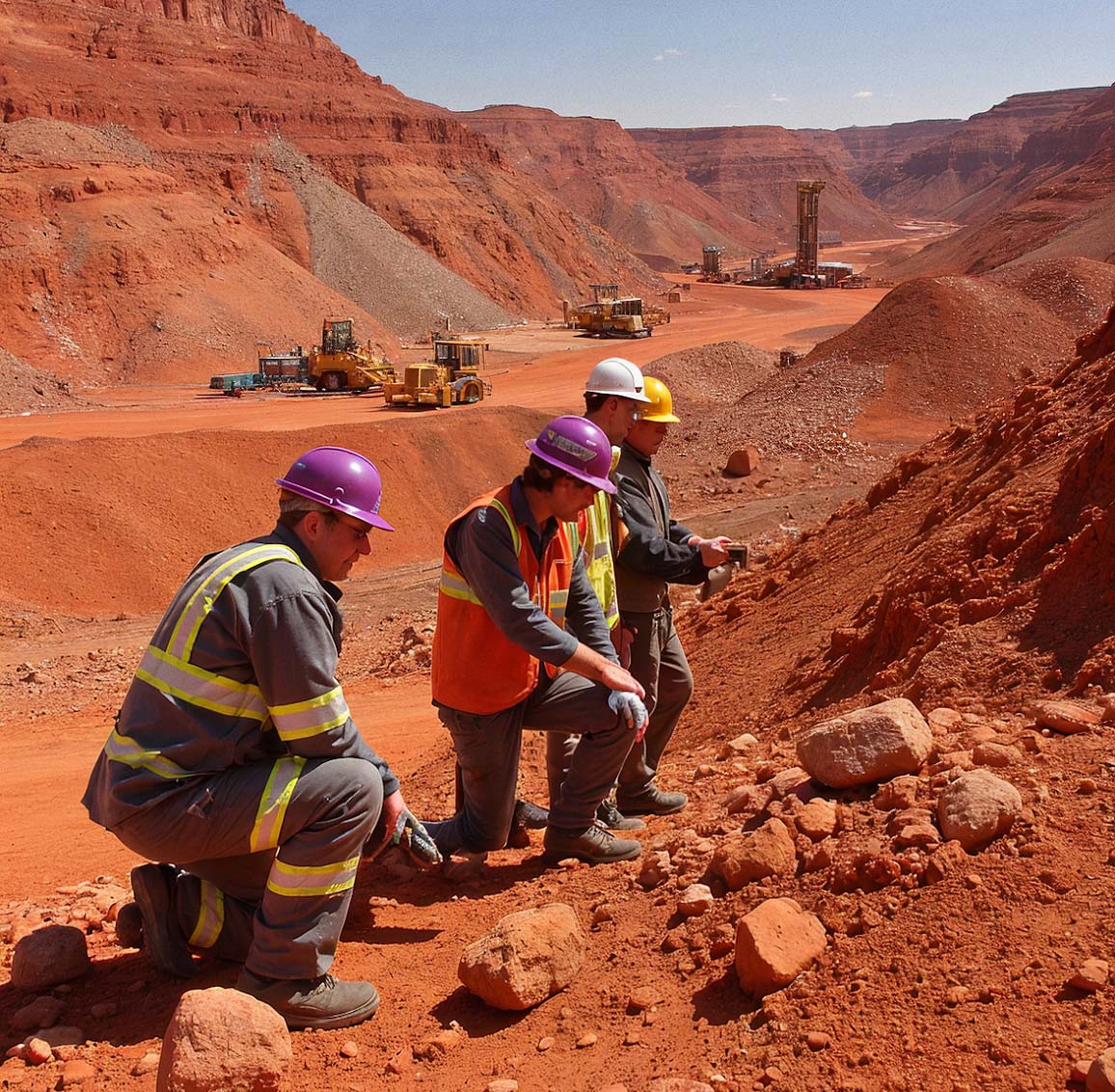

Hamersley Range, Western Australia – Geologists have identified the largest iron ore deposit ever recorded, located in the Hamersley Range of Western Australia. This colossal reserve is estimated to contain 55 billion metric tons of high-grade iron ore, with an approximate market value of $5.7 trillion USD.
The Hamersley Range has long been recognized for its rich mineral resources, but this recent find surpasses all previous records, solidifying Australia’s position as a global leader in iron ore production. The sheer scale of this deposit is expected to have significant economic implications, attracting substantial investments and potentially reshaping the dynamics of the global iron ore market.
Related News
- Trump’s Tariffs on Canada, Mexico, and China Disrupt Mining and Mineral Trade, Sparking Global Concerns
- How One Cyclone Could Send Shockwaves Through the Global Iron Ore Market
- Ukraine, Russia and Lithium The Battle Shaping Europe’s Energy Security
- Trump Energy Policies 2.0: What’s Next for Fossil Fuels and Renewables?
Beyond its economic impact, this discovery is prompting geologists to reassess existing theories on mineral formation. Recent studies suggest that these iron-rich formations are much younger than previously believed, dating back approximately 1.4 billion years. This challenges the conventional understanding of how Earth’s richest iron ore deposits formed and highlights the role of ancient tectonic movements and supercontinent cycles in concentrating such vast mineral resources.
The identification of this deposit not only enhances our understanding of geological processes but also underscores the potential for future mineral exploration in regions previously considered less promising.