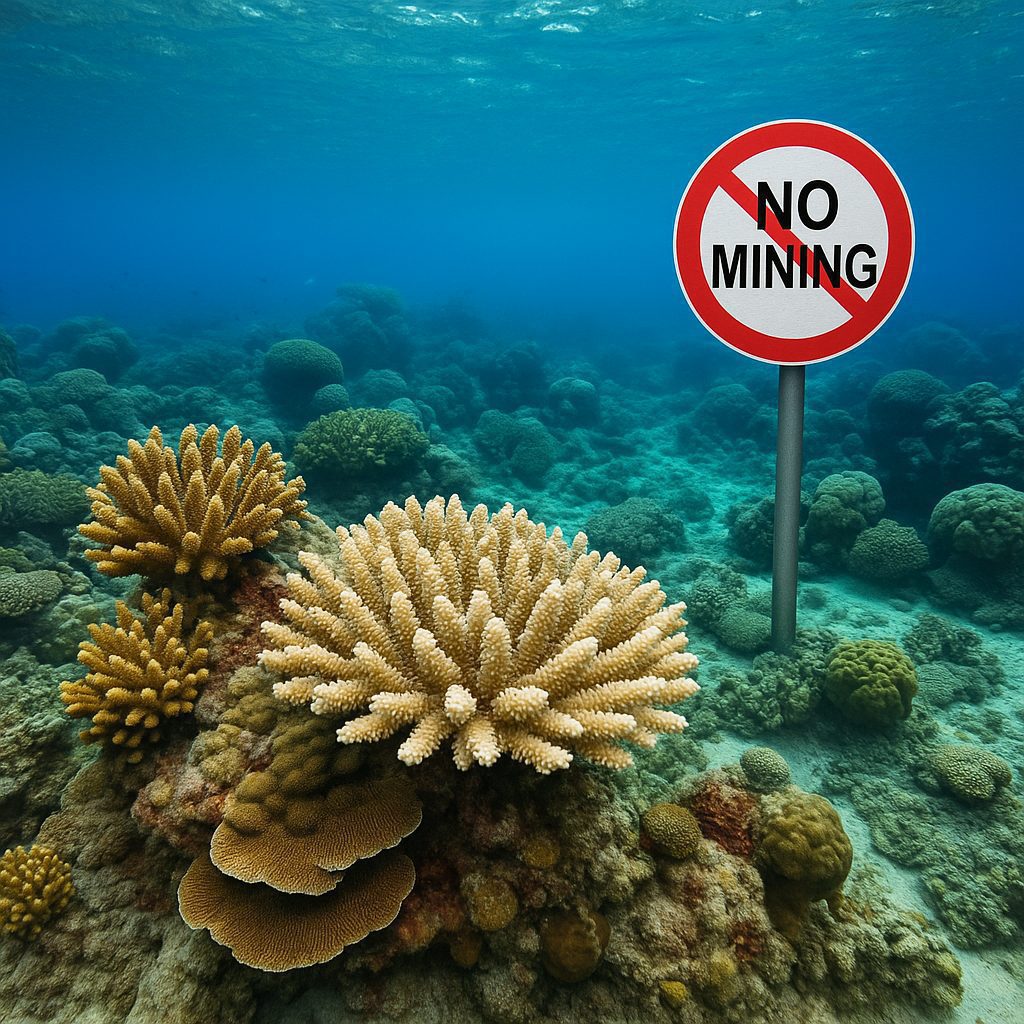
The government of New Caledonia has approved a landmark 50-year moratorium on seabed mining across its vast maritime territory, aiming to protect the ecological integrity of one of the world’s richest marine zones.
The decision, affecting an exclusive economic zone of over 1.3 million square kilometers, prohibits any commercial exploration or extraction of seabed minerals. The legislation makes exceptions for non-invasive scientific research, ensuring that marine biodiversity studies can continue without industrial disruption.
Related News
- Newmont Deploys PhotonAssay Technology, Begins Global Rollout at Ghana’s Ahafo Mine
- Lithium Corporation 2025 Field Work Targets Lithium Exploration in Nevada and British Columbia
- Sanatana Resources Secures Gold Strike Two in Yukon Mining Project Expansion
- U.S.-Ukraine Minerals Agreement Signals Strategic Shift in Reconstruction and Global Supply Chains
The move comes in response to growing environmental concerns surrounding deep-sea mining. Experts have warned that such activities threaten to permanently damage delicate seabed ecosystems, many of which remain poorly understood. In New Caledonia, where coral reefs and marine biodiversity rank among the highest globally, the risks are particularly acute.
The new policy was championed by members of the local government who view environmental protection as a cornerstone of long-term economic and social stability. Advocates argue that placing conservation over exploitation sets a powerful example for other island and coastal nations confronting similar pressures from the mining and energy sectors.
New Caledonia’s waters are home to nearly a third of the world’s pristine coral reefs, as well as countless endemic species. These ecosystems not only support local livelihoods through sustainable fishing and tourism but also play a critical role in regulating global climate and ocean health.
Despite broad support for the ban, political opposition has emerged. Some factions argued that locking up such a large area for half a century is economically short-sighted, particularly given the territory’s reliance on the nickel industry and growing global demand for critical minerals. They maintain that a case-by-case regulatory framework would be more flexible than a blanket moratorium.
Still, the decision reflects a strategic choice to prioritize ecosystem preservation over short-term extraction. The ban complements previous conservation efforts, such as the establishment of the Coral Sea Natural Park, which already restricts certain commercial activities within protected zones.
This long-term pause on seabed mining also positions New Caledonia within a growing global movement of coastal jurisdictions taking preemptive action against deep-sea exploitation. Other Pacific territories have issued moratoriums in recent years, citing insufficient scientific understanding of the ecological consequences.
Environmental advocates have welcomed the decision, noting that it allows time for science to catch up with industry. Without adequate data on the effects of sediment plumes, noise pollution, and habitat destruction on deep-sea species, many argue that caution is the only responsible path.
By enacting this 50-year moratorium, New Caledonia signals its intent to be a global leader in ocean governance—one that favors biodiversity, scientific integrity, and intergenerational responsibility over extractive short-term gains.