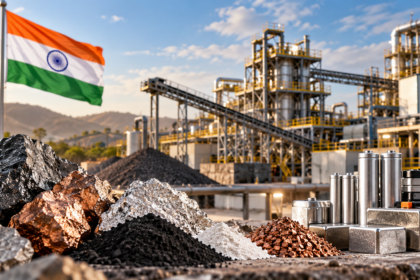
Rare earth diversification has become a strategic imperative for Western economies seeking to curb China’s near-monopoly on critical materials used in clean energy, defense, and electronics.
The United States and Brazil are rapidly advancing rare earth processing infrastructure to reduce dependence on Beijing, which currently accounts for more than 70% of global rare earth mining and over 90% of downstream refining. The rare earth supply chain—long dominated by Chinese producers—is undergoing a transformation, driven by geopolitical tension and industrial policy.
Brazil, home to the world’s second-largest rare earth reserves, is positioning itself as a linchpin in the global strategy to diversify supply. With untapped deposits in its northeastern and central regions, the country is attracting capital from Western developers eager to establish a processing foothold outside of China.
Related News
- Rio Tinto Gallium Extraction Breakthrough Anchors North America Supply Chain
- China’s Latest Trade Weapon: The Seven Rare Earth Minerals Aimed at the U.S.
- Europe Rare Earth Production Falls Short as Demand Surges Toward 2030
- U.S.-China Trade War 2025 Heats Up as Beijing Targets Rare Earth Exports
Rare Earth Diversification Gains Ground in the Americas
The movement toward rare earth diversification is gathering momentum in North America, where Canada’s Aclara Resources is setting up a rare earth processing facility in the United States. The project is among the most visible efforts to create a vertically integrated supply chain independent of China.
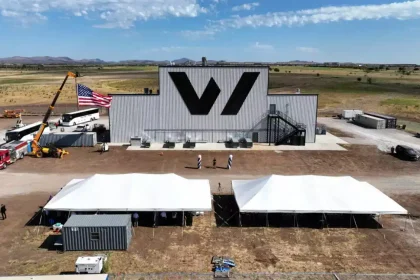
Aclara recently secured a long-term supply agreement with Germany’s Vacuumschmelze (VAC), which is building a Pentagon-funded permanent magnet plant in South Carolina. The magnets, made from neodymium and other rare earths, are critical for electric vehicles, wind turbines, and defense applications.
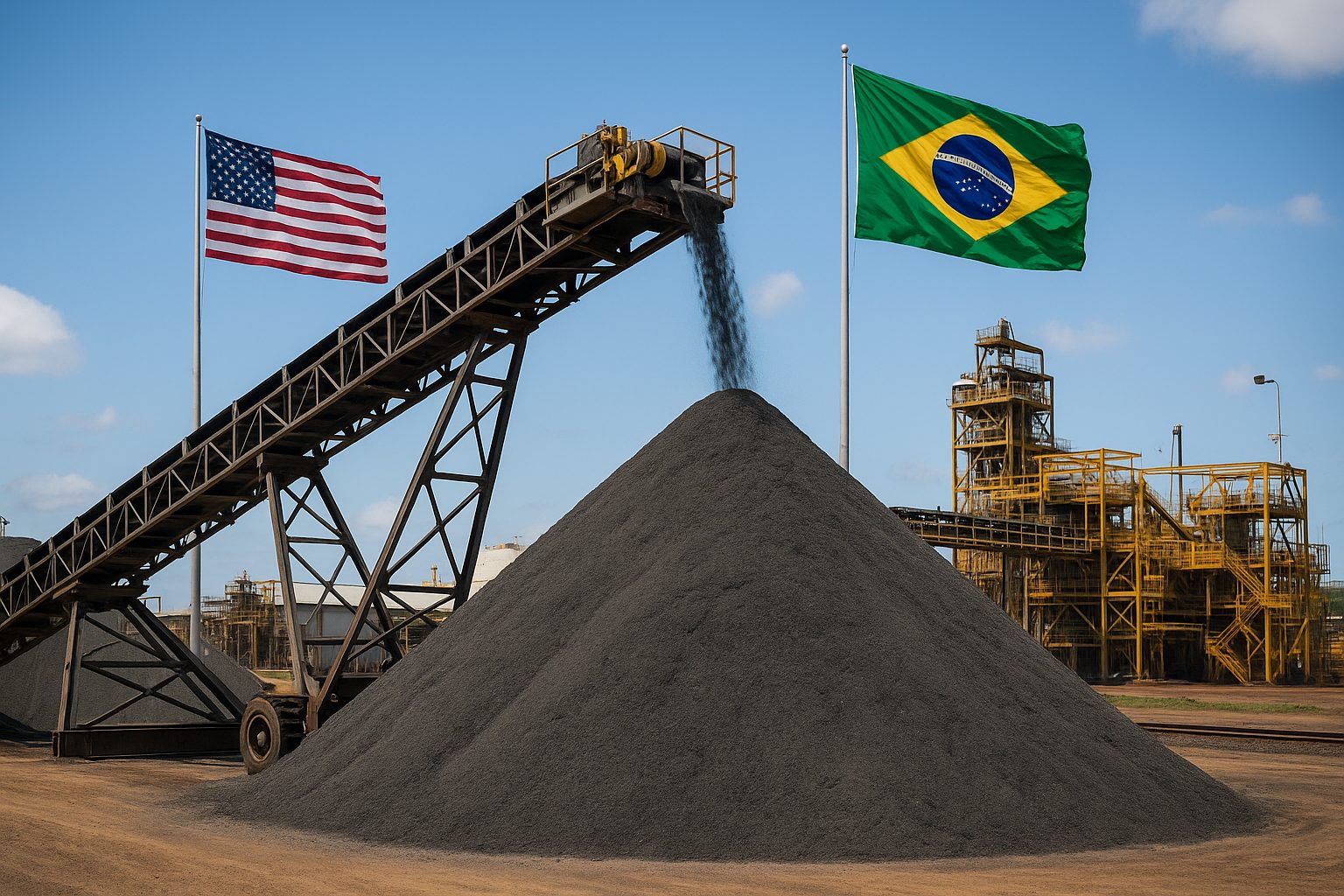
“By coupling Brazilian raw materials with U.S. processing, we are building a hemispheric solution to a global supply chain challenge,” said a senior Aclara executive during a May earnings call.
Pentagon-Backed Magnet Factory Targets Strategic Autonomy
VAC’s new facility, partially financed by the U.S. Department of Defense, aims to deliver rare earth magnets to high-profile clients, including General Motors, as part of its EV expansion strategy. The factory will process rare earth materials into neodymium-iron-boron (NdFeB) magnets used in electric drivetrains and military-grade systems.
This initiative is part of Washington’s broader push under the Defense Production Act to onshore the rare earth supply chain and ensure that critical minerals are sourced and refined in friendly jurisdictions. Rare earth processing capacity, long concentrated in China, is now being strategically distributed across key allied economies.
Brazil’s Strategic Reserves Come Into Focus
Brazil’s rare earth deposits, long underutilized, are gaining new prominence. According to the U.S. Geological Survey, Brazil holds vast reserves of lanthanides and heavy rare earths crucial for advanced electronics and green technology.
Government officials are courting foreign investment to build domestic processing capabilities. In recent months, Brazil has signed cooperation agreements with North American and European companies to accelerate mine development and rare earth refining, especially in the states of Minas Gerais and Pará.
Strategic Realignment of the Rare Earth Supply Chain
The rare earth diversification effort is also about de-risking. With Beijing’s history of weaponizing exports—including a 2010 embargo on Japan—Western policymakers are no longer willing to treat rare earths as a purely economic issue. The U.S., EU, and allies are treating these minerals as core components of national security and industrial competitiveness.
“A single-source supply chain is a single point of failure,” said a U.S. Commerce Department official involved in critical mineral strategy. “Rare earth processing capacity must be globally redundant and geopolitically secure.”
Outlook: A Global Market in Transition
As rare earth diversification becomes policy orthodoxy across NATO-aligned countries, the long-term outlook for the rare earth supply chain is shifting. Aclara, VAC, and Brazil are part of an emerging counterweight to China’s mineral dominance. Analysts expect global rare earth processing capacity outside of China to triple by 2030, with new entrants focusing on cleaner, more sustainable technologies.
While the road to full independence from China is long, the foundation is being laid. For automakers like General Motors and governments like those in Brasília and Washington, rare earth processing is not just a materials issue—it’s a defining factor in economic sovereignty and technological leadership.