China rare earth elements are becoming a flashpoint in U.S. trade negotiations, with Beijing’s recent export restrictions raising alarm across Washington and global markets. The strategic importance of rare earth metals—vital for advanced manufacturing, defense technologies, and green energy—has thrust the issue to the center of ongoing talks between the two economic superpowers.
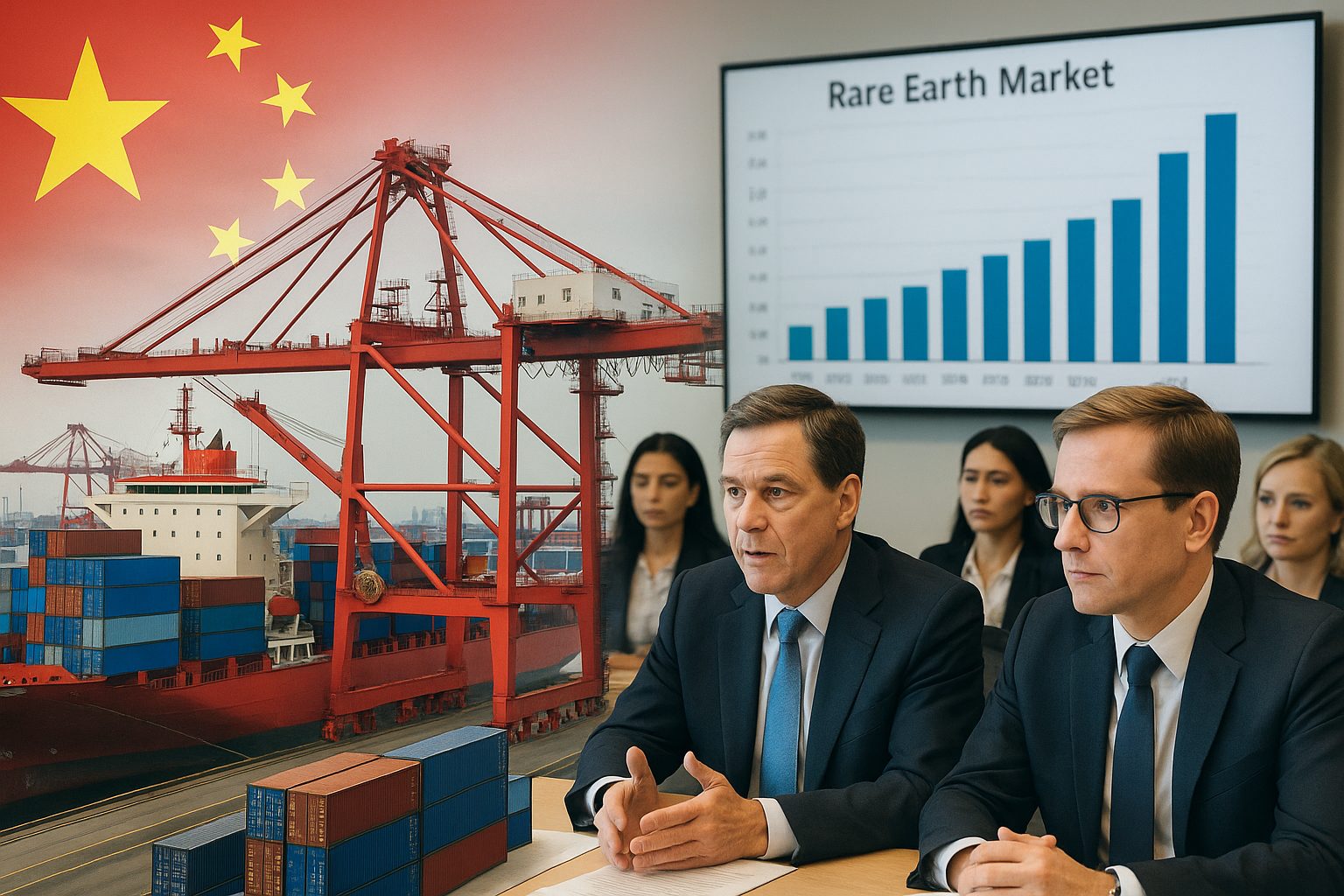
China currently controls more than 70% of global rare earth elements production and dominates the downstream processing chain, according to the U.S. Geological Survey. This overwhelming market share allows Beijing to exert significant influence on global supply and pricing.
Recent measures by China to further tighten rare earth elements exports have sent ripples through U.S. industries. A May 15 report from Reuters confirmed that Beijing will impose new licensing requirements for selected rare earth compounds this summer, with potential impacts on critical sectors including aerospace, electronics, and defense.
Related News
- Ukraine–US Mineral Resources Agreement Sparks Major Rare-Earth and Energy Investments
- China’s Mining Fleet Goes Electric in Zero-Carbon Mining Drive
- China’s Yimin Mine Deploys 100 Autonomous Electric Trucks in Global First
- CPEC Supercharges Pakistan’s Mining Sector Amid Global Resource Race
Mounting Concerns in Washington
Senior U.S. officials engaged in trade negotiations acknowledge that rare earth supply chain vulnerabilities have become an increasingly urgent concern. “The dominance of China rare earth elements is a clear strategic risk,” said a senior Commerce Department official. “Securing alternative sources is now a top priority in our trade discussions.”
A recent Brookings Institution study underscored that U.S. dependency on China for rare earth metals could compromise national security. Without diversified sources and domestic processing capabilities, Washington faces the prospect of supply disruptions amid escalating geopolitical tensions.
Global Scramble for Alternatives
In response, the Biden administration has intensified efforts to cultivate alternative rare earth supply chains. The Department of Defense has allocated funding to bolster domestic mining and processing capacity, while trade envoys are deepening partnerships with Australia, Canada, and European allies.
“The current market reality is that China has a stranglehold on refining,” said an executive at an American mining company. “Breaking that grip will take substantial investment and sustained policy support.”
Financial Times analysis indicates that new rare earth processing facilities outside China may not come online at scale until the end of the decade, leaving near-term vulnerabilities in place.
Trade Negotiations Face New Headwinds
With China rare earth elements now a key negotiating lever, U.S. trade representatives are pressing Beijing for assurances on continued supply flows. However, Chinese officials view control over rare earth exports as a strategic asset and are unlikely to cede ground without significant concessions.
According to CNBC , parallel U.S. efforts to develop a “rare earth resilience strategy” are gaining momentum, though experts caution that reengineering supply chains will be both time-consuming and costly.
The Path Ahead
As the next round of U.S. trade negotiations approaches, rare earth elements remain a linchpin issue. For Washington, reducing dependency on China rare earth elements is not merely an economic imperative but a national security priority.
Industry leaders and policymakers alike recognize that the outcome of these talks could reshape the global landscape for critical materials. In a world increasingly defined by technological competition, control of rare earth elements may well determine the next front in U.S.-China relations.