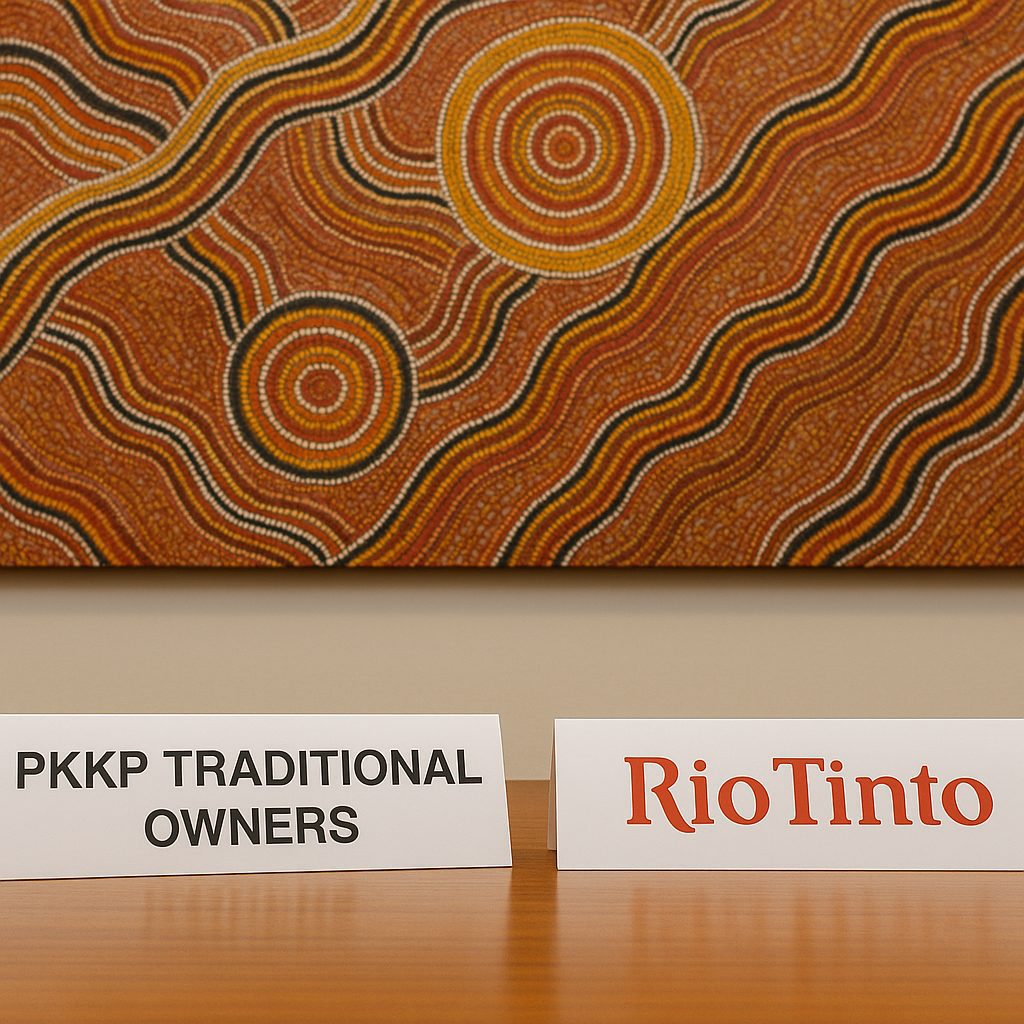
Rio Tinto’s agreement with the Puutu Kunti Kurrama and Pinikura (PKKP) traditional owners marks a defining shift in Australia’s mining industry, following the fallout from the 2020 destruction of the sacred Juukan Gorge site.
The newly signed agreement grants PKKP traditional owners unprecedented authority over future mining activities on their ancestral lands in Western Australia’s Pilbara region. This comes after global condemnation of Rio Tinto’s demolition of two 46,000-year-old rock shelters during an iron ore expansion, which sparked a parliamentary inquiry and led to leadership changes within the company.
“This agreement represents a new chapter in our relationship with Rio Tinto,” said Burchell Hayes, a PKKP director. “It gives our people a meaningful voice in decisions that affect our country, our heritage, and our future.”
Related News
- Copper Price Concerns Mount as Study Warns of Doubling Need to Meet Future Demand
- Stillwater Critical Minerals Showcases Montana Project at Quebec Mining Investment Event
- Harmony Gold Makes $1B Copper Bet with Mac Copper Acquisition
- New Zealand Mining Expansion Targets $3B Export Boom Amid Environmental Pushback
A New Model for Mining Governance
Under the terms of the agreement, PKKP will have co-management rights over land use, cultural heritage protection, and mining approvals—a notable departure from prior models where traditional owners had limited influence post-consultation.
“The power dynamic is shifting,” noted a legal adviser to the PKKP. “This agreement ensures that PKKP voices will now be integral to the governance of their land.”
Industry observers view this as a milestone that could reshape mining rights governance across Australia’s resource sector. A Financial Times analysis (link) highlighted that mining companies globally are under growing pressure to forge more equitable relationships with Indigenous communities.
Industry Reckoning After Juukan Gorge
The Juukan Gorge disaster remains a cautionary tale in corporate governance. As reported by the BBC (link), Rio Tinto’s destruction of the sacred caves drew international rebuke and prompted widespread calls for reform in corporate practices.
In the aftermath, Rio Tinto underwent a board reshuffle, introduced new heritage protection policies, and launched efforts to rebuild trust with affected communities. This new Rio Tinto agreement with PKKP is the most substantial step yet in that ongoing rehabilitation effort.
“Trust must be earned through action,” said Rio Tinto CEO Jakob Stausholm. “This agreement is part of our long-term commitment to respectful and transparent relationships with traditional owners.”
Broader Implications for the Resource Sector
The Australian government has also intensified scrutiny of Indigenous rights in resource development. Canberra’s latest Indigenous land rights policy framework (link) encourages greater empowerment of traditional owners in commercial negotiations.
Experts believe that the Rio Tinto-PKKP agreement could serve as a template for other mining companies. “This sets a new bar for Indigenous engagement,” said an academic specializing in Aboriginal law. “It signals that token consultation is no longer sufficient.”
Reuters reports (link) that other miners operating in the Pilbara are now reviewing their agreements in light of Rio Tinto’s move.
Path Forward
For the PKKP community, the journey is ongoing. “Healing from what happened at Juukan Gorge will take time,” Hayes said. “But this agreement is a step toward ensuring it never happens again.”
As the global mining sector watches closely, the Rio Tinto agreement with PKKP traditional owners may prove to be a watershed moment—an example of how corporate accountability and Indigenous empowerment can reshape an entire industry.