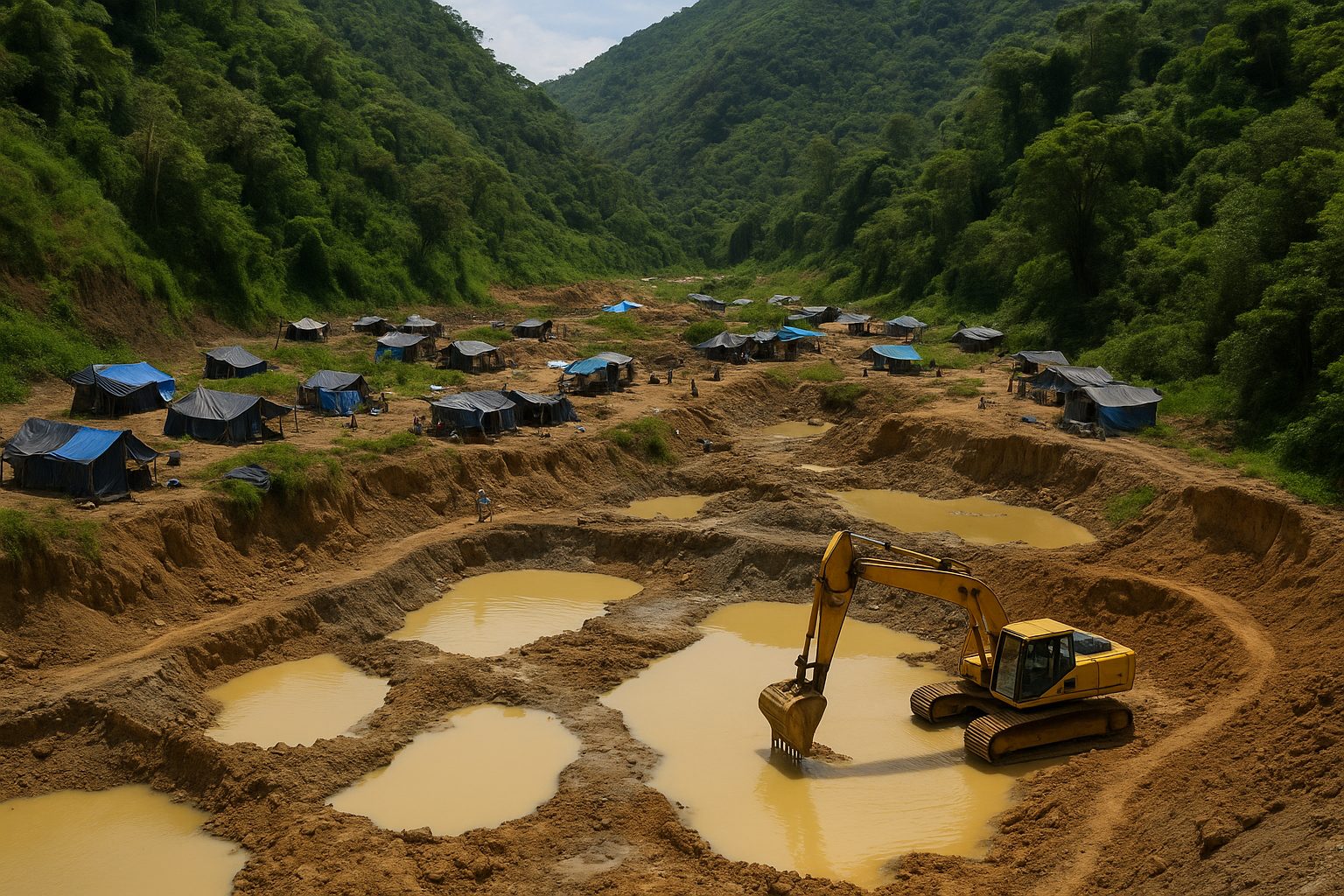
Illegal gold mining in Peru’s Pataz region is fueling violence and environmental degradation, posing mounting challenges for the country’s efforts to boost copper output in 2025.
Government projections show that Peru’s copper output is expected to climb modestly next year as key mining operations ramp up. The country is the world’s second-largest copper producer and relies heavily on the metal for export revenues. But the surge in illegal gold mining—particularly in Pataz—is threatening the broader stability of the mining sector.
Pataz Violence Undermines Mining Confidence
The Pataz region has become a hotbed for illegal gold mining. In recent months, violence between informal miners and government forces has intensified. Armed groups linked to organized crime are now deeply entrenched in the area, complicating law enforcement efforts.
“Illegal gold mining in Pataz is spiraling out of control, with serious repercussions for local communities and Peru’s broader mining industry,” said María Isabel Cabanillas, a prosecutor focused on environmental crimes.
Beyond violence, illegal operations are accelerating deforestation and contaminating water supplies with mercury and other toxins—environmental damages that could take decades to reverse.
Related News
- China’s Rare Earth Elements Curtail U.S. Trade Negotiations Amid Rising Supply Chain Fears
- Ukraine–US Mineral Resources Agreement Sparks Major Rare-Earth and Energy Investments
- China’s Mining Fleet Goes Electric in Zero-Carbon Mining Drive
- China’s Yimin Mine Deploys 100 Autonomous Electric Trucks in Global First
Copper Output 2025: A Key Economic Priority
Despite these headwinds, Peru’s Ministry of Energy and Mines forecasts a slight increase in copper output in 2025. Major producers, including Cerro Verde and Antamina, are expected to drive the gains. Demand for copper remains robust amid global trends in electrification and green technologies, as underscored in the International Energy Agency’s copper market review.
“Peru’s copper output in 2025 will be critical for sustaining economic growth,” said Central Reserve Bank Governor Julio Velarde. “But continued instability in regions like Pataz risks undermining investor confidence.”
Balancing Mining Growth with Environmental Stewardship
The Peruvian government is pursuing a two-pronged strategy: encouraging legal mining investments while cracking down on illegal gold mining networks. However, efforts to formalize artisanal mining have yielded limited success, as high global gold prices continue to drive illicit activity.
“The unchecked expansion of illegal gold mining casts a long shadow over Peru’s legal mining sector,” said José Miguel Morales of the Lima Chamber of Commerce. “Addressing this crisis is essential to securing the country’s copper output prospects in 2025 and beyond.”
Regional Collaboration and Future Outlook
Illegal gold mining is not unique to Peru; it is a pervasive problem across Latin America. The World Gold Council notes that such activities frequently intersect with transnational organized crime. Peru is now seeking closer collaboration with regional partners to combat these networks.
Interior Minister Walter Ortiz recently emphasized the need for coordinated action: “Illegal gold mining is a regional threat requiring joint intelligence and enforcement.”
As Peru positions itself for a slight rise in copper output 2025, the nation must also reckon with the escalating crisis of illegal gold mining. The ability to stabilize regions like Pataz will be a critical test of the government’s resolve and the mining sector’s future resilience.