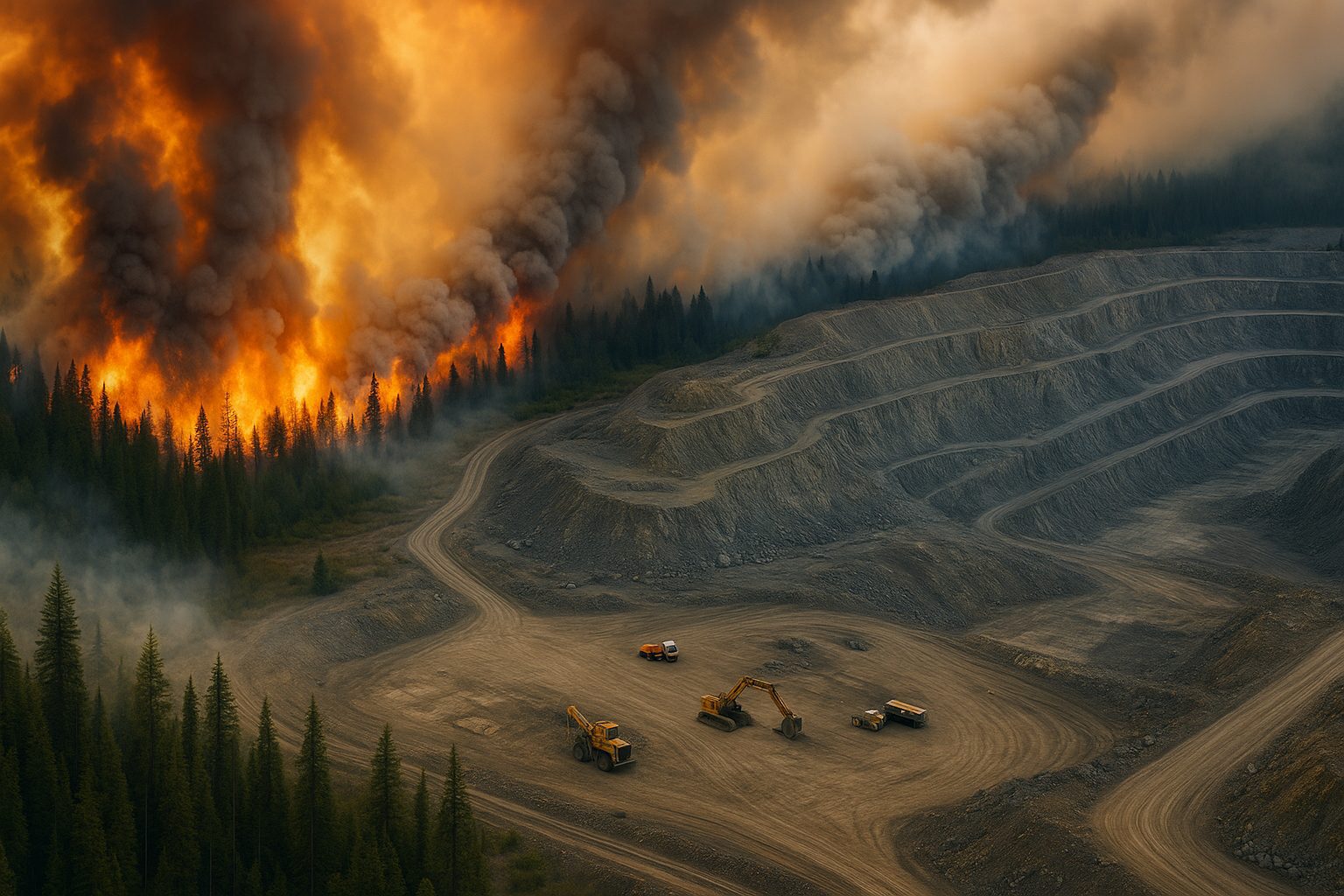
Canadian wildfires are disrupting mining operations across key regions this month, forcing companies like Hudbay Minerals to suspend activities and prioritize staff safety.
On June 5, 2025, Hudbay Minerals confirmed that while its facilities remain structurally secure, it has halted operations due to worsening wildfire conditions. The company has enacted its emergency response plan, which includes the evacuation of all non-essential personnel from affected sites.
“Our first priority is always the safety of our people,” the company said in a public statement. “While there is no immediate threat to our facilities, mining operations will remain suspended until conditions improve.”
Related News
- China’s Rare Earth Elements Curtail U.S. Trade Negotiations Amid Rising Supply Chain Fears
- Ukraine–US Mineral Resources Agreement Sparks Major Rare-Earth and Energy Investments
- U.S.-Led Peace Talks Could Unleash Rwandan Processing of Congo’s Critical Minerals
- Rare Earth Supply Chain Splinters as U.S. and Brazil Ramp Up Processing Capacity
Canadian Wildfires Spread Across Mining Regions
Canadian wildfires this season are among the most severe on record, particularly impacting provinces such as Manitoba, Saskatchewan, Alberta, and British Columbia—home to a significant portion of Canada’s mining sector. According to Natural Resources Canada, thousands of hectares of forestland have already burned, with fires advancing toward industrial zones.
Mining operations across Canada are being affected not only by the physical threat of wildfires but also by smoke hazards, road closures, and disrupted power supplies. Industry experts warn that prolonged disruptions could impact production schedules and supply chains.
Industry-Wide Precautions and Response
The broader mining industry is responding swiftly. The Mining Association of Canada has urged members to review and implement emergency protocols, including air quality monitoring, evacuation drills, and communication strategies with local authorities.
Several mining companies, including Hudbay Minerals, have also established crisis coordination teams and are in close contact with regional fire authorities. This collaborative approach is helping firms stay ahead of fast-changing fire conditions.
Supply Chain Risks Grow
Canadian wildfires threaten not only individual mining operations but also the broader commodity supply chain. Industry analysts caution that continued disruptions could lead to production delays in critical minerals such as copper, nickel, and zinc—all of which are central to Canada’s mining economy and global supply chains.
“This is a dynamic situation,” said a representative from the Mining Association of Canada. “With the Canadian wildfires affecting mining operations in multiple provinces, companies must remain agile and prepared for extended interruptions.”
Outlook for Recovery
The outlook remains uncertain. Meteorologists at Government of Canada Wildfire Information forecast dry conditions to persist into mid-June, raising the likelihood of continued fire activity.
For now, mining companies are balancing safety with business continuity as the Canadian wildfires continue to disrupt mining operations across the country. Industry leaders will be watching weather patterns closely in the weeks ahead.