Key Takeaways
- Gold has surged over 30% since November, nearing record highs amid debate about gold as a critical mineral.
- Central banks expect record purchases and repatriation of gold reserves.
- Mining stocks are outperforming the metal itself as investors see sustained demand.
- Reclassification of gold as a critical mineral reflects broader fears over U.S. financial stability.
- The shift underscores the metal’s evolving role as a strategic asset.
Gold as a Critical Mineral Is No Longer a Fringe Idea
Gold as a critical mineral is no longer a fringe idea. A blistering rally has lifted the metal close to all-time highs, prompting governments and investors to reconsider whether gold deserves formal recognition as a strategic asset. The price has climbed 32% since November, when Donald Trump’s return to the White House ignited concerns over the durability of U.S. institutions and the safety of Treasury securities.
At stake is whether gold, long regarded as a hedge, should be classified as a critical mineral essential to economic security. The idea, once considered fringe, is gaining traction as policymakers grapple with the erosion of confidence in the U.S. dollar.
Gold Price vs. Major Miners (Nov 2024 – June 2025)
| Asset | % Change |
|---|---|
| Gold Spot Price | +32% |
| Newmont Corporation | +63% |
| AngloGold Ashanti | +108% |
| Barrick Gold | +40% |
A Strategic Reserve in Waiting
The World Gold Council reported last month that 95% of central banks surveyed plan to increase their official holdings over the next year—the highest share since the organization began tracking expectations. Many governments are also repatriating bullion from vaults in New York, signaling a determination to control reserves more directly.
“Central banks are essentially hedging against the end of U.S. exceptionalism,” said Mark Bristow, chief executive of Barrick Gold. “If you think the dollar can’t be weaponized or devalued, recent history tells you otherwise.”
These moves highlight a growing conviction that gold’s utility transcends its historical role as an inflation hedge. As sovereign debt piles up and political polarization deepens, the case for gold as a critical mineral is becoming harder to dismiss.
Miners Outrun the Metal
Gold’s ascent has invigorated mining shares, which have outperformed the commodity itself. Newmont, the world’s largest listed producer, has gained 63% since December. AngloGold Ashanti has more than doubled, reflecting expectations that tight supply and resurgent demand will lift profits for years.
Investors are rewarding companies that avoided costly expansion during the last bull market. As permitting hurdles mount and exploration spending remains subdued, analysts see little prospect of a meaningful increase in global output.
“Supply growth is constrained almost everywhere,” said Emily Stone, a metals analyst at BMO Capital Markets. “If gold becomes a more strategic asset, miners stand to benefit disproportionately.”
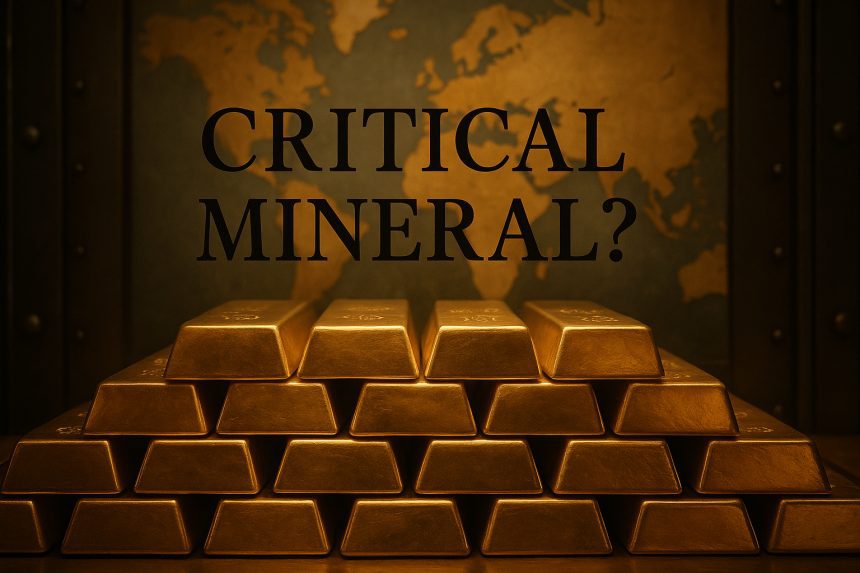
Gold as Critical Mineral?
Whether gold deserves critical status is far from settled. Unlike lithium, copper, or rare earths, gold is not a direct input into renewable energy technologies or advanced manufacturing. Skeptics warn that conflating financial hedges with strategic resources risks politicizing portfolio management.
But supporters argue that the definition of criticality must evolve. “We tend to think of critical minerals only in industrial terms,” said Alexandra Hudson, a senior fellow at the Centre for Strategic Resources. “But safeguarding financial stability is equally important to national security.”
Supporters say that gold as a critical mineral reflects its strategic role in protecting financial systems during prolonged crises.
An Era of Reappraisal
Even amid daily swings driven by economic headlines, gold’s underlying trajectory points to a deeper shift. As central banks diversify away from Treasuries and investors question the dollar’s resilience, the case for gold as a critical mineral is no longer academic. In a world where confidence can evaporate overnight, the metal once dismissed as a relic is staging a formidable comeback.