- Japan will test seabed mud extraction for rare earths in early 2026.
- The project aims to secure strategic minerals vital for EVs and defense.
- Surveys confirm significant deposits near Minamitori Island.
- The initiative reflects a global race to control critical mineral supply chains.
Japan seabed mining rare earths operations are rapidly gaining momentum as the country prepares to recover mineral-rich mud from the ocean floor near Minamitori Island. Officials have called this effort the world’s first attempt to extract rare earth elements from deep-sea mud for industrial use.
Located nearly 2,000 kilometers southeast of Tokyo, Minamitori Island is a remote outpost better known for typhoons than technology. Yet surveys have confirmed the area contains vast deposits of dysprosium, neodymium, gadolinium, and terbium—materials essential for electric vehicle motors, wind turbines, and advanced electronics.
Shoichi Ishii, program director at Japan’s national platform for innovative ocean development, emphasized the strategic urgency: “The goal is to secure a domestic supply to enhance national security, rather than to enable private companies to profit from selling rare earths.”
| Mineral | Strategic Use | Primary Global Suppliers |
|---|---|---|
| Dysprosium | Electric vehicle motors | China |
| Neodymium | Wind turbines, electronics | China |
| Gadolinium | MRI machines, high-tech alloys | China |
| Terbium | LEDs, fuel cells | China |
Strategic Mineral Supply for National Security
The Japan seabed mining rare earths initiative reflects growing concern over China’s near-total dominance of the global supply. In 2010, a diplomatic clash led Beijing to restrict exports, causing prices to spike and exposing vulnerabilities in Japan’s supply chains. By launching test mining in 2026, Tokyo aims to build a domestic buffer against future disruptions.
Technical Innovation at Extreme Depths
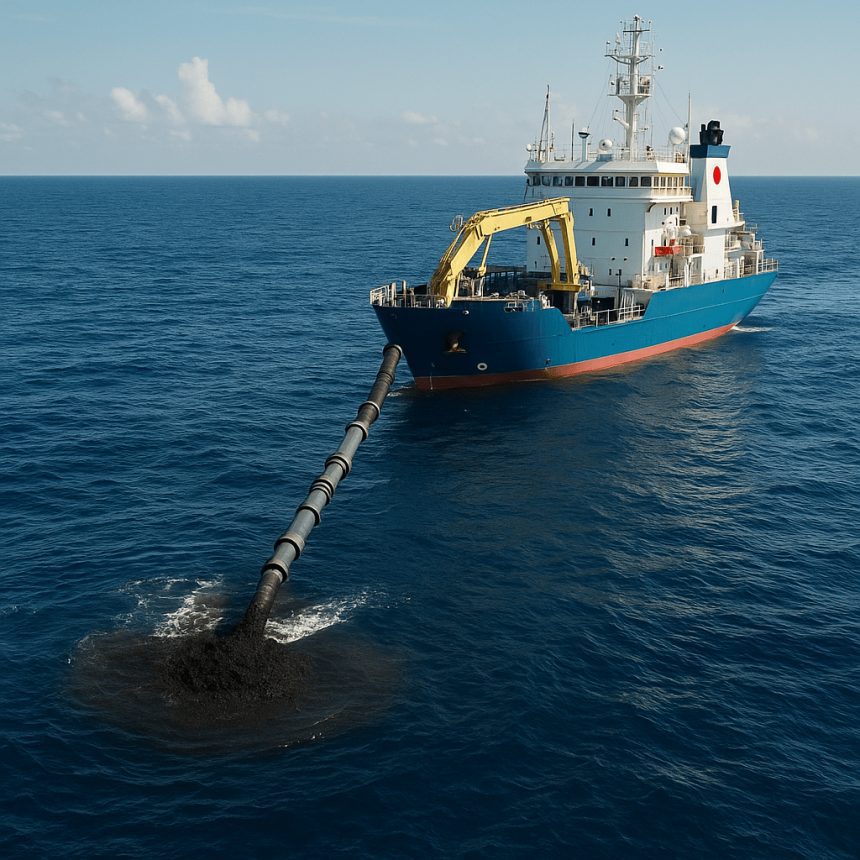
The Japan Agency for Marine-Earth Science and Technology plans to deploy a deep-sea exploration vessel equipped with industrial-scale pipes to collect mud from depths of 5 to 6 kilometers. If successful, trial operations could begin by early 2027, processing 350 metric tonnes of sediment per day.
Environmental Risks of Seabed Mining
While proponents argue that Japan seabed mining rare earths projects are essential, marine biologists warn of potentially irreversible harm. Yuko Inoue, a researcher at the University of Tokyo, cautioned: “These are some of the least understood habitats on Earth. Once disturbed, the biodiversity loss could be permanent.”
Global Race for Critical Minerals
Japan is not alone in pursuing rare earth independence. The United States has announced measures to expedite offshore mineral exploration. The European Union recently approved its Critical Raw Materials Act to secure supply chains across the bloc. These moves highlight a worldwide scramble to control strategic materials needed for the energy transition.
Hiroshi Matsuda, an energy security analyst, summed it up: “Any interruption of supply, whether geopolitical or economic, could have immediate consequences for manufacturing.”
The Future of Minamitori Island
Once a strategic military outpost, Minamitori Island is poised to become the epicenter of Japan’s critical minerals strategy. The Japan seabed mining rare earths project could transform the nation’s industrial future, but it also raises hard questions about environmental stewardship in the deep ocean.
As Japan prepares to lower extraction pipes and test the limits of seabed mining, the outcome will likely shape not only domestic supply chains but also the global debate over how far nations should go to secure essential resources.