Key Takeaways
- Pentagon rare earths deal includes equity stake in MP Materials and price floor for key elements.
- Australian miners Lynas and Iluka rallied 20% and 27% respectively, leading ASX gains.
- China’s export restrictions intensified global scramble for magnet supply independence.
- U.S. government intervention repositions rare earth pricing and investment dynamics.
- Long-term implications for critical mineral alliances with Australia.
SYDNEY — The Pentagon rare earths deal with MP Materials sent shockwaves through global critical minerals markets Friday, igniting a powerful rally in Australian rare earth mining stocks and marking a turning point in U.S. industrial strategy.
The agreement gives the U.S. Department of Defense an equity stake in MP Materials and guarantees a minimum price of $110 per kilogram for key magnet elements—more than double current Chinese market levels. That bold move triggered a revaluation across the sector, especially in Australia, where producers are closely tied to U.S. supply ambitions.
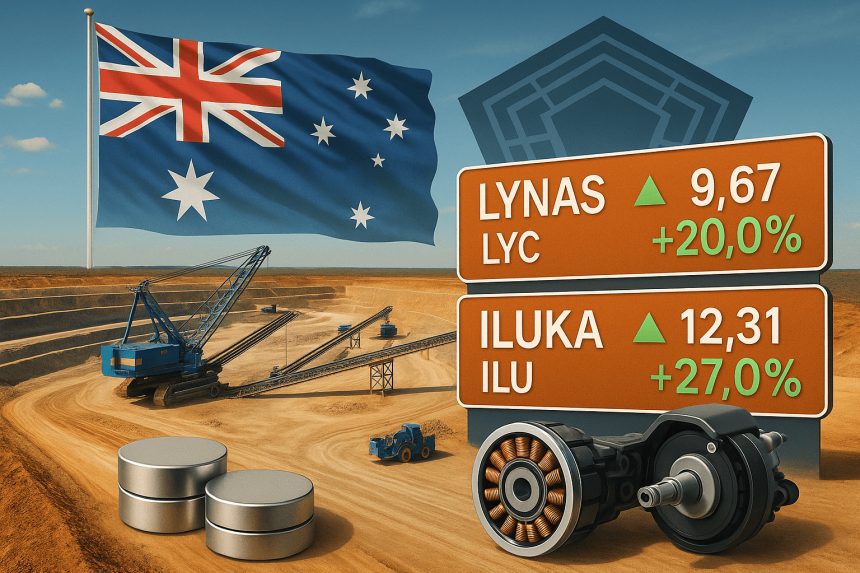
Shares of Lynas Rare Earths surged 20% to A$9.67, its highest in nearly two years, while Iluka Resources soared 27%, its largest one-day gain on record. Both companies topped the ASX 200 index Friday, underscoring their role in Washington’s strategic push to diversify rare earth sources.
Strategic Imperative: Reducing China’s Grip
The Pentagon rare earths deal comes at a moment of growing urgency. Last month, China slashed rare earth magnet exports by 75%, roiling automakers and electronics producers. With Beijing controlling over 80% of the world’s rare earth refining capacity, Western governments are now actively reshaping market structures.
“This signals a strong U.S. push for rare earth magnet independence,” Jefferies said in a note to clients, calling Lynas “the next logical beneficiary of government market support.” The brokerage upgraded Lynas from “underperform” to “buy” and raised its price target from A$6.40 to A$10 per share.
U.S. Plays Market Maker
MP Materials, which operates the Mountain Pass mine in California, now benefits from a price floor that reshapes the economics of global rare earths. The Pentagon rare earths deal effectively underwrites producers aligned with Western interests—offering earnings visibility and derisking future expansion.
“This is a structural shift, not a temporary subsidy,” said a Perth-based mining banker. “It gives investors pricing clarity and justifies long-term capex.”
Australia’s Role in a New Supply Chain
Australia stands out as a prime beneficiary. Lynas already supplies to U.S. defense contractors and is building a processing plant in Texas with Pentagon funding. Iluka is constructing a refinery in Western Australia, poised to support any joint U.S.-Australia critical minerals framework.
The Pentagon rare earths deal cements Australia’s relevance in the reshaped supply landscape.
Execution Risks and Market Realities
Despite bullish sentiment, obstacles remain. Rare earth processing requires high capex, niche expertise, and careful environmental oversight. While Washington’s involvement adds momentum, execution timelines could lag.
Still, the consensus is shifting. With the Pentagon rare earths deal setting a global precedent, producers outside China are entering a new era of pricing power and geopolitical relevance.