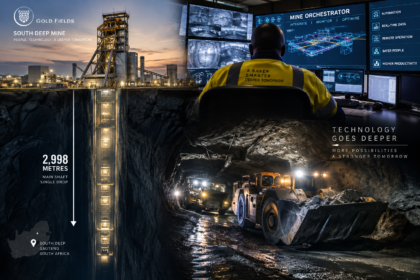
Underground mines have always had one silent enemy: air. Moving it, cooling it, cleaning it. Ventilation is often the single biggest electricity bill a mine pays — sometimes a third of the total. And every time a diesel loader fires up, it dumps hot exhaust and particulates into headings that were already choking.
For years, miners grumbled but carried on. Sandvik and Epiroc rolled out electric machines, but they were either too big, too experimental, or came with the risk of betting on a vendor without Caterpillar’s support muscle.
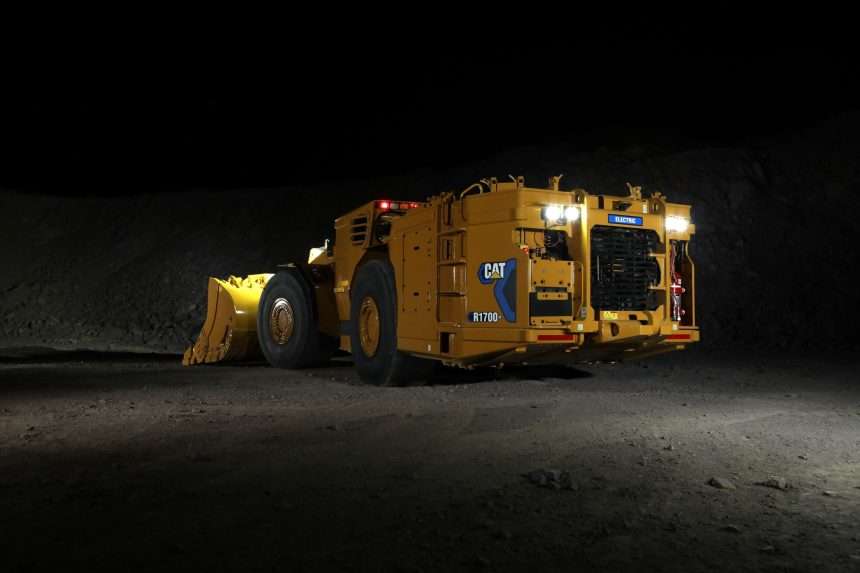
That’s why Caterpillar’s R1700 XE — a 15-tonne battery loader — matters. It isn’t just another machine launch. It’s Caterpillar plugging a very real gap in the mid-tier class where most underground mines actually operate.
Cutting the Cost of Air
The R1700 XE doesn’t guzzle diesel. It doesn’t throw off the same heat. And because of that, mines can cut ventilation loads by 15–20%. On paper, that’s just a percentage. In practice, it’s millions of dollars a year.
Executives looking at OPEX see a direct line item drop. Engineers see less strain on fans. Operators notice they can work without being blasted by hot, dirty airflow.
This is not a “greenwashing” win. It’s a bottom-line one.
Regulatory and Investor Pressures
Mines in Canada, Scandinavia, and Australia are already being told: no new diesel underground. Full stop. At the same time, ESG-driven investors are pushing for Paris-aligned operations, and lenders are quietly rewarding projects that can show real emissions cuts.
Caterpillar played smart. They didn’t just build an electric loader; they tied it into a recycling loop with Redwood Materials, promising that lithium, cobalt, and nickel from end-of-life packs won’t just vanish into a landfill. Whether that recycling loop scales is still open for debate — but it gives boards and ESG officers a neat slide for investor decks.
Where It Stands Against Rivals
Sandvik’s LH518B offers a bigger 18-tonne capacity and an automated battery swap. Epiroc’s ST14 Battery is lighter at 14 tonnes, popular in Scandinavia. Komatsu, through Artisan, has the Z40, another 18-tonne battery unit.
Caterpillar chose the middle ground — a 15-tonne loader, the size class that carries most underground mines worldwide. And unlike its rivals, Cat has the dealer network to support a fleet in Sudbury, Kalgoorlie, or Rajasthan without a six-month parts delay.
That’s the edge.
The Hard Questions Miners Will Ask
- Runtime: Does the 213 kWh battery really last a full shift under heavy mucking?
- Swapping vs Charging: Can a mine afford the downtime for swaps, or does Cat’s fast-charge MEC500 actually keep up?
- Battery Life: What happens when a pack needs replacing at year 6 or 7? At US$500k+, does the OPEX math still work?
- Tire Wear: Instant torque has been chewing through rubber faster in early deployments. Can software torque limits fix it?
Caterpillar has answers for some of these. Others will only be proven after thousands of underground hours.
Skillings Analysis
The R1700 XE isn’t about being first. Sandvik and Epiroc were already there. What Caterpillar did was more subtle: they picked the payload slot where the most mines sit, layered in a ventilation-savings narrative, and leaned on their global parts and service arm.
For miners, that means the XE is less a gamble and more a calculated step — a loader that pays its way in reduced air costs and ESG compliance.
For Caterpillar, it’s survival. Without a credible battery machine in the mid-tier, they risked losing underground market share to European rivals. With the XE, they’ve reminded the industry: they may not be first, but they don’t intend to be last.