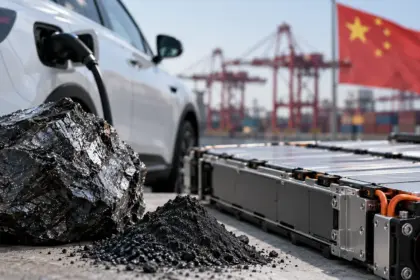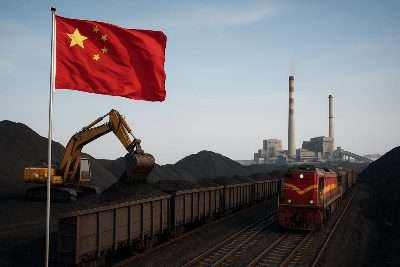
BEIJING, Aug 28 – China, the world’s largest coal consumer and producer, has moved to cap coal production after a supply surge in the first half of 2025 triggered a sharp decline in domestic prices. The policy, revealed by officials at state-owned China Coal Energy and confirmed by market analysts, marks a significant intervention in a sector already under pressure from decarbonization targets and volatile global demand.
Oversupply Triggers Policy Shift
China’s coal output climbed more than 5% year-on-year in the first six months of 2025, according to official statistics. By June, prices in certain regions had fallen nearly 30% compared with a year earlier, eroding profitability for both state-owned and private operators.
But July brought a sharp reversal: national production dropped to its lowest level in over a year as regulators ordered tighter inspections and enforced strict adherence to approved capacity levels.
“The increase in supply has exceeded expectations and that has led to prices falling,” a senior official from China Coal Energy, the country’s third-largest coal miner, told analysts this week. “So we have seen regulations regarding production and limitations on production imposed.”
Shanxi Output Cuts Hit Market Balance
The deepest cuts have been concentrated in Shanxi, China’s top coal-producing province. According to Shanghai-based consultancy Mysteel, 54 coking coal mines in the province, representing 61.1 million metric tons of annual capacity, have either suspended or curtailed production.
Mysteel linked the clampdown to Beijing’s so-called “anti-involution” campaign, a government effort to reduce unsustainable industrial competition and tackle overcapacity. The term has become a political shorthand in China for addressing excessive, self-defeating growth that undermines margins and safety.
The closures have already affected steelmakers’ procurement schedules, with spot coking coal prices stabilizing in late August after months of declines.
Safety, Stability and Politics in Play
Analysts warn that prolonged price weakness can lead to under-investment in mine upgrades, increasing the risk of accidents. “When prices fall below cost level, mines cut back on investments and upgrades, leading to safety concerns,” Galaxy Futures wrote in a client note.
Political timing is also a factor. Industry insiders told Reuters that regulators were keen to minimize the risk of major accidents ahead of the September 3 military parade in Beijing commemorating the end of World War Two. Mysteel reported that the Wanbolin mine in Taiyuan, with capacity of 5 million tons a year, was shut this week for safety reasons.
The National Development and Reform Commission (NDRC) and the National Energy Administration have not publicly commented on the policy tightening.
Implications for Global Coal and Steel Markets
China’s production cuts come at a time when seaborne coal demand in Asia remains firm, with India and Southeast Asia increasing imports. If sustained, Beijing’s restrictions could tighten the global coking coal balance and provide price support for exporters in Australia, Indonesia, and Mongolia.
For domestic steelmakers, however, the policy poses a delicate balance: stabilizing raw material costs while ensuring supply continuity for blast furnaces. China’s steel production, already under scrutiny for its carbon footprint, could face renewed margin pressure if coking coal prices rebound too sharply.
Skillings Analysis
- Short-term stability, long-term uncertainty: Beijing’s output cap may stabilize prices in the near term, but it underscores the government’s willingness to intervene forcefully, adding policy risk for miners and investors.
- Steel margins under watch: Any rebound in coking coal prices will squeeze Chinese steel mills, already dealing with weak property sector demand.
- Global coal exporters stand to benefit: Reduced Chinese supply may offer a temporary boost to seaborne exporters, particularly Australia, but geopolitical trade frictions remain a wild card.
Looking Ahead
Market participants will closely monitor September’s production figures for signs of whether the curbs are temporary or part of a longer-term regulatory tightening. With winter heating demand and the Christmas steel export cycle approaching, both coal miners and steelmakers face a volatile outlook. For now, Beijing’s signal is clear: stability in coal prices takes precedence over unfettered output growth.
For further context, see Skillings’ coverage of China’s steel demand slowdown and coal price volatility in Asia. For official market data, visit NDRC’s energy policy releases.