Anglo American and Teck Resources unveiled plans for a $53 billion merger on Tuesday, a deal that would create Anglo Teck, the world’s fifth-largest copper producer and the second-biggest mining merger in history. Anglo shareholders will hold 62.4% of the combined entity, while Teck investors will retain 37.6%.
The new company will be headquartered in Canada, with a primary stock listing in London, signaling a transatlantic consolidation aimed squarely at positioning copper as the metal of the energy transition. The announcement sent shares in both companies surging—Anglo gained 9% in London trading, while Teck rallied 14% in Toronto.
A Strategic Copper Merger with Global Implications
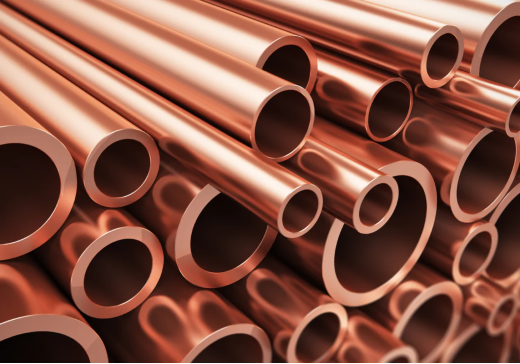
The Anglo–Teck tie-up comes at a time when copper has become one of the most sought-after industrial commodities. With demand expected to rise 30% by 2030, driven by electric vehicles, renewable power grids, and AI-related data centers, miners are aggressively securing scale. According to the International Copper Study Group (ICSG), refined copper demand reached nearly 26 million tonnes in 2023, with deficits projected over the next five years if new supply fails to materialize.
By combining operations, Anglo Teck immediately becomes a top-five copper producer with approximately 1.2 million tonnes of annual output. The new entity’s portfolio spans Chile, Peru, Canada, and Southern Africa—placing it in direct competition with Freeport-McMoRan, BHP, and Glencore.
Defensive Moves After Failed Takeover Bids
Both Anglo and Teck have spent the past two years fending off takeover attempts. Anglo rejected a £39 billion ($53 billion) bid from BHP in 2024, while Teck resisted Glencore’s $22.5 billion offer in 2023 before selling its steelmaking coal business to Glencore for $6.9 billion.
The merger’s zero-premium, all-share structure is designed to shore up defenses against further unsolicited bids. Anglo shareholders, however, will receive a $4.5 billion special dividend. Analysts at Berenberg noted that “interloper risk” remains, with Glencore and BHP still possible challengers.
Teck CEO Jonathan Price told Reuters: “We cannot speculate on that (bidding war). We are focused on securing approvals and delivering a stronger copper, iron ore, and zinc business.”
Operational and Financial Synergies
Anglo Teck expects annual synergies of $800 million within four years, citing overlapping assets and complementary cultures. The companies’ adjacent Chilean mines—Teck’s flagship Quebrada Blanca and Anglo’s stake in Collahuasi—will provide operational integration opportunities.
Anglo CEO Duncan Wanblad, who will lead the merged entity, said the deal represented a “true merger of equals” with a balanced board drawn from both companies. He highlighted that the combination would create “a stronger, more resilient financial platform with the flexibility to reallocate capital to the highest returning opportunities.”
Regulatory Challenges and Canadian Legacy
Regulatory approval could take 12–18 months, with scrutiny likely in Canada, Chile, and South Africa. However, the decision to establish Anglo Teck’s headquarters in Canada is viewed as a strategic concession to secure Ottawa’s support. Canadian regulators strongly opposed Glencore’s earlier approach for Teck, citing national interest concerns.
Teck’s powerful Keevil family, which controls a majority of A-class shares, has given irrevocable backing. Norman Keevil’s endorsement is widely seen as critical to smoothing the political and shareholder process.
Market Reaction and Shareholder Support
Institutional investors welcomed the merger. Adam Matthews of the Church of England Pensions Board, a long-term Anglo shareholder, said: “This consolidation makes sense and brings complementary cultures together. Both companies are ones we hold in high regard, and the industry will be stronger for this move.”
Skillings Analysis
- Copper Dominance: This deal solidifies copper’s centrality in mining’s next growth cycle. For miners and suppliers, it sets a benchmark for scale-driven competitiveness.
- Defensive Strategy: By merging, Anglo and Teck reduce their vulnerability to predatory bids from bigger rivals like BHP and Glencore.
- Execution Risk: Synergies of $800 million look credible but hinge on resolving Teck’s operational challenges at Quebrada Blanca, where tailings issues have hurt output.
Looking Ahead
If approved, Anglo Teck will reshape the copper supply landscape just as the market braces for tightening supply into 2026. The merged entity is betting that the red metal’s demand curve—from EVs to AI data centers—will continue its upward trajectory, sustaining prices above $8,000 per tonne.
With Glencore and BHP circling and governments eager to secure critical minerals, the next 18 months could see further shocks. For now, Anglo Teck represents mining’s boldest wager on copper’s electrified future.