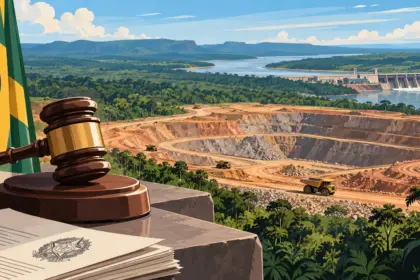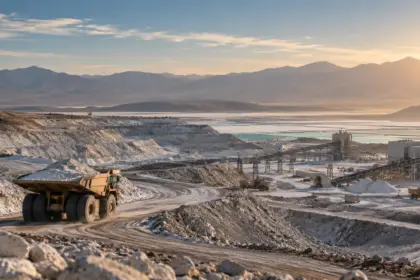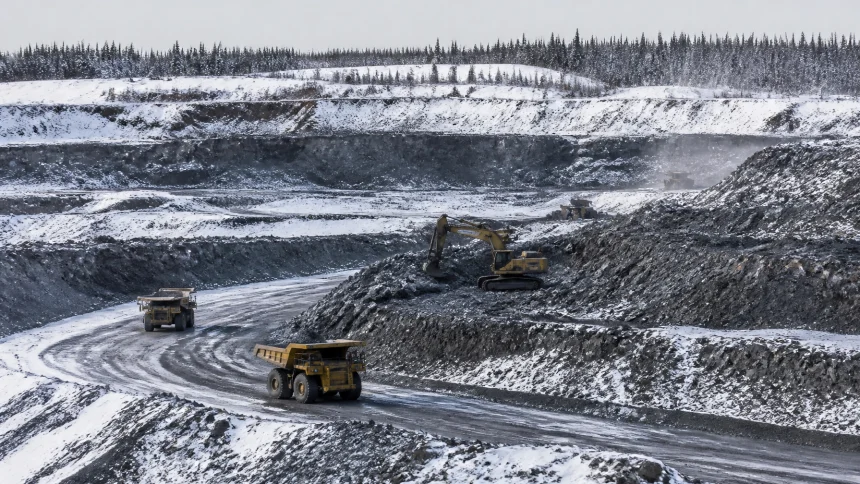
In the global race for critical minerals, the ability to move a project from a feasibility study to a “shovel-ready” state is often the most significant hurdle for junior developers. For Generation Mining (TSX: GENM), the Marathon Copper-Palladium Project in northwestern Ontario has become a case study in sophisticated project financing. With a capital expenditure (CAPEX) requirement nearing C$1 billion, the company has successfully assembled a multi-layered funding stack that leverages government support, precious metal streaming, and traditional senior debt.
As the industry looks toward a potential construction start in the second half of 2026, the Marathon project stands out as one of the few fully permitted, large-scale critical minerals projects in North America. This deep-dive analysis examines the financial architecture supporting the project, the underlying asset economics, and what the current project valuation P/NAV tells us about the market’s appetite for new copper and palladium supply.
The Marathon Project: A Strategic Asset in Ontario
The Marathon project is located just outside the town of Marathon, Ontario, a region with a deep-rooted mining history. Unlike many Greenfield projects that face years of permitting delays, Generation Mining has secured the necessary federal and provincial approvals, positioning it at the front of the queue for the next wave of North American metal production.
The 2025 Feasibility Study (FS) outlines an open-pit operation with a 13-year mine life. The project is expected to produce approximately 2.16 million ounces of palladium and 532 million pounds of copper over its duration. Notably, the revenue mix is almost evenly split between the two metals at long-term consensus prices, providing a natural hedge against volatility in either the automotive catalyst market (palladium) or the energy transition sector (copper).

Breaking Down the C$1 Billion Funding Stack
Securing nearly C$1 billion in a high-interest-rate environment requires more than just a solid deposit; it requires a strategic combination of capital sources. Generation Mining’s financing blueprint is built on four primary pillars:
1. Senior Project Debt
In June 2026, the company received credit approvals for a US$310 million (~C$420 million) senior secured loan facility. The lending syndicate includes Export Development Canada (EDC), ING Capital, and Société Générale. This participation from top-tier international banks and a crown corporation signals strong institutional confidence in the project’s technical viability and strategic importance to the Canadian supply chain.
2. Canada Infrastructure Bank (CIB) Support
The Canada Infrastructure Bank has committed C$200 million to the project. This is structured as C$110 million in subordinated debt for development and construction, plus a C$90 million standby facility specifically designed to cover potential construction cost overruns. This “buffer” is a critical component for de-risking the project for other lenders and shareholders.
3. Precious Metal Streaming
A US$240 million (~C$200M+) “metals agreement” with Wheaton Precious Metals provides a significant portion of the upfront capital. Under this arrangement, Wheaton will receive a percentage of the gold and platinum produced from the mine in exchange for the advance payment. This type of non-dilutive financing is a hallmark of successful junior-to-mid-tier transitions, as it reduces the need for massive equity raises at the project level.
4. Equipment Leasing and First Nation Equity
Rounding out the stack is approximately C$145 million in equipment leasing arrangements. Furthermore, the project has seen active participation from the Biigtigong Nishnaabeg First Nation, who recently subscribed for equity units. This partnership is not just a social license requirement but a financial integration that aligns the interests of the local community with the project’s success.
Financing Summary Table
| Funding Source | Estimated Amount (C$) | Status (as of Mid-2026) |
|---|---|---|
| Senior Secured Debt (EDC, ING, SocGen) | ~C$420 Million | Credit Approved |
| Canada Infrastructure Bank (CIB) | C$200 Million | Committed |
| Wheaton Precious Metals Stream | ~C$200+ Million | Partially Advanced |
| Equipment Leasing | ~C$145 Million | Arranged |
| Total Assembled Support | ~C$965 Million | 97% of Initial CAPEX |
Project Valuation and the P/NAV Framework
For investors, the critical metric to watch is the project valuation P/NAV (Price to Net Asset Value). The 2025 FS calculated an after-tax Net Asset Value (NPV) at a 6% discount rate of C$1.07 billion, with an Internal Rate of Return (IRR) of 28%.
Historically, single-asset developers like Generation Mining trade at a significant discount to their NPV during the permitting and financing phases: often between 0.2x and 0.5x P/NAV. As the company moves toward a Final Investment Decision (FID) and breaks ground, the market typically “re-rates” the stock toward a 0.7x to 1.0x P/NAV multiple.
The current financing package essentially covers the initial CAPEX of C$992 million. When a project is fully funded, the primary remaining risks move from “financial” to “execution.” This transition is a known catalyst for value realization. Investors should monitor how the company manages its project valuation P/NAV as construction de-risks the asset.

Operational Outlook: The Road to 2026
With the financing largely in place, the focus shifts to execution. Generation Mining has awarded the Engineering, Procurement, and Construction Management (EPCM) contract to Ausenco, a firm with a track record of delivering large-scale mineral processing plants on schedule.
The timeline for 2026 is tight but structured. Early works and detailed engineering are advancing in parallel with the final documentation of the debt facilities. The company targets the start of full field execution (construction) by Q3 or Q4 of 2026. This timeline aligns with broader market trends where copper demand is expected to tighten further due to the expansion of AI data centers and renewable energy infrastructure.

Risks and Sensitivity Analysis
While the $1B blueprint is robust, it is not without risks. The primary concerns for the Marathon project remain:
- Cost Inflation: Although the CIB standby facility provides a $90 million cushion, sustained inflation in labor or materials could still pressure the C$992 million CAPEX estimate.
- Metal Price Volatility: The project is sensitive to both copper and palladium prices. While the 28% IRR is based on conservative 3-year trailing averages, a prolonged slump in the automotive sector could impact the palladium revenue stream.
- Execution Risk: Moving from a “paper mine” to a “physical mine” involves logistical challenges, particularly in the rugged terrain of northwestern Ontario.
Conclusion: A Model for Critical Minerals Development
The Marathon project represents more than just a new mine; it is a model for how Canadian juniors can navigate the complex capital requirements of modern mining. By combining government mandates for critical minerals with traditional banking and creative streaming, Generation Mining has created a viable path for Ontario’s next powerhouse.
As construction begins in 2026, the industry will be watching closely. If Generation Mining can deliver Marathon on time and on budget, it will provide a significant boost to North America’s domestic supply of the metals essential for both traditional industry and the green transition.