As the global mining sector enters the second half of 2026, the intersection of industrial policy, the energy transition, and structural supply deficits has created a high-stakes environment for major producers. The “July pivot” is a recognized phenomenon in mining finance, where mid-year operational updates and updated trade policies often reshape the competitive landscape for the remainder of the fiscal year.
This July 1, 2026, the focus is squarely on the culmination of major capital projects and the impact of the U.S. Section 232 copper investigation. From the iron ore mountains of Guinea to the uranium shafts of Saskatchewan, specific companies are approaching critical production milestones.
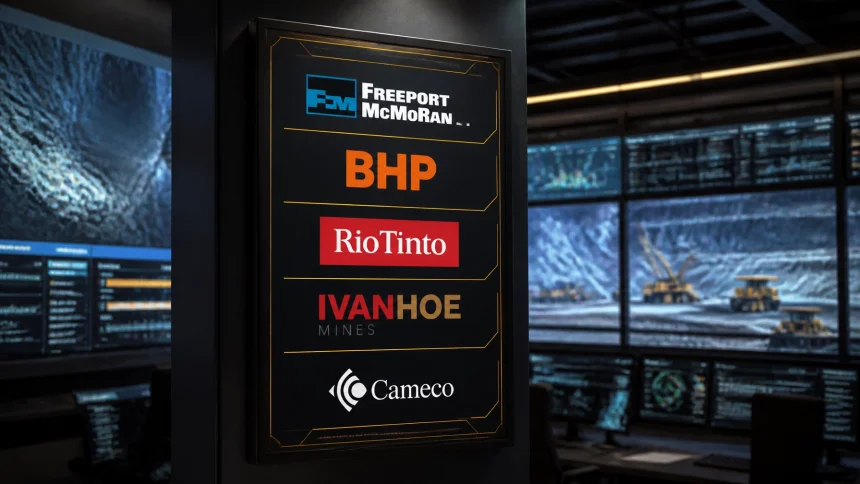
Here are the top five mining tickers to watch for July 2026, based on project catalysts, regulatory shifts, and fundamental supply-demand dynamics.
1. Freeport-McMoRan (NYSE: FCX)
Freeport-McMoRan remains the primary bellwether for the global copper market. For July 2026, the company faces a dual catalyst: the resolution of long-standing supply disruptions at its flagship Grasberg mine in Indonesia and the immediate fallout from the U.S. Commerce Secretary’s Section 232 report on copper imports.

Following a series of operational challenges in late 2025 and early 2026, including mudslides that hindered throughput, Freeport is expected to provide a definitive recovery update in its July operational report. Analysts are looking for confirmation that Grasberg is back to full nameplate capacity, which is essential to meet the 2026 demand spike driven by AI data center infrastructure.
Furthermore, as a major domestic producer in the United States, Freeport stands to benefit or suffer from the implementation details of potential copper tariffs or quotas. If the U.S. moves to protect domestic smelting and extraction, Freeport’s Arizona and New Mexico assets could see a margin expansion, even as global trade flows reroute.
2. BHP Group (NYSE: BHP)
BHP’s 2026 narrative is defined by its transition away from traditional bulk commodities toward “future-facing” minerals. The primary catalyst for July is the final commissioning phase of the Jansen Potash project in Canada.

Jansen represents one of the largest greenfield mining projects in the world. As the project nears its 2026 commercial production window, July marks a critical period for equipment testing and logistical ramp-up. Any updates on the project’s timeline or capital expenditure will be scrutinized by investors looking for signs that BHP can disrupt the established potash oligopoly.
BHP also remains a central figure in the copper M&A landscape. After the high-profile strategic pivots of 2024 and 2025, the market is watching for a potential renewed bid for tier-1 copper assets. The company’s ability to unlock “invisible” copper through technology, similar to its peers, remains a key driver of its 2.7 million tonne growth strategy.
3. Rio Tinto (NYSE: RIO)
July 2026 is widely expected to be the “Simandou Month.” After decades of delays and legal disputes, Rio Tinto’s Simandou iron ore project in Guinea: one of the highest-grade undeveloped iron ore deposits in the world: is slated for its first major shipments.

The arrival of Simandou ore on the global market is a structural catalyst that could shift the cost curve for the entire iron ore industry. For Rio Tinto, this project is essential to maintaining its dominance against Brazilian and Australian competitors. Investors will be monitoring the Guinean port of Morebaya throughout July for the first cape-size vessels carrying Simandou’s high-grade ore. This development is not just an operational win but a geopolitical milestone, given the multi-billion dollar infrastructure investment shared between Rio Tinto, the Guinean government, and Chinese consortiums.
4. Ivanhoe Mines (TSX: IVN)
Ivanhoe Mines is currently operating the world’s fastest-growing copper complex: Kamoa-Kakula in the Democratic Republic of Congo. The July 2026 catalyst for Ivanhoe is the Phase 3 concentrator reaching steady-state production.

The Phase 3 expansion elevates Kamoa-Kakula into the ranks of the top three copper mines globally by production volume. More importantly, the July report is expected to show the first full month of production from the project’s new on-site 500,000 tonne-per-annum copper smelter. By processing ore locally, Ivanhoe significantly reduces transportation costs and carbon intensity, a move that aligns with the green copper premium increasingly sought by European and North American buyers.
5. Cameco (NYSE: CCJ)
In the uranium sector, July 2026 marks the beginning of the Q3 contracting cycle, a period where utilities often lock in long-term supply agreements. Cameco, as the world’s largest publicly traded uranium producer, is at the heart of this structural deficit.

The catalyst for CCJ this July is the intersection of record-low utility inventories and the accelerated rollout of Small Modular Reactors (SMRs). With uranium prices holding firm above $100/lb in recent forecasts, market participants are watching for Cameco to announce new, high-value long-term contracts. The company’s 2026 uranium price forecast highlights a “structural breakout” that could be triggered by any announcement of further supply constraints in Kazakhstan or Niger.
July 2026 Catalyst Summary
| Company | Ticker | Primary Commodity | July 2026 Catalyst |
|---|---|---|---|
| Freeport-McMoRan | FCX | Copper | Section 232 Report & Grasberg Recovery |
| BHP Group | BHP | Potash / Copper | Jansen Phase 1 Commissioning |
| Rio Tinto | RIO | Iron Ore | Simandou First Ore Shipments |
| Ivanhoe Mines | IVN | Copper | Phase 3 Smelter Steady-State |
| Cameco | CCJ | Uranium | Q3 Utility Contracting & SMR Demand |
Market Outlook
The performance of these “Power List” tickers will likely dictate the sentiment for the broader mining index throughout the summer. While macroeconomic factors like interest rates and the U.S. dollar continue to provide a backdrop of volatility, the catalysts for these five companies are largely operational and project-specific.
For operators and investors, July 1, 2026, represents the point where multi-year capital investments finally meet the reality of production. As the world continues to fragment into competing resource blocs, the ability of these majors to deliver on their 2026 milestones will be the defining theme of the decade.