Key Takeaways:
- Chile mining reform and copper investment 2025 center on cutting permit times by up to 70%.
- Digital SUPER platform enhances transparency and inter-agency coordination.
- Companies like Marimaca Copper and Fitzroy Minerals are positioned to gain.
- Chile boosts competitiveness in the global critical mineral supply chain.
In 2025, Chile mining reform and copper investment 2025 have converged in one of the most consequential policy overhauls in the mining sector. Chile’s newly passed Framework Law for Sectoral Authorizations (LMAS) slashes mine permitting times by 30–70%, a shift that investors and analysts see as a structural unlock for the global copper supply chain.
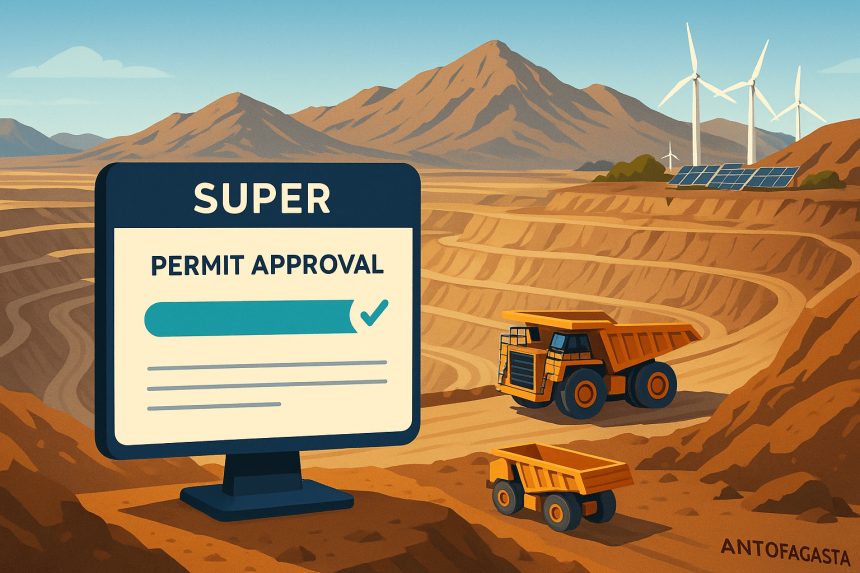
At the core of the Chile mining reform and copper investment 2025 strategy is SUPER, a centralized digital permitting platform designed to eliminate bureaucratic friction and provide real-time application tracking across multiple regulatory bodies.
“Streamlining permitting supports economic growth, provides greater clarity and efficiency for mining companies, and — most importantly — accelerates the supply of copper,” said Merlin Marr-Johnson, CEO of Fitzroy Minerals.
Faster Permitting Powers Copper Investment
Previously, Chile’s Environmental Assessment Service (SEA) took up to 36 months to approve mining projects. With Chile mining reform and copper investment 2025, that wait drops to as little as 8 months.
This change significantly improves project economics. Companies such as Marimaca Copper, ATEX Resources, and Camino Corp now see improved IRRs and reduced time-to-revenue across their portfolios.
Hot Chili Ltd., which secured “national priority” status for its Costa Fuego project, stands to benefit directly. “It adds further confidence to our final permitting process,” said CEO Christian Easterday.
Chile Mining Reform and Copper Investment 2025 Enable Strategic Expansion
Chile currently produces nearly 24% of global copper. With reforms accelerating project timelines, the country aims to grow its share to 27.3% by 2034. The northern Antofagasta region, home to vast undeveloped deposits, is expected to see rapid project deployment.
For ESG-aligned investors, Chile mining reform and copper investment 2025 offer transparency and accountability — key differentiators from jurisdictions with opaque or slower permitting systems.
“Chile is not just catching up. It’s leapfrogging,” said a Santiago-based advisor. “This reform raises the global bar.”
SUPER Platform Modernizes Permitting
A critical pillar of Chile mining reform and copper investment 2025 is the introduction of SUPER, a government-run digital portal consolidating more than 40 agency workflows. The system tracks each permit, flags delays, and offers real-time visibility for companies and investors.
Economy Minister Nicolás Grau noted, “We improved timelines without lowering regulatory standards — that’s what we’ve achieved.”
This approach enhances capital planning, reduces regulatory ambiguity, and aligns with international best practices.
Chile Mining Reform and Copper Investment 2025: Global Implications
With critical mineral supply chains under pressure, Chile mining reform and copper investment 2025 provide a model for other jurisdictions. Faster approvals, maintained ESG standards, and digital transparency combine to create a compelling case for copper-focused capital.
Companies such as Fitzroy Minerals and Mogotes Metals are well-placed to benefit, with streamlined timelines unlocking faster returns.