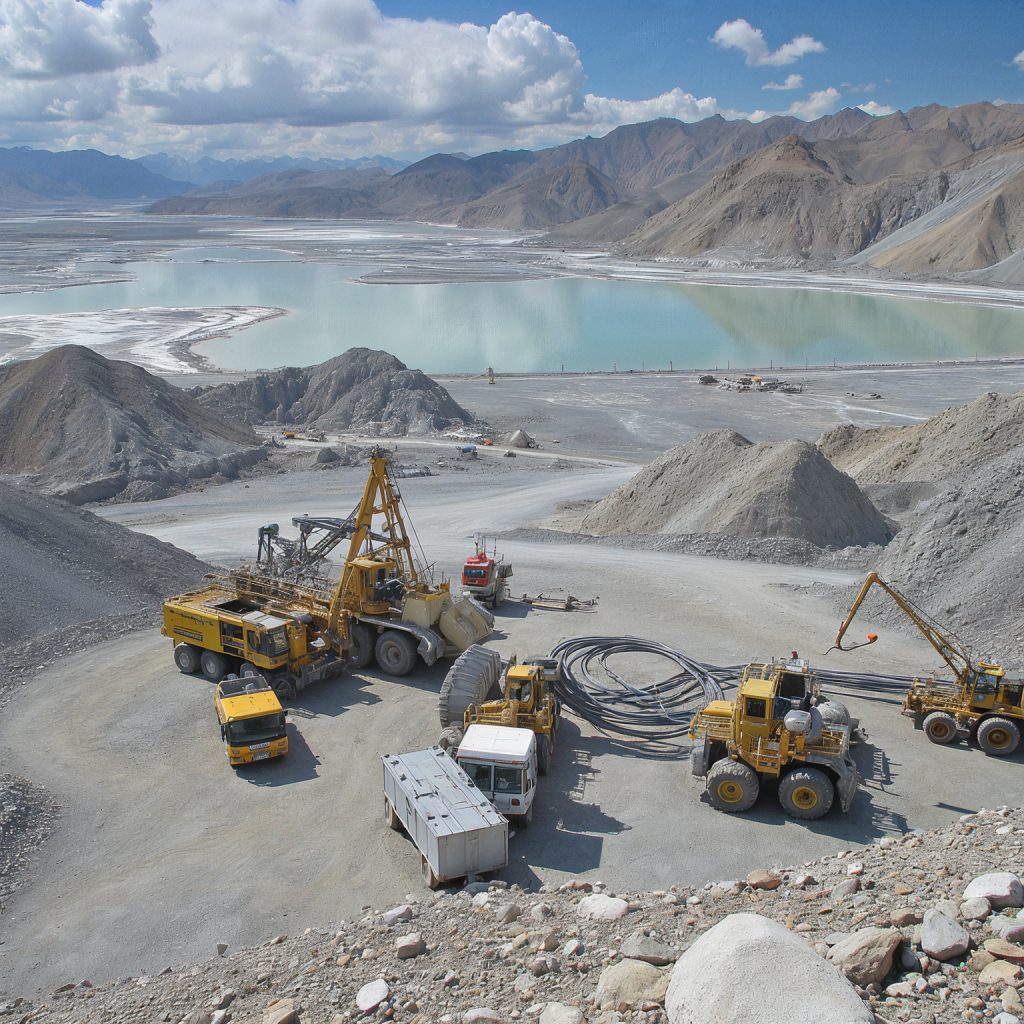
China has surged to become the world’s second-largest holder of China lithium reserves, now accounting for 16.5% of the global total, according to a report by state-run Xinhua News Agency. This significant leap—up from just 6%—further strengthens Beijing’s position in the rapidly expanding market for battery metals, vital for the global shift toward renewable energy and electric vehicles (EVs).
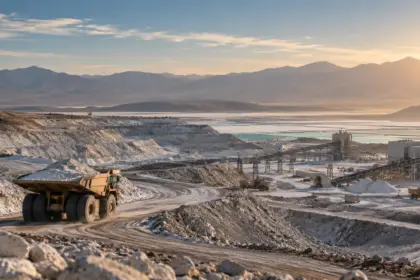
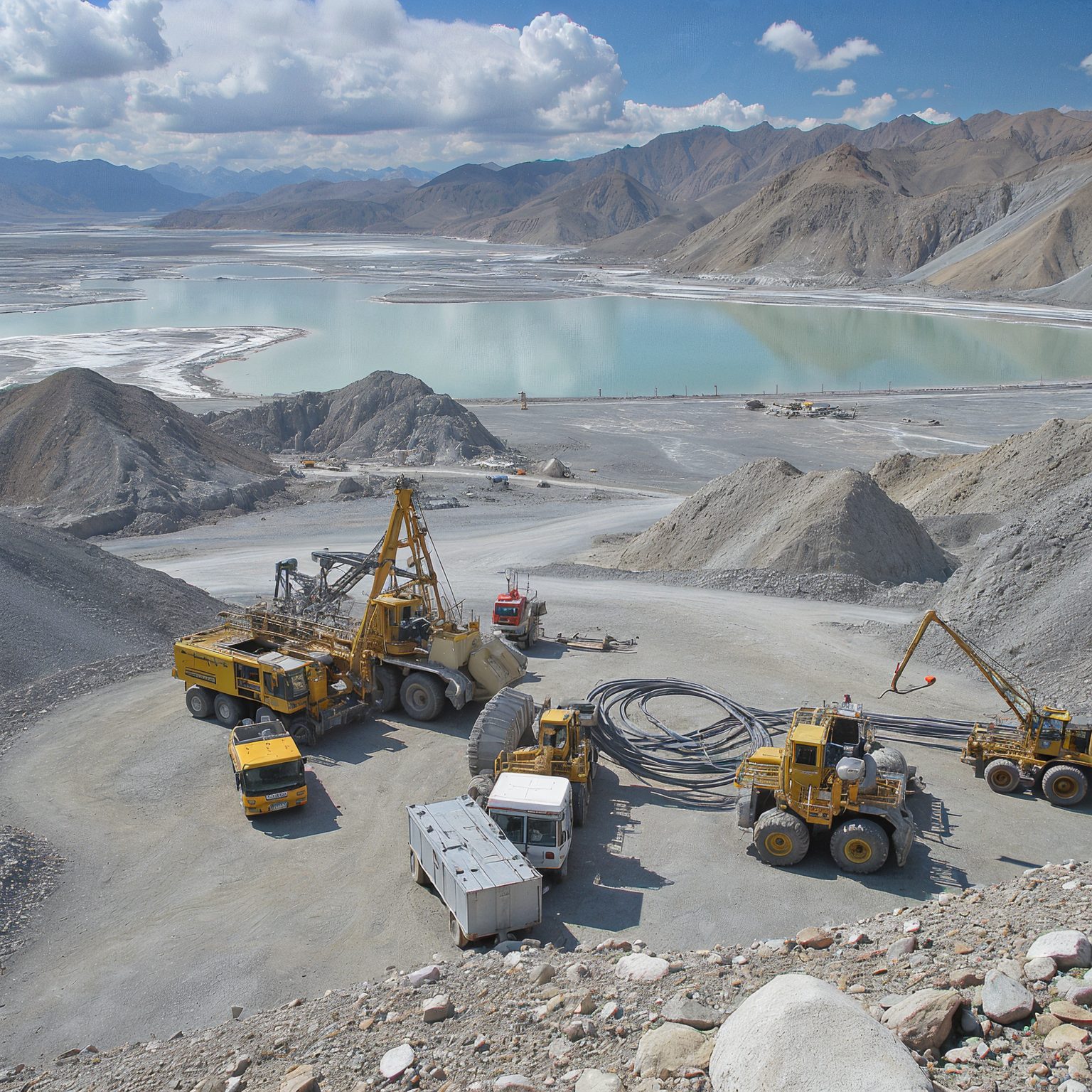
The discovery of major lithium deposits, including a sprawling spodumene mine in Tibet’s Xikunsong-Pan-Ganzi region and lithium-rich salt lakes on the Qinghai-Tibet Plateau, has fueled the rise in China lithium reserves.
Related News
- Nippon Steel U.S. Steel Deal: Blocked Bid Could Send U.S. Steel Prices Soaring in 2025
- NMDC Limited Gains Momentum Following Merger Proposal with KIOCL
- India Critical Minerals Fund: Strategic Push for Overseas Mining Ventures
- Gold Price Today Dips as Traders Eye Key U.S. Economic Data
Strategic Resource for a Transitioning World
Lithium plays a critical role in rechargeable batteries for electronics, EVs, and renewable energy storage. Its applications also extend to ceramics, glass, and pharmaceuticals, making it a cornerstone of the energy transition.
China’s newly discovered salt lakes have positioned it as the third-largest holder of salt lake resources globally, trailing only South America’s “lithium triangle” and reserves in the western United States. Salt lakes are a low-cost source of lithium extraction, giving China lithium reserves a competitive edge in production costs.
“China is strategically positioning itself to be a dominant force in the lithium supply chain, from mining to refining to manufacturing,” said Li Wei, an energy analyst with Beijing-based consultancy EnvironTech.
Domestic Push Amid Import Dependence
Despite its growing China lithium reserves, the nation remains the world’s largest consumer of lithium and relies heavily on imports to meet demand. Beijing has prioritized domestic exploration to reduce dependence on foreign sources, particularly from Australia and South America.
“China’s reliance on lithium imports has been a key vulnerability,” said Wu Jianhong, a researcher at the Chinese Academy of Sciences. “These new discoveries will not only secure supply but also enhance its bargaining power on the global stage.”
The push for domestic exploration aligns with Beijing’s broader goals to achieve carbon neutrality by 2060 and to dominate the EV market, where lithium-ion batteries are indispensable.
Impact on Global Lithium Markets
The growth in China lithium reserves has already rippled through global lithium markets. The most active lithium carbonate futures contract on the Guangzhou Futures Exchange rose to 77,420 yuan ($10,560) per ton on Wednesday, a 0.4% increase week-on-week.
Analysts predict that the new reserves will eventually ease pressure on global supply chains, although it may take years to bring the newly discovered mines into full production.
“While the discovery is a game-changer for China, the global market will not see immediate relief from supply constraints,” said Carlos Mendez, a commodities expert at EnergyMetals. “Lithium demand is growing faster than supply expansions, and new projects require significant investment and time to become operational.”
Geopolitical Implications
The rise in China lithium reserves adds a geopolitical dimension to the metal’s supply chain. The nation already dominates lithium refining and battery manufacturing, with a robust infrastructure that turns raw lithium into usable materials for EV batteries.
“With these discoveries, China is not only strengthening its domestic supply but also its influence over global lithium markets,” said Zhang Hong, a senior advisor at the China Energy Council. “This poses challenges for countries looking to diversify their lithium sources.”
A Vision for Lithium Self-Sufficiency
China’s rapid expansion in China lithium reserves underscores its commitment to controlling key resources in the clean energy transition. While the new discoveries represent a step toward self-sufficiency, industry experts emphasize the need for sustainable mining practices to minimize environmental impact.
For now, the world’s top lithium consumer has made a clear statement: it is poised to shape the future of this critical resource, setting the stage for a new era in the global energy race.