Key Takeaways
- AVZ Minerals secures control of the Congo lithium mine at Manono, one of the world’s largest deposits.
- The deal boosts U.S. access to critical minerals as global demand for lithium accelerates.
- Local civil society leaders raise concerns over transparency, environmental impact, and community reinvestment.
- China, long dominant in African mining, loses strategic ground in the lithium race.
- Mining operations are projected to begin by 2027, amid governance and infrastructure challenges.
A Strategic Breakthrough in the Congo Lithium Mine
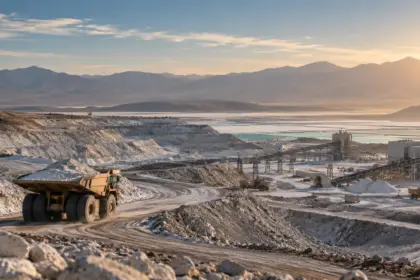
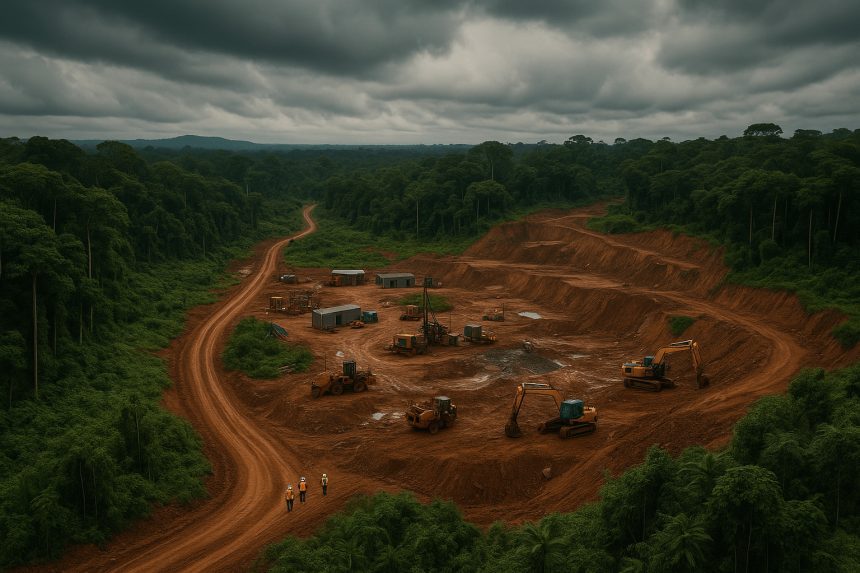
In the mineral-rich terrain of southeastern Congo, a U.S. mining firm has secured control over what may become the most geopolitically significant lithium mine in Africa. AVZ Minerals, a mid-tier company with outsized ambition, has finalized its majority stake in the Congo lithium mine at Manono, a deposit considered among the richest sources of lithium globally.
The agreement gives AVZ access to more than 400 million tonnes of lithium-bearing ore, positioning the project at the center of the global race for electric vehicle battery materials. But beyond its mineral value, the Manono concession reflects a strategic tilt — away from China’s decades-long dominance in Congo’s extractive industries and toward a new era of Western reengagement.
U.S. Strategy Meets African Resources
The U.S. government views the Congo lithium mine deal as more than a commercial win. It aligns with Washington’s broader strategy to “friendshore” its supply chains, reducing reliance on China for materials critical to clean energy technologies.
“This isn’t just about mining lithium,” said a senior U.S. official who advised on the deal. “It’s about recalibrating how we source critical minerals, especially from regions like central Africa that have been left to China’s sphere for too long.”
AVZ’s deal, which includes a 75% stake in the Manono mine, was approved after Kinshasa blocked competing claims from Chinese companies, citing regulatory irregularities. Congo’s state mining company, Cominière, retains a 25% interest.
Congolese Voices Demand Accountability
Despite the deal’s high-level endorsements, skepticism persists among Congolese civil society groups. “We’ve watched copper and cobalt leave this country for decades, with little to show in schools, roads, or healthcare,” said Ernest Ilunga, a civic leader in Manono. “The Congo lithium mine must not follow that same path.”
The agreement outlines community reinvestment and environmental oversight clauses, but enforcement has historically been weak. Local NGOs are calling for third-party monitoring of project impacts, especially given the site’s proximity to wetlands and forest reserves.
“We are talking about large-scale environmental disruption,” said Marie-Therese Kapinga, an environmental scientist in Lubumbashi. “Without accountability, promises mean nothing.”
China’s Setback in the Global Lithium Race
The Congo lithium mine deal marks a rare strategic setback for China in Africa’s resource sector. For over a decade, Chinese-backed firms have secured dominant positions in Congo’s cobalt and copper sectors. Lithium was their next target — until AVZ’s bid gained favor in Kinshasa and backing in Washington.
“The Chinese model worked when there was no competition,” said Dr. Edward Mbuyi, a resource economist at the University of Kinshasa. “But Western countries are now fighting to reclaim critical mineral supply chains.”
Earlier configurations of the Manono project included Zhejiang Huayou Cobalt and other Chinese investors. But last year, the Congolese government halted their advances, signaling a new calculus.
Infrastructure, Transparency, and Timing
Mining operations at the Congo lithium mine are expected to begin in late 2027, following the construction of access roads, processing facilities, and logistics infrastructure. AVZ has said it will source part of its financing from international development banks and ESG-aligned investors.
The government has pledged to publish royalty flows and allocate a portion of revenues for local development. Still, trust remains low.
“Until we see contracts published and money reaching our schools, it’s just paper,” said Ilunga.
A Global Flashpoint in the Energy Transition
The Manono lithium concession is more than a mine — it is now a geopolitical fulcrum. As demand for lithium is projected to quadruple by 2030, countries are racing to secure stable, ethical, and non-Chinese sources of supply. The Congo lithium mine may be among the most important test cases of how that shift unfolds.
For the U.S., the deal reflects a new approach to resource diplomacy — one grounded in partnerships rather than extractive hegemony. For Congo, it is a chance to rewrite the country’s extractive legacy — if promises translate into results.
And for the global energy economy, Manono is a reminder that the clean energy transition begins in places still wrestling with poverty, governance, and the weight of history.