By Penny Langford | August 5, 2026
New York copper futures surged to a fresh historic high on August 5, 2026, as aggressive U.S. stockpiling ahead of anticipated import tariffs collided head-on with persistent global supply constraints. COMEX copper contracts broke past $6.65 per pound, extending an unprecedented multi-month rally that has fundamentally disrupted traditional transatlantic trade flows and left industrial consumers scrambling for secure metal units.
The latest price surge highlights a complex market dynamic where tariff policy uncertainty, unprecedented inventory hoarding, and structural mine deficits have eclipsed standard macroeconomic demand signals. For mining executives, commodities investors, and industrial operators, the August 2026 milestone marks a critical inflection point in the global critical minerals landscape.
The Tariff Catalyst and U.S. Stockpiling Dynamics
At the heart of the New York record is a profound shift in physical inventory localization. Anticipation of stringent U.S. import tariffs on refined copper and raw industrial metals has spurred traders, fabricators, and financial institutions to pull massive tonnages into domestic warehouses.
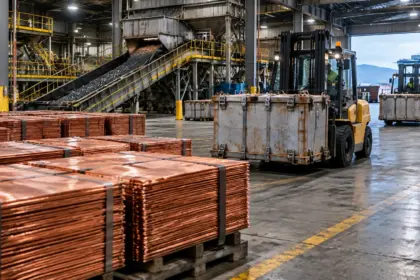
COMEX-registered copper inventories climbed past 450,000 metric tons in early 2026: representing a fourfold increase from levels recorded just twelve months prior. Independent trade monitors, including commodity houses like Macquarie, estimate that an additional 360,000 tons are currently held in off-exchange private yards across North America.

This intense hoarding behavior has effectively created a localized U.S. inventory fortress. Rather than acting as a tradable surplus available to global markets, domestic metal is being locked away to hedge against prospective trade barriers. Consequently, international buyers face tighter spot availability, widening regional price spreads between New York (COMEX), London (LME), and Shanghai (SHFE).
Persistent Mine Constraints and Structural Deficits
While tariff-driven hoarding accelerated short-term U.S. premiums, underlying physical tightness stems from prolonged disruptions across major primary extraction hubs.
The lingering operational fallout from the late-2025 mudslide at Indonesia’s Grasberg mine: the world’s second-largest copper producer: removed substantial tonnage from the global market. With the vital Block Cave extraction zone offline for major rebuilding phases through early 2026, global output has suffered a multi-hundred-thousand-tonne deficit.
According to the International Copper Study Group (ICSG), global mine supply growth is projected at a meager 1.4% for the year, lagging far behind accelerating consumption. The ICSG maintains a structural market deficit forecast of 150,000 tonnes for 2026, marking one of the tightest multi-year periods in the modern mining era.

Longer-term projections from S&P Global indicate that global primary mine output is approaching a plateau, expected to peak near 27 million tonnes by 2030 before declining toward 22 million tonnes by 2040 as ore grades diminish and major greenfield discoveries remain scarce.
2026 Copper Market Snapshot
| Metric / Indicator | Current Level (August 2026) | Annual Change / Trend | Key Driver |
|---|---|---|---|
| COMEX Front-Month Futures | $6.68 per lb | +38% YoY | U.S. tariff hedging & domestic stockpiling |
| LME Three-Month Copper | $13,450 per metric ton | +42% YoY | Global inventory tightness & Grasberg outage |
| U.S. COMEX Registered Stocks | ~453,450 metric tons | +400% vs. prior year | Influx of metal ahead of trade policy shifts |
| ICSG Global Balance 2026 | -150,000 tonne deficit | Structural deficit | Stagnant mine supply vs. grid/AI demand |
| Estimated Scrap Supply Response | Moderate increase | +5.2% YoY growth | High price environment incentivizing recycling |
Copper Price Forecast 2026: Base, Bull, and Bear Scenarios
As markets digest the August 2026 price highs, major financial institutions and commodity analysts remain divided on whether current valuations are sustainable through the second half of the year.
1. Base Case: Controlled Easing Amid High Structural Floors
Most mainstream analysts project that while immediate New York and London spot prices may moderate from their peak levels as tariff clarity emerges, fundamental support remains robust. Average annual prices are expected to hold near $12,000 per metric ton ($5.45/lb), underpinned by relentless demand from electrical grid modernization, renewable energy installations, and hyperscale artificial intelligence data centers.
2. Bull Case: Severe Supply shocks & Inventory Squeezes
In a bull-case scenario: championed by resource-focused funds: unexpected operational stoppages at secondary South American deposits or formal implementation of severe import tariffs could drive COMEX futures past $7.00 per pound. In this environment, localized hoarding intensifies, forcing international consumers into fierce bidding wars for uncommitted concentrate and refined metal.
3. Bear Case: Demand Destruction and Scrap Surge
Conversely, major institutional houses such as Goldman Sachs argue that the current price rally has overshot underlying physical fundamentals. High price points have already begun triggering demand destruction among industrial wire and tube manufacturers, alongside a significant surge in secondary scrap recovery. Goldman's baseline models estimate a potential global surplus materializing toward late 2026, which could pull LME benchmarks closer to $11,200 per metric ton ($5.08/lb).

Strategic Implications for Operators and Investors
For mining operators, the current market environment provides unprecedented operating cash flows but demands heightened capital discipline. Exploration budgets are increasingly being directed toward brownfield expansions and high-grade underground deposits that can achieve faster permitting and shorter time-to-market than traditional greenfield megaprojects.
For investors and policymakers, the record-breaking copper prices underscore the urgent vulnerability of critical mineral supply chains. As trade policy interventions intersect with secular energy transition demands, navigating geographical supply concentration will remain a paramount operational challenge for industrial economies throughout the remainder of the decade.
Shareable Industry Insight (LinkedIn / X)
Copper Price Alert: COMEX futures hit a record $6.68/lb on August 5, 2026, driven by U.S. tariff-related stockpiling and persistent mine deficits. Read our full analysis on 2026 price forecasts, warehouse inventory shifts, and structural supply constraints at Skillings Mining Intelligence. #MiningNews #Copper #Commodities #EnergyTransition #CriticalMinerals