Key Takeaways
- The U.S. targets critical minerals from mine waste to reduce import reliance.
- Fast-track permitting and new funding streams support reprocessing projects.
- Earth MRI maps mine waste to identify valuable concentrations.
- The initiative supports defense, clean energy, and remediation goals.
- Potential economic impact: $10B+ and thousands of skilled jobs.
The United States is tapping into a previously overlooked resource to secure its future: critical minerals from mine waste. A sweeping directive from the Interior Department announced July 25 aims to streamline permitting, expand funding, and launch a national mapping effort to recover these minerals from legacy mining sites.
“We’re unlocking the value in what we once discarded,” said Interior Secretary Doug Burgum. “It’s not just about recovery—it’s about redefining security.”
Unlocking Critical Minerals from Mine Waste
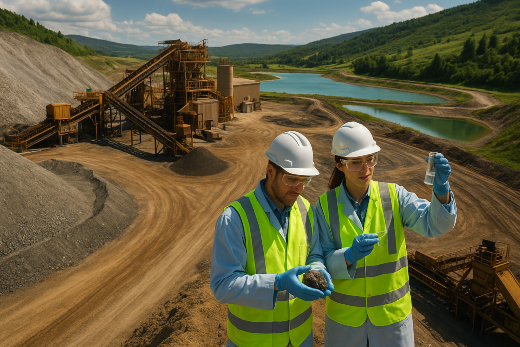
The directive centers on recovering critical minerals from mine waste left behind by a century of extraction. Many of these tailings and waste piles contain materials such as tellurium, antimony, germanium, and rare earth elements—all vital to clean energy and defense systems.
Utah’s Bingham Canyon holds tellurium-rich tailings. Oklahoma’s Tar Creek district has valuable germanium and zinc in former lead-zinc waste. In Idaho’s Coeur d’Alene district, abandoned rock piles contain an estimated $2.5 billion worth of strategic minerals.
Reducing Dependency with Domestic Supply
By focusing on critical minerals from mine waste, the U.S. can reduce its dependence on imports, particularly from China. More than 80% of U.S. germanium, antimony, and rare earths are currently sourced abroad. Officials see this initiative as essential to national resilience.
“We can’t afford supply chain single points of failure,” said Adam Suess, Acting Assistant Secretary. “These domestic sources are our insurance.”
Select U.S. Sites with Critical Minerals in Mine Waste
| Location | Key Minerals | Estimated Value |
|---|---|---|
| Bingham Canyon, UT | Tellurium | $100M+ |
| Tar Creek, OK | Germanium, Zinc | $200M |
| Coeur d’Alene, ID | Antimony, Indium | $2.5B |
| Appalachia, PA/WV | Rare Earths | TBD |
Fast-Tracked Permitting and Funding
The initiative creates a dedicated permitting track for reprocessing mine waste, aiming to cut approval times from five years to 18 months. Eligible projects can now access Department of Energy grants and infrastructure loans, making this approach more competitive.
Environmental and Economic Co-Benefits
Mining critical minerals from mine waste also addresses environmental liabilities. Legacy sites like Montana’s Berkeley Pit and coal refuse in Appalachia pose long-term contamination risks. Reprocessing allows for remediation with economic return.
“This is remediation with ROI,” said Dr. Rebekah Fong of the Colorado School of Mines. “You clean up the past and get strategic value in return.”
Mapping the Opportunity: Earth MRI
The U.S. Geological Survey’s Earth Mapping Resources Initiative (Earth MRI) will catalog the nation’s mine waste, using airborne surveys and hyperspectral imaging to identify concentrations of critical minerals from mine waste.
“We’re using imaging to de-risk the unknown,” said Dr. Emily Trask of the USGS. Public datasets from Earth MRI will guide private investment and reduce exploration costs.
Challenges and Strategic Payoff
Processing waste involves complex chemistry and variable mineral concentrations. Extraction can be 20–40% costlier than conventional mining. But the strategic payoff is clear: thousands of potential jobs, $10 billion in economic activity, and a more secure mineral base.
Think of it as an industrial policy reset,” said Jennifer Hall of the National Mining Association. This could reshape domestic supply chains.”