Estimated reading time: 3 minutes
The Bonita Peak Mining District Superfund site in southwest Colorado will get $90 million as a proposed settlement. The US Environmental Protection Agency and Denver-based Sunnyside Gold Corp. said on Friday. After 30 days of public debate, a federal court must rule on the agreement. Since the EPA and Sunnyside, the local landowner, could agree on cleaning this region, it’s been a while. The EPA has asked Sunnyside to help pay for the cleaning, but the company has resisted, launching a series of challenges to the project’s scope and management.
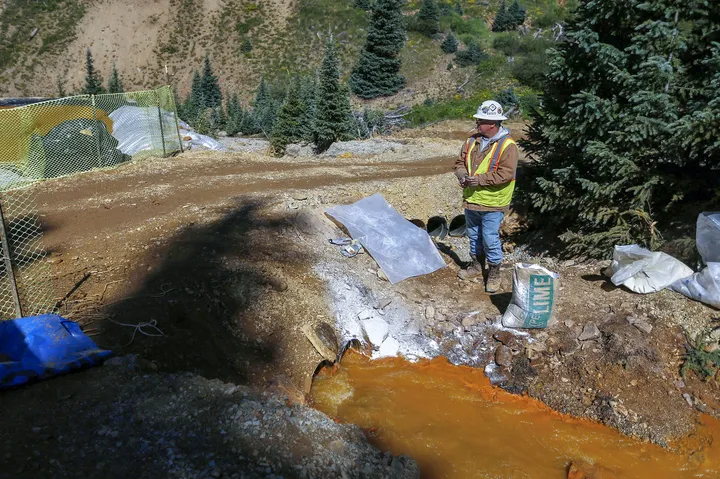
While working on another site in the area not owned by Sunnyside, an EPA-led construction team accidentally broke a debris pile holding back wastewater within the Gold King Mine’s entrance in August 2015. Iron and aluminum accounted for almost 540 metric tons (490 short tons) of the nearly 11 million liters of effluent discharged. The rivers of Colorado, New Mexico, the Navajo Nation, and Utah had been contaminated by industrial runoff and agricultural runoff. Farmers stopped using rivers when water utilities in the downstream region shut down intake valves.
The Bonita Peak Superfund area was created due to the litigation against the EPA.
Gold King’s neighbor, Sunnyside, had a gold mine shut down in 1991. Water contaminated with heavy metals accumulated within Gold King after bulkheads meant to cap the mine was installed, according to a government inquiry. The leak was caused by an EPA contractor trying to reduce the accumulation. Kinross Gold Corp.’s subsidiary Sunnyside and its parent company, Canada-based Kinross Gold Corp., have agreed to pay $45 million in future remediation costs under the deal. The United States will provide additional funds of $45 million for the district’s cleaning, including the Gold King Mine and other decommissioned mines surrounding Silverton.
The money will be used to collect water and soil samples and construct new landfills for trash. There has been more than $75 million spent on cleaning efforts, and significant work will continue at the site in the future years,” stated an EPA statement on Friday.
Sunnyside has acknowledged that the new contract is fault-free. The corporation claims to have spent over $40 million cleaning up their Superfund land over 30 years. Last year, Sunnyside reached agreements with the Navajo Nation and New Mexico. As of December, Sunnyside has agreed to pay $1.6 million to address its obligation for natural resource harm resulting from the Gold King Mine leak. An abandoned and unclaimed hard rock mine is a stark reminder that these mines are dangerous, especially in the West of the United States. Communities and tribal lands are in danger because of mining operations, and the businesses responsible should be held accountable.
A statement from Gina Myers, Sunnyside’s director of reclamation operations, said the deal signed on Friday “recognizes the federal government’s responsibility for its part in producing environmental degradation” at the Superfund site.