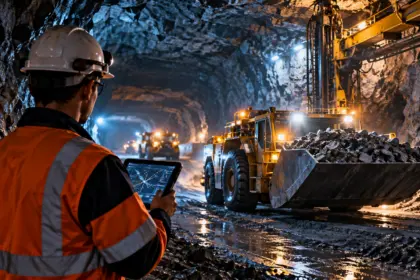
In eastern Congo, China claims that five of its people have been abducted. In this case, a gold mine running there for four to five months had five Chinese workers who were seized.
The Chinese Embassy in Kinshasa reported through a WeChat message that the five were kidnapped early Sunday from a location in the South Kivu region that borders the three neighboring countries. It advised any Chinese nationals in South Kivu and the surrounding provinces of North Kivu and Ituri to leave immediately, citing the “very difficult and gloomy” security situation in the region and the limited ability to assist in the case of an assault or abduction.
Details regarding those abducted or whom they worked for or suspected of kidnapping them have not been released.
“All Chinese residents and Chinese-invested firms in Congo should pay careful attention to local circumstances, strengthen their understanding of safety and emergency readiness, and avoid needless outside travel,” the embassy stated…
You might be interested in
- China’s $200 Billion Special Credit Facility To Boost Clean Coal Usage
- China’s Objective To Maintain 2021 Crude Steel Output At The Same Level As 2020
- As China And Europe Rush For Supply, The US Coal Industry Is Struggling To Find New Miners Ready To Undertake The Labor As Demand Increases.
- China’s greenfield iron ore plant will use stirred mill technology from Metso Outotec
- China’s top gold producer Shandong installs 5G network underground at its Laixi operations
- Iron Ore Price boosted as a result of Resilient China Steel Production.
The governor of South Kivu, Theo Kasi, halted the activities of six small Chinese enterprises in August and ordered all local and international workers to leave the locations. Companies that didn’t shut promptly sparked protests in several areas, according to local media. A $6 billion “infrastructure-for-minerals” contract with Chinese investors is being reviewed by President Felix Tshisekedi, who took office after Joseph Kabila. Because Congo is the world’s biggest producer of cobalt and Africa’s leading copper miner, he suggested earlier that specific mining contracts may be reevaluated.
One hundred heavily armed individuals, believed to be former members of the M23 rebel group, stormed into the park ranger’s patrol position in North Kivu on Saturday and shot him. Other rangers were able to flee uninjured.
The Democratic Forces for the Liberation of Rwanda, known by its French name FDLR, the Mai-Mai, and the M23, routinely compete to control eastern Congo’s natural resources. Even if there are no conflicts over contracts, eastern Congo remains a dangerous environment to do business. A variety of militias contests land and natural resources. A few hundred kilometers north of this weekend’s raid, the army has engaged with the M23 rebel group, causing hundreds of people to flee.
Chinese corporations have pushed into unstable African countries, searching for rare minerals and other natural resources despite the dangers. In Pakistan and other nations where insurgents are active, Chinese laborers have also been kidnapped and assaulted.