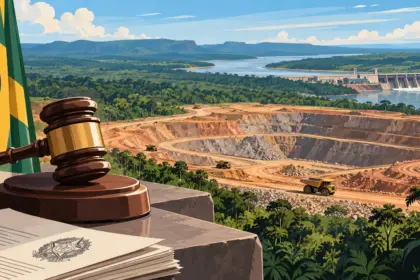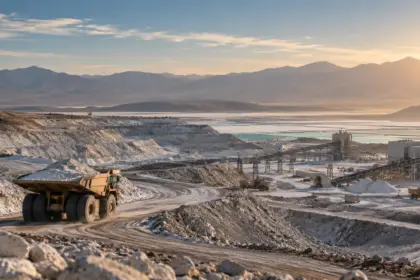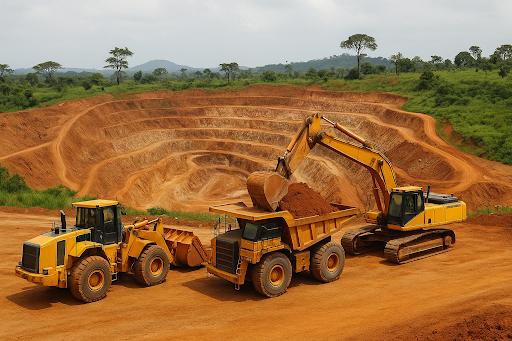
Accra (October 2025) — Over the past decade, Ghana mining revenue has exceeded an estimated US $40 billion, making the extractive sector one of the most critical sources of national income. Yet, as the industry celebrates these record earnings, many citizens — particularly in mining communities — continue to ask a troubling question: Where is the impact?
A Decade of Surging Ghana Mining Revenue
According to data presented by Emma Morrison, Regional Manager for Corporate Affairs and Stakeholder Engagement at Gold Fields Ghana and Vice-Chair of the PR Committee of the Ghana Chamber of Mines, Ghana mining revenue between 2014 and 2024 reached more than US $40.1 billion.
Of this, over US $29 billion was reinvested locally through the Bank of Ghana and domestic commercial banks, helping to stabilize the cedi and support public expenditure. A further US $220 million was allocated to corporate social responsibility (CSR) projects — including schools, clinics, and community infrastructure across mining regions.
The Chamber’s 2024 report reinforces the picture: the Ghana mining revenue for that year alone hit GH₵ 17.7 billion (≈ US $1.5 billion), up 51 % from 2023. Royalties soared 76 %, climbing from GH₵ 2.8 billion to GH₵ 4.9 billion, driven by higher gold prices and improved tax collection.
The Paradox of Ghana Mining Revenue Growth and Community Strain
Despite the scale of Ghana mining revenue, ordinary Ghanaians — particularly in Tarkwa, Obuasi, and Kenyasi — say they have yet to feel its benefits. These communities, located near some of the country’s richest deposits, still face poor roads, limited jobs, and inadequate healthcare.
Mining has undeniably contributed to fiscal stability and foreign exchange reserves. Yet, analysts note that the wealth has not translated into tangible improvements in living standards or infrastructure. Ghana’s Minerals Income Investment Fund (MIIF) was designed to manage and invest mineral revenues transparently, but watchdog groups argue that reporting remains opaque and allocations uneven.
The disconnect between the billions in Ghana mining revenue and the visible impact in host communities has become a flashpoint for protests and rising social tension.
Ghana Mining Revenue, Governance, and Accountability
Economists and policy experts argue that the real issue is revenue management. The mining industry consistently delivers — through royalties, taxes, and CSR — but the challenge lies in government allocation.
Dr. Patrick Akoto, an economist specializing in resource governance, noted that “Ghana’s extractive wealth must be matched with a robust fiscal strategy that directs mining proceeds toward industrialization and human development.”
Reports indicate that gold smuggling alone may have cost Ghana US $11 billion between 2019 and 2024 — a loss equal to nearly one-quarter of official Ghana mining revenue over the same period. Addressing such leakages could substantially increase the funds available for national development.
Meanwhile, gold output is projected to rise 6.25 % in 2025 to 5.1 million ounces, suggesting that Ghana mining revenue could grow even higher — if the sector maintains stability and public confidence.
Skillings Analysis
- The Ghana mining revenue surge underscores the sector’s fiscal importance, but without stronger local impact, its legitimacy is at risk.
- For mining professionals, “social licence to operate” now depends as much on revenue transparency as on environmental compliance.
- As Ghana pushes for downstream processing and value-addition, success will hinge on how effectively the next phase of Ghana mining revenue translates into visible, equitable development.
Looking Ahead: Turning Revenue into Results
With record commodity prices and output growth projected into 2026, Ghana’s mining industry will continue to underpin national finances. Yet, the critical test remains: can policymakers and operators convert the next US $40 billion of Ghana mining revenue into lasting transformation for local communities?
As the holiday quarter approaches, expectations are mounting. Industry insiders agree — the numbers are impressive, but without impact, the story remains unfinished.