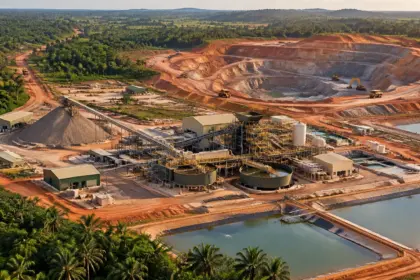

Despite a surge in gold prices, gold Equities have notably underperformed, raising questions about the factors contributing to this divergence. Barrick Gold’s President and CEO, Dr. Mark Bristow, addressed this issue during the company’s third-quarter results presentation, highlighting the complexities influencing investor behavior in the gold sector.
Central Banks Shift Reserves to Gold
A significant driver of rising gold prices is the trend of central banks, particularly in emerging markets, reallocating reserves from U.S. dollars to gold. This de-dollarization reflects a strategic move to hedge against currency volatility and geopolitical risks. “You’re effectively seeing a switching of dollars for gold in the central banks,” Bristow noted.
Retail Demand and Western Investment Patterns
Retail investors have also shown increased interest in physical gold, with notable sales spikes in outlets like Costco. Interestingly, Western investors have recently intensified their participation in gold exchange-traded funds (ETFs), viewing physical gold as the ultimate hedge against risk. However, this surge in physical gold investment has not translated into a proportional rise in gold equities.
Related news
- General Beltings Holdings Pins Hopes on Mining Sector Revival Amid Rising Platinum Prices
- China Opens Copper Blending Sector to Private Firms Amid Supply Shortages
- Caterpillar Launches First Fully Autonomous Truck for Quarry Industry in Partnership with Luck Stone
Investor Behavior and Equity Performance
As gold prices climb, one might expect heightened interest in gold mining stocks to leverage these gains. Contrarily, many investors are redeeming their holdings in gold-focused funds, possibly to capitalize on profits or reallocate to other sectors. Bristow observed, “At a high gold price, you start seeing people taking their money out of gold funds.”
This trend underscores a broader shift toward short-term investment strategies, which may not align with the long-term nature of the mining industry. The sector requires sustained capital investment and patience, attributes that are increasingly scarce among investors seeking immediate returns.
Challenges in the Mining Industry
The mining sector faces additional hurdles, including a shortage of new exploration projects and a focus on short-term gains over long-term value creation. Bristow emphasized that the industry has not invested sufficiently in exploration, leading to a lack of optionality in stock offerings. This deficiency diminishes the traditional drivers of premiums in the gold industry.
Barrick’s Strategic Response
In response to these challenges, Barrick Gold is focusing on long-term value creation without relying on mergers or acquisitions. The company reported a 33% increase in net earnings and a 27% rise in cash flow, alongside stock buybacks and debt reduction. Bristow stated, “We want a strong balance sheet so that we can remain independent given our big growth projects that we will start building next year.”
Barrick is also investing in automation and digitalization to enhance operational efficiency. The company has implemented a fully integrated, digitized mine at its Kibali site and plans to extend this model across its operations. This strategy aims to optimize capital use and improve productivity in a labor-constrained environment.
Outlook for Gold Equities
The underperformance of gold equities relative to bullion prices reflects a complex interplay of investor behavior, industry challenges, and market dynamics. While physical gold remains a favored hedge against global risks, gold mining stocks have not experienced a commensurate rise, partly due to short-term investment strategies and a lack of new exploration initiatives.
For gold equities to regain favor, the industry may need to address these underlying issues by investing in exploration, embracing technological advancements, and aligning more closely with investor expectations. As Barrick’s approach suggests, a focus on long-term value creation and operational efficiency could be key to bridging the gap between gold prices and equity performance.