Destruction in the Name of Progress
The Amazon rainforest, often referred to as the “lungs of the Earth,” is under siege from illegal mining operations targeting precious minerals essential for green energy technologies. These operations are not only devastating the environment but also threatening indigenous communities and fueling criminal enterprises.
The Rise of Illegal Mining in the Amazon Rainforest
Illegal mining in the Amazon has surged in recent years, driven by the global demand for minerals like cassiterite, a key component in producing tin used in electronics and renewable energy technologies. According to a recent investigation by The Guardian, these mining activities are wreaking havoc on the Yanomami Indigenous Territory in Brazil, leading to deforestation, river pollution, and severe health impacts on local communities.
Related News
- Indian Miner Vedanta Reports 37% YoY Profit Surge in Q1 2024
- Glencore Faces $150 Million Fine in Swiss Bribery Probe: What You Need to Know
- Navajo Nation Takes Stand Against Uranium Transport Through Tribal Lands
- Global Concerns Mount Over Unregulated Deep-Sea Mining Activities
- Canadian Miners Navigate Uncertain Terrain Amid Anti-China M&A Rules
The Human Cost
The Yanomami people, one of the most isolated indigenous groups in the Amazon, are facing an existential threat. The influx of miners has brought diseases, violence, and environmental degradation. Reports indicate that mercury in gold extraction has contaminated rivers, leading to poisoning and long-term health issues among the Yanomami. The Brazilian government has been criticized for its inadequate response to these illegal activities, with enforcement agencies like IBAMA (Brazilian Institute of Environment and Renewable Natural Resources) struggling to combat the well-armed and organized mining gangs.
Criminal Networks
These illegal mining operations are not isolated incidents but are part of a broader network of criminal activities. A comprehensive investigation by a team of 37 journalists across 11 countries, known as the Amazon Underworld project, has mapped out the presence of armed groups and illicit economies in the Amazon. The project revealed that rivers in southern Venezuela, for instance, are used as trafficking routes for mining supplies, further entrenching the power of these criminal networks.
Environmental Impact
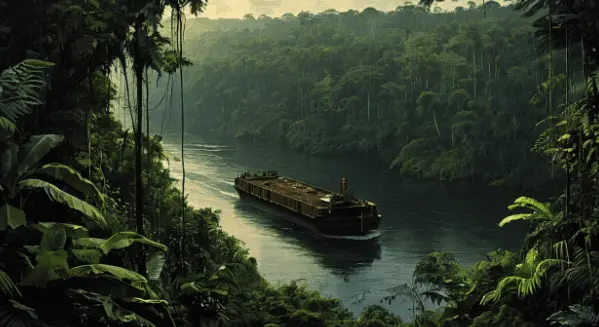
The environmental toll of illegal mining is catastrophic. Mining barges, often called dragas, dredge river beds, causing severe sedimentation and altering river courses. Mercury in gold extraction contaminates water sources, affecting aquatic life and the communities that rely on these rivers for sustenance. The deforestation and habitat destruction caused by mining operations also contribute to the loss of biodiversity in one of the world’s most vital ecosystems.
Global Implications
The minerals extracted from the Amazon are crucial for the global transition to green energy. However, their extraction’s environmental and human costs raise significant ethical and sustainability concerns. The international community must address the demand for these minerals by ensuring that their extraction does not come at the Amazon’s and its inhabitants’ expense.