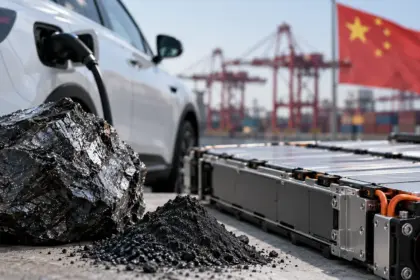
The lithium market is moving into a period of structural consolidation following the volatile boom-and-bust cycle of 2022–2024. As we look toward 2026, the prevailing narrative among analysts and institutional investors has shifted from “when will the crash end” to “how long is the bottom.”
Current market data suggests a classic L-shaped recovery is underway. After a steep correction that saw battery-grade lithium carbonate prices plummet from historic highs, the market has found a floor. For 2026, the industry is bracing for a “shallow uptrend,” where prices stabilize on a higher plateau supported by tightening supply-demand balances and a significant surge in stationary energy storage requirements.
The L-Shaped Recovery: Timing the Market Bottom
The “L-shaped” thesis rests on the idea that while the vertical drop in prices is over, a return to the exuberant peaks of US$80,000 per tonne is unlikely in the near term. Instead, the market is entering a “mid-cycle” phase. By early 2026, spot battery-grade lithium carbonate is expected to trade in a stabilizing band between US$18,000 and US$25,000 per tonne.
This recovery is driven by two diverging forces: a narrowing global surplus and the depletion of “invisible” inventories. While 2024 and 2025 were characterized by a glut that forced high-cost lepidolite producers in China to curtail operations, 2026 represents the year where demand growth: forecasted at 17% to 30%: finally begins to erode the remaining buffer.
2026 Lithium Market Snapshot: Key Metrics
To understand the 2026 outlook, decision-makers must track the narrowing gap between production and consumption. The following table highlights the shifting fundamentals:
| Metric | 2025 (Estimated) | 2026 (Forecast) | Change (%) |
|---|---|---|---|
| Global Demand (Million Tonnes LCE) | 1.30 | 1.48 | +13.5% |
| Global Supply (Million Tonnes LCE) | 1.44 | 1.58 | +9.9% |
| Market Balance (Surplus/Deficit) | +141,000 | +109,000 | -22.7% |
| Storage Sector Growth | 71% | 55% | – |
| Avg. Carbonate Price (US$/t) | $14,000 – $16,000 | $18,000 – $24,000 | +28.5% |
Supply Chain Dynamics: The New Geography of Lithium
The supply chain for 2026 is no longer just an Australian-Chilean story. The entry of African supply, particularly from Zimbabwe, is a critical variable. Zimbabwe is projected to contribute approximately 124,000 tonnes LCE in 2026: roughly 7% of global supply. Much of this is destined for Chinese refineries, maintaining China’s dominance in the midstream processing segment.

However, the geographic concentration of refining remains a primary risk. China is expected to control over half of the world’s lithium processing capacity through 2026. This has prompted Western governments to accelerate mining permits reform and domestic processing initiatives, though these projects are unlikely to reach meaningful scale before the end of the decade.
For investors, the Lithium Power Map highlights that while North American projects are advancing, the immediate 2026 balance will still rely heavily on South American brines and African hard-rock mines.
Demand Drivers: EVs vs. Stationary Storage
While electric vehicles (EVs) remain the primary consumer of lithium, the 2026 growth story has a new protagonist: Battery Energy Storage Systems (BESS). In 2025, storage demand jumped by 71%, and it is expected to grow by another 55% in 2026. This secondary pillar of demand provides a critical safety net for prices if EV adoption rates in Western markets continue to face headwinds.
Technologically, the shift toward Lithium Iron Phosphate (LFP) chemistries is also influencing the market. LFP’s lower cost and longer cycle life make it the preferred choice for both mass-market EVs and stationary storage. This trend supports steady demand for lithium carbonate over the more expensive hydroxide variant typically used in high-nickel NCM (Nickel-Cobalt-Manganese) batteries.

Price Forecast 2026: Three Scenarios
The following scenarios outline the potential trajectories for the lithium market as we navigate 2026.
The Base Case: Stabilization (60% Probability)
Prices trade between US$18,000 and US$24,000/t. The surplus narrows to roughly 100,000 tonnes as higher-cost Chinese producers remain offline. EV demand grows at a moderate 20% pace, and storage demand remains robust. Investors focus on “quality juniors” and established producers with low-cost brine operations in the Lithium Triangle.
The Bull Case: The Deficit Returns (25% Probability)
Prices surge toward US$30,000/t. In this scenario, project delays in Africa and South America, combined with an upside surprise in Chinese EV sales, flip the market into a 22,000-tonne deficit. Global inventories, currently hovering at just twenty days of supply, prove insufficient to buffer the shock, leading to localized price spikes.
The Bear Case: Continued Oversupply (15% Probability)
Prices remain depressed in the US$12,000 – $15,000/t range. This would be triggered by a “hard landing” in global EV markets and a faster-than-expected ramp-up of new supply from greenfield projects. In this environment, only the lowest-quartile producers remain profitable, leading to further M&A activity as majors consolidate distressed assets.
Supply Chain Risks and ESG Constraints
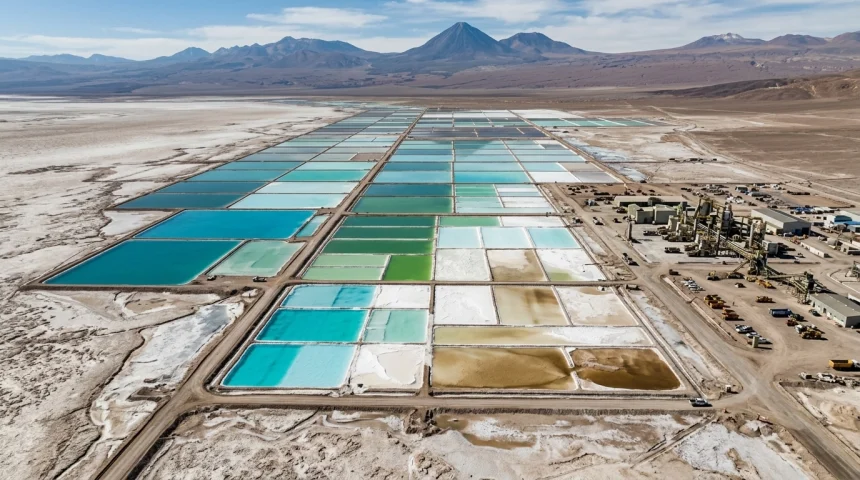
Operational risks remain a significant hurdle for the 2026 outlook. Water scarcity in Chile’s Atacama Desert and social licensing issues in regions like Serbia and the United States continue to threaten the “supply response.”

Furthermore, the industry is facing increasing pressure to address the carbon footprint of lithium extraction. Hard-rock mining in Australia and Africa is significantly more energy-intensive than brine evaporation. As ESG reporting becomes more stringent for automakers, producers who can demonstrate a lower carbon intensity may begin to command a small “green premium,” or at the very least, preferred access to Western supply chains.
Investor Outlook: Timing the Bottom
For mining professionals and investors, 2026 represents a year of transition. The market is moving away from the “commodity boom” phase and into an “industrial maturity” phase. Successful strategies will likely focus on:
- Cost Curve Resilience: Prioritizing projects that remain profitable even at the US$15,000/t bear-case level.
- Vertical Integration: Companies that control both the mine and the refinery will be better positioned to navigate the “mid-cycle” volatility.
- Regional Diversification: Reducing reliance on Chinese processing by supporting projects in emerging hubs like the Lobito Corridor.

While the lithium market has been humbled by the recent correction, the long-term structural deficit projected for the 2030s remains intact. The L-shaped recovery of 2026 is not a sign of a dying industry, but rather a healthy recalibration. For those looking to time the bottom, the narrowing surplus and the explosion in energy storage demand suggest that the window for entry is beginning to open.