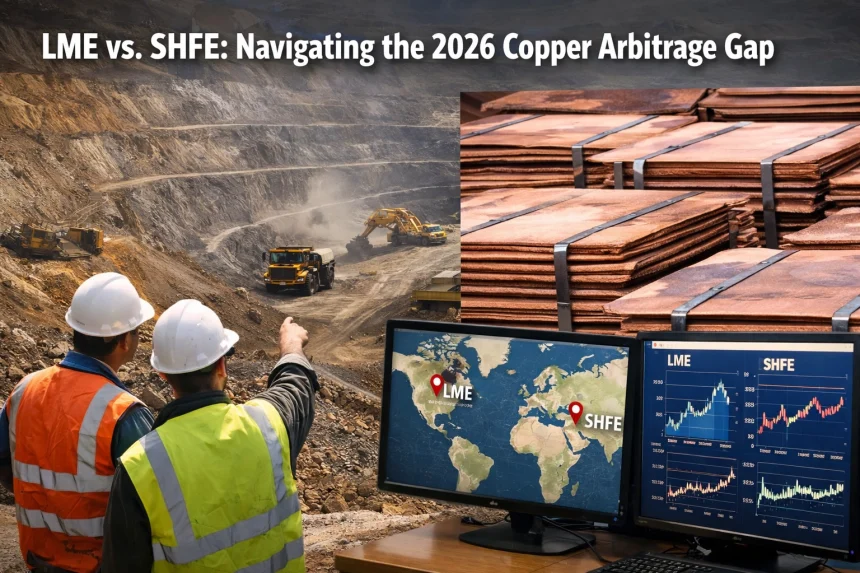

Here’s the thing nobody wants to admit: the copper arbitrage game between London and Shanghai isn’t what it used to be. The 2026 market isn’t presenting traders with textbook pricing differentials you can exploit with a few container ships and some clever timing. It’s showing you something far more uncomfortable: a fundamental disconnect between what Western speculators believe and what Chinese industrial buyers are actually experiencing.
The numbers tell the story. LME and SHFE copper prices maintain a 95.98% correlation. That sounds reassuring until you realize the two markets are looking at completely different realities.
The Positioning Split That Changes Everything
Western traders on the LME are holding net long positions approaching record levels: sitting at the 80th percentile to the upside. They’re betting on shortage narratives, supply constraints, and the electrification boom that’s supposed to consume every pound of copper the planet can dig up.
Meanwhile, over in Shanghai, SHFE traders are net short at their widest levels since 2021.

That’s not a minor divergence. That’s two groups of sophisticated market participants looking at the same metal and reaching opposite conclusions about where prices are headed. One of them is catastrophically wrong, or the arbitrage opportunity everyone keeps talking about doesn’t actually exist in any tradable form.
The traditional arbitrage play: buy low in one market, sell high in another, pocket the spread minus shipping and financing costs: assumes both markets are fundamentally valuing the same underlying reality. When positioning splits this wide, you’re not looking at a price inefficiency. You’re looking at a philosophical disagreement about demand.
The Physical Flow Problem
Here’s where it gets really uncomfortable for arbitrage traders: the physical mechanics that used to make cross-market plays work are breaking down. The arbitrage between COMEX and LME prices no longer supports pulling new copper material to the United States. That’s not because traders got lazy. It’s because the math stopped working.

Consider what’s changed on the ground. LME warehouse stocks in Asia hit their highest levels since March. Copper is piling up in Shanghai and Singapore, not because Chinese demand is weak in absolute terms, but because downstream buyers are resisting elevated prices. They’re consuming copper, sure: China still accounts for 58% to 60% of global demand. But they’re not chasing it at current premiums.
The dollar strengthening through late 2025 and into 2026 compounds the problem. A stronger greenback makes dollar-denominated LME copper more expensive for buyers using other currencies, which dampens the incentive to pull metal from London warehouses into Asian markets. The traditional flow patterns that created arbitrage windows are getting strangled by currency headwinds.
And then there are tariffs. The bottlenecked global trade system isn’t just a political talking point: it’s a transaction cost that erodes arbitrage margins. When you’re factoring in potential tariff adjustments, shifting customs regulations, and longer-than-usual port delays, the spread between LME and SHFE needs to be significantly wider than historical norms just to break even on a physical delivery play.
What Chinese Buyers Are Actually Saying
The SHFE positioning reveals something critical: Chinese industrial buyers don’t believe current prices are sustainable. Their net short stance isn’t speculation: it’s hedging against inventories they’re holding at what they consider inflated levels.
Downstream demand growth in China’s transport, construction, power, and home appliance sectors is forecast to inch up just 0.7% in 2026. That’s effectively flat compared to 2.6% growth in 2025. These are the end users who determine whether copper moves from warehouses into actual consumption. When they’re not accelerating purchases, the shortage narrative starts looking shaky.

Chinese strategic reserve discussions create headline noise, but reserves are reserves: one-time purchases that don’t represent sustained industrial demand. Once those positions are filled, you’re back to the underlying consumption trends, which are growing slower than the LME positioning suggests Western traders expect.
The Chinese market is pricing in a future where supply catches up faster than bulls anticipate and where demand growth disappoints relative to electrification hype. That’s not bearishness: it’s realism informed by ground-level industrial activity.
The 2026 Forecast Divergence
StoneX is calling for average copper prices around $11,490 per metric ton in 2026. Goldman Sachs is projecting a potential 160,000-ton surplus rather than the shortage that drove January price peaks. Those aren’t fringe opinions: they’re major market participants revising their supply-demand models downward.
A 160,000-ton surplus would represent a fundamental regime shift from the deficit narratives that have dominated copper discourse since mid-2024. If that surplus materializes, the LME net long positions become toxic. Traders holding those positions are betting on scarcity that doesn’t arrive.
The arbitrage gap exists, but it’s not exploitable through traditional means because it reflects genuinely different fundamental outlooks rather than temporary pricing inefficiencies. Western markets are pricing in continued tightness. Eastern markets are pricing in adequate-to-surplus conditions. Someone’s reading the supply pipeline wrong.

The Strategic Calculus for 2026
If you’re trying to navigate this market, the playbook isn’t “find the spread and trade it.” The playbook is “figure out which market is correct about fundamentals and position accordingly.”
The case for LME bulls: mine supply disruptions remain unpredictable, green energy infrastructure projects are locked in regardless of near-term economic wobbles, and AI data center buildouts continue requiring massive copper input. Demand destruction at current prices may be more limited than bears think.
The case for SHFE shorts: Chinese demand is the marginal driver of global copper prices, and those buyers are telling you through their positioning that they don’t believe shortage premiums are justified. New mine supply is coming online faster than 2023-2024 projections suggested, and end-user demand outside of headline-grabbing sectors is softer than bulls admit.
The traditional arbitrage trader gets caught in the middle: unable to profitably bridge the gap because both markets are internally consistent with their respective fundamental assumptions. You can’t arbitrage a philosophical disagreement.
What Happens Next
The 2026 copper arbitrage gap resolves one of two ways: either LME prices correct downward as supply materializes and Western traders unwind their record net longs, or SHFE prices rally as Chinese buyers capitulate and accept that shortage conditions persist longer than expected.
Neither outcome favors the arbitrageur looking for low-risk spread capture. Both outcomes favor the directional trader who correctly identifies which market is reading fundamentals accurately.
The uncomfortable truth is that navigating this gap requires taking a view: not on pricing inefficiencies, but on the actual supply-demand balance for 2026. That’s not arbitrage. That’s speculation with better footnotes.
The markets are giving you information through their positioning divergence. LME traders think the shortage story holds. SHFE traders think it doesn’t. One group is positioned for significant pain. The 2026 copper market will determine which.