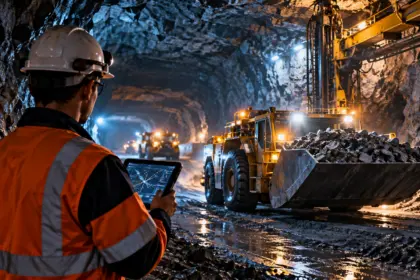
Betolar, a Finnish materials technology innovator, is set to launch its newly developed low-carbon shotcrete solution at Outokumpu’s Kemi mine in early 2025. This marks a major step forward as Outokumpu strives to transform the Kemi mine into the world’s first carbon-neutral mining operation by the end of next year.
The innovative low-carbon shotcrete adheres to CEM III standards—a cement composition with reduced clinker content—and has been successfully piloted and approved under Betolar and Outokumpu’s partnership agreement. Betolar now plans to push the boundaries further, developing a fully cement-free Geoprime shotcrete solution by September 2025.
Relaed News
- Trump Fast-Track Permits: A $1 Billion Investment Opportunity
- Pecos River Watershed Conservation Efforts Take Center Stage
- BHP Sexual Harassment Allegations: Legal Scrutiny over NDAs in Australian Mining Lawsuits
- BHP, Rio Tinto Face Class Actions Over Alleged Systemic Sexual Harassment at Australian Mine Sites
Low-Carbon Shotcrete: A Critical Step in Carbon-Neutral Mining
Pasi Karekivi, Betolar’s Business Development Director for Mining & Metals, emphasized the breakthrough:
“We have successfully developed, piloted, and approved a low-carbon shotcrete solution for Outokumpu’s Kemi mine within the agreed timetable. Already at this stage, we have been able to reduce the amount of CO₂-emitting cement from the current level.”
Shotcrete—sprayed concrete widely used in underground mining for tunnel support—relies heavily on cement, a significant source of carbon dioxide emissions. Traditional cement production accounts for approximately 8% of global CO₂ emissions, making the need for low-carbon shotcrete urgent. Betolar’s current solution reduces cement content while maintaining shotcrete’s structural integrity, a vital factor for mining operations.
The next phase of development will aim to completely eliminate cement. Betolar’s cement-free Geoprime solution uses alkali-activated binders to provide a zero-cement alternative, significantly advancing carbon-neutral mining practices. Karekivi added:
“The cement-free solution is completely new in shotcrete. The product Betolar is developing for Outokumpu allows us to focus on low-carbon shotcrete in the mining industry and infrastructure construction.”
Outokumpu Kemi Mine and Carbon-Neutral Goals
For Outokumpu, a global leader in sustainable stainless steel production, achieving carbon-neutral mining is critical to its long-term strategy. The Kemi mine, which supplies ferrochrome—a key raw material in stainless steel production—plays a central role in Outokumpu’s sustainability roadmap.
Martti Sassi, President of Outokumpu’s Business Area Ferrochrome, highlighted the importance of the partnership:
“The carbon neutrality of the Kemi mine is an important and concrete step in Outokumpu’s journey toward ambitious climate targets. Collaborating with Betolar on low-carbon shotcrete supports emissions reductions across the mine’s entire value chain.”
Betolar’s low-carbon shotcrete solution aligns seamlessly with Outokumpu’s broader sustainability goals. Shotcrete, a significant material in tunnel construction, presents an opportunity to reduce emissions at scale, accelerating carbon-neutral mining operations.
Betolar’s Strategic Expansion into Low-Carbon Shotcrete Solutions
While Betolar initially focused on low-carbon construction materials, its expansion into mining demonstrates a strategic shift toward industries with high emissions profiles. The adoption of low-carbon shotcrete solutions in operations like Outokumpu’s Kemi mine showcases scalable opportunities for sustainability in mining and infrastructure.
Tuija Kalpala, Betolar’s CEO, sees the partnership as a blueprint for future industry collaborations:
“Working with a pioneer like Outokumpu accelerates sustainable and responsible development within the mining sector. This partnership demonstrates that low-carbon shotcrete solutions can be implemented today without major investments.”
By providing innovative alternatives to traditional cement-based materials, including fully cement-free technologies, Betolar is positioning itself as a vital partner for mining companies committed to achieving carbon-neutral mining targets.
Implications of Low-Carbon Shotcrete for the Mining Sector
The mining sector faces mounting pressure to decarbonize, with regulators, investors, and customers demanding sustainable practices across value chains. Betolar’s low-carbon shotcrete solution addresses one of the industry’s most significant carbon sources—concrete infrastructure—while offering scalable, cost-effective alternatives.
As Outokumpu’s Kemi mine progresses toward carbon neutrality, Betolar’s solution serves as a critical case study for other mining operations globally. The successful adoption of low-carbon shotcrete demonstrates that significant CO₂ reductions are achievable without disrupting workflows or cost efficiency.
Paving the Way for Carbon-Neutral Mining
Betolar’s partnership with Outokumpu marks a pivotal advancement in sustainable mining practices. By delivering a low-carbon shotcrete solution and progressing toward a fully cement-free alternative, Betolar is helping to redefine the standards for carbon-neutral mining.
As the Kemi mine approaches its ambitious net-zero target in 2025, this collaboration signals significant progress for the mining industry. The success of low-carbon shotcrete at Outokumpu’s operations can inspire broader adoption of low-carbon technologies, paving the way for greener, more sustainable mining worldwide.