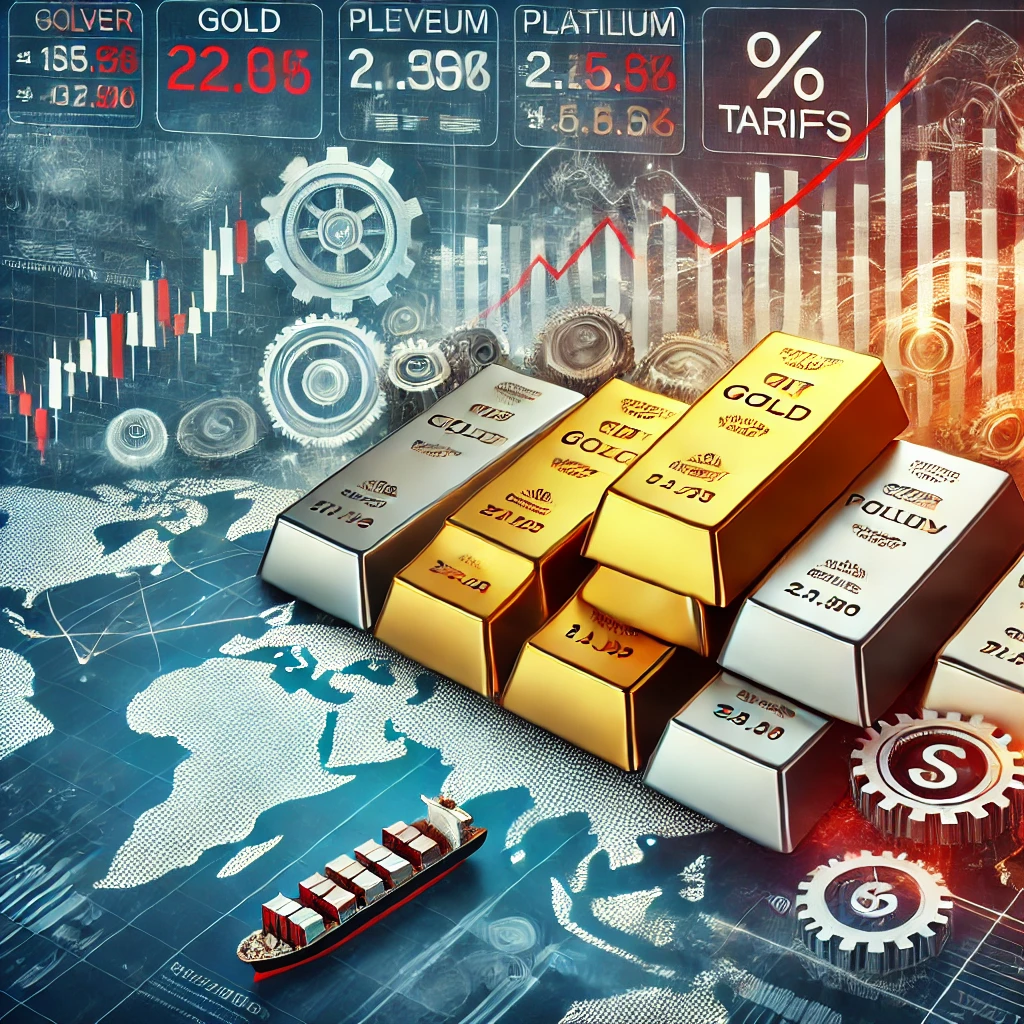

Tariff policies have long played a significant role in shaping global trade, but their effects on the metals markets are particularly profound. With ongoing trade disputes and shifting economic strategies, the impact on gold, silver, platinum, and palladium is reshaping supply chains and influencing investment decisions. Understanding these changes is crucial for stakeholders across multiple industries, including electronics, solar energy, and automotive manufacturing.
Gold and Silver: The Movement of Precious Metals
Recent tariff policies have significantly affected the metals markets, leading to notable shifts in the movement of gold and silver. A major example is the movement of approximately 600 tonnes of gold into COMEX vaults in New York from December to February. This shift was largely due to the threat of tariffs pushing futures prices higher, creating arbitrage opportunities that traders were quick to exploit.
Additionally, reports indicate that gold and silver shortages are emerging in Asia, including South Korea, where the state-run mint temporarily paused gold bar sales. Singapore and Hong Kong have also reported net outflows of about 70 tonnes of gold. These shortages are tightening global supplies, driving wholesale premiums higher, and affecting industrial production and investment strategies.
Latest News
- Mining Operators: Securing a Stake in the EV Future
- UK’s First Geothermal Lithium Production Facility Secures Planning Permission
- U.S. construction industry Faces Rising Costs Amid New Tariffs
- Tshiamiso Trust Reaches Major Milestone with R2 Billion Payout to Ex-Gold Mineworkers
The Electronics Industry and Silver Demand
Silver plays a crucial role in the electronics sector, accounting for over 50% of annual silver demand. Industrial demand for silver is expected to surpass 700 million ounces this year, fueled by increased usage in electronics and solar energy applications.
The first round of U.S.-China trade wars in 2018 forced many electronics manufacturers to shift their supply chains to alternative locations such as Vietnam, Thailand, Malaysia, and India. However, the recent imposition of new tariffs has once again placed pressure on these global networks. Electronics manufacturers who once relied on “free trade” agreements are now facing costlier adjustments as they restructure their operations to mitigate tariff impacts.
Solar Energy: A Growing Reliance on Silver
The metals markets are also feeling the effects of tariff policies in the solar energy sector. Silver’s role in photovoltaic (PV) technology makes it a crucial resource, and its demand is projected to account for over 20% of annual silver supply by 2027. By 2050, solar panel production may consume up to 98% of today’s global silver reserves.
China remains the dominant force in solar panel production due to its technological and cost advantages. In response, the U.S. has increased tariffs on silicon-based solar products and critical metals from China to 50%. However, domestic production faces significant challenges, including limited raw material supply and higher production costs—20-30% more than China. Despite these efforts, China’s leadership in the sector remains unchallenged in the short term.
The Automotive Industry and Platinum Group Metals
Tariff policies are also having a significant impact on the automotive sector, particularly concerning platinum and palladium, which are essential for catalytic converters. The U.S. auto industry depends heavily on imported parts, with Mexico supplying 40% and Canada an additional 20% of components. While tariffs on foreign vehicles might seem like an incentive to boost domestic manufacturing, they also increase production costs, leading to higher vehicle prices.
A projected 25% tariff could result in a decrease of 1 million vehicle sales, reducing demand for platinum group metals (PGMs) by 160,000 ounces. This would not only affect car manufacturers but also have widespread repercussions on the metals markets, influencing investment strategies and production planning.
Conclusion: The Future of Metals Markets Amid Tariff Uncertainty
The current global trade landscape is in flux due to evolving tariff policies. As companies and investors navigate these changes, they must consider the long-term consequences on metals markets, supply chains, and industrial production. While some regions are attempting to localize production to counteract tariffs, the costs and challenges associated with this shift remain high.
Ultimately, the continued interplay between policy decisions, trade disputes, and raw material competition will shape the future of the metals markets, with ripple effects across multiple industries worldwide. Staying informed and strategically planning for these shifts will be essential for businesses looking to adapt to the evolving economic environment.