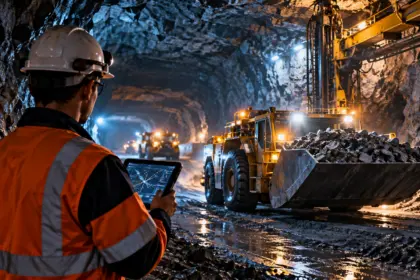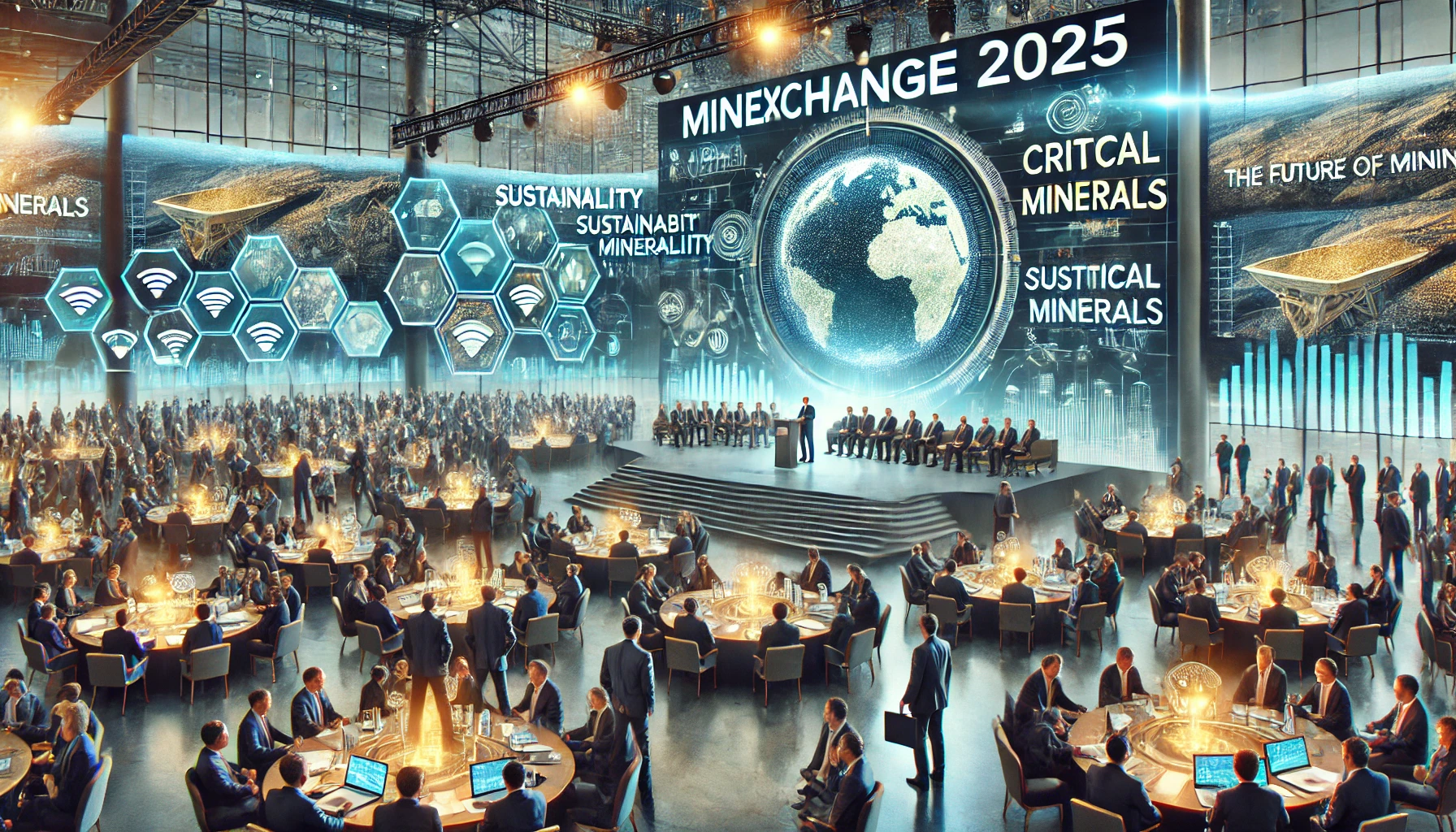
The MINEXCHANGE 2025 conference in Denver, alongside the PDAC 2025 convention in Toronto, has underscored a critical moment for the mining industry. As global demand for critical minerals surges, industry leaders, policymakers, and technology providers are focusing on strategies to enhance sustainability, optimize supply chains, and drive operational efficiency.
A Pivotal Moment for the Mining Industry
“These events are happening at a time when the industry is being challenged to rethink how resources are extracted, processed, and transported,” said Jerome Rodriguez, Executive Vice President of Sales and Marketing at Railveyor, who attended both conferences.
During PDAC, Ontario Premier Doug Ford emphasized Canada’s commitment to expediting mining developments, particularly in the Ring of Fire—a region rich in critical minerals essential for the clean energy transition. Ford’s announcement aligns with Canada’s broader strategy to strengthen its position in global mineral supply chains while reducing reliance on foreign sources.
Meanwhile, Canada’s Natural Resources Minister Jonathan Wilkinson announced an extension of the 15% mineral exploration tax credit, injecting $110 million into the sector. “This reinforces that Canada is open for business,” Rodriguez noted. “Investment in mining technology and sustainable extraction methods is now a national priority.”
Related News
- Thiess Prioritizes Abatement Over Offsets in Fleet Decarbonization Strategy
- PDAC 2025 Sparks Global Momentum for Critical Minerals and Mining Investment
- Iron Ore Price Volatility Rattles Global Markets Amid New Tariffs and Weak Demand
- Canadian Companies Brace for Trump’s Tariffs: Strategies and Survival Tactics
Technological Innovation Takes Center Stage at MINEXCHANGE 2025
At the MINEXCHANGE 2025 conference, industry experts explored the role of digital twin technology and AI-driven analytics in optimizing mining operations. Mining companies are increasingly adopting real-time data solutions to improve productivity, reduce operational risks, and lower costs.
“This signals a shift toward data-driven decision-making,” Rodriguez said. “Companies that integrate these technologies now will position themselves for long-term success.”
Discussions also revolved around automated haulage systems, electrification, and water conservation strategies, reflecting the industry’s push toward sustainability. The growing adoption of zero-emission mining vehicles and renewable energy-powered operations highlights a commitment to reducing the sector’s carbon footprint.
Balancing Speed with Sustainability in Mining Development
At PDAC, the conversation shifted to how new mining projects can be brought online quickly without compromising environmental and social standards. Tas Mohamed, CEO of Railveyor, emphasized the importance of balancing speed with sustainability in project execution.
“The demand for critical minerals is surging, and supply chains must evolve to keep up,” Mohamed said. “The industry is embracing innovative technologies to ensure responsible extraction while maintaining productivity and return on investment.”
Northern Ontario, in particular, has emerged as a focal point for mining innovation. With both Premier Ford and Minister Wilkinson advocating for faster project approvals and increased investment, the challenge now is ensuring responsible and efficient execution.
The Future of Mining: Efficiency and Sustainability Go Hand in Hand
A key takeaway from both MINEXCHANGE 2025 and PDAC 2025 was the growing recognition that optimized material movement is as critical as resource extraction itself. Efficient haulage systems, streamlined supply chains, and AI-driven operational improvements are becoming central to the mining sector’s transformation.
“The mining industry is evolving rapidly,” Mohamed concluded. “Innovation in material handling, automation, and sustainability will define the future of resource extraction.”
As the industry navigates economic shifts, geopolitical uncertainties, and increasing sustainability pressures, the insights from MINEXCHANGE 2025 and PDAC 2025 suggest that mining’s transformation is well underway—driven by technology, policy, and an urgent need to secure critical mineral supplies.