Namibia is positioning itself as a key supplier in the global clean energy value chain by scaling up sulphuric acid production, a vital input for extracting uranium, copper, manganese and rare earths. Two significant moves—the recommissioning of Vedanta’s Skorpion zinc plant and a new Green Metals Refining facility at Walvis Bay—signal the country’s intent to reduce dependence on imports and secure chemical supply for a wave of critical minerals projects.
Green Metals Refining Bets Big on Walvis Bay
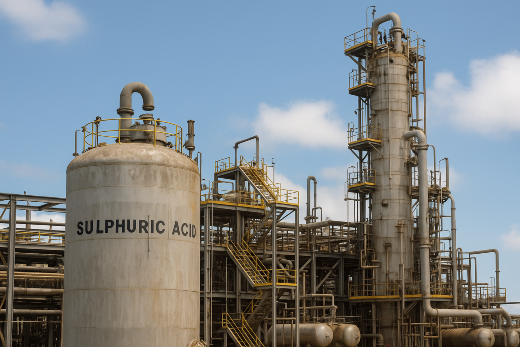
London-based Green Metals Refining will invest $59 million in the first phase of a sulphuric acid plant integrated with its planned manganese refinery at Walvis Bay. Phase one is designed to produce 175,000 metric tons per year, with long-term capacity to scale up to 720,000 tons annually.
Chief executive Derk Hartman said Namibia’s position as a net importer of sulphuric acid, combined with a growing pipeline of acid-intensive mining projects, created “a compelling business case that can benefit local third-party metals projects.” The facility, expected online by late 2027, will supply uranium and copper operations while anchoring downstream industrial growth around Walvis Bay’s port.
Vedanta to Restart Skorpion Zinc Facility
Vedanta Resources, which suspended operations at its Skorpion zinc mine in 2020, confirmed it will recommission its sulphuric acid plant within four to six months. Once operational, the plant will produce around 1,000 tons per day—roughly 365,000 tons per year—restoring a critical chemical source to Namibia’s mining sector.
The move comes as Vedanta weighs strategic options for Skorpion, including potential re-integration into its global zinc portfolio. By reactivating the acid plant, the company is also addressing supply bottlenecks faced by miners reliant on imported acid.
Why Sulphuric Acid is Critical
Sulphuric acid is the backbone of hydrometallurgical processing across multiple commodities:
- Uranium: Namibia, the world’s third-largest uranium producer, relies heavily on acid leaching.
- Copper: Heap leaching of oxide ores demands a stable acid supply to keep unit costs competitive.
- Manganese and Rare Earths: Refining and beneficiation often depend on acid availability to achieve purity thresholds.
With at least eight active critical mineral projects in development, consistent access to sulphuric acid is a prerequisite for Namibia’s ambitions in clean energy minerals. Until now, imports have filled the gap—at a premium and with exposure to volatile global logistics.
Economic and Strategic Implications
Import Substitution and Cost Control
By shifting to local production, Namibia can cut foreign exchange outflows and reduce logistics costs tied to shipping hazardous chemicals. Shorter supply chains could help mines stabilize operating expenses, a competitive edge as margins tighten globally.
Security of Supply
Reliable domestic acid production insulates miners from port disruptions and shipping delays, ensuring projects can proceed on schedule.
Downstream Industrial Value
Both projects add jobs in chemical engineering, plant maintenance, and logistics. Walvis Bay, already a logistics hub, could evolve into a processing corridor for southern Africa’s mining industry.
Environmental and Operational Risks
Sulphuric acid production raises concerns around SO₂ emissions, water consumption, and spill risk. Namibia’s arid climate and fragile ecosystems will require robust oversight. Industry insiders note that ensuring skilled operators and modern safety infrastructure is critical to sustainable expansion.
Skillings Analysis
- Strategic Leverage: Namibia is aligning chemical production with critical mineral expansion, a move that could elevate its role in global supply chains.
- Risk Factor: Execution risks remain high—capital overruns, environmental opposition, and water scarcity could delay or downsize projects.
- Regional Impact: If successful, Namibia could emerge not just as a mineral exporter but as a processing hub for southern Africa, reshaping trade patterns in uranium and copper.
Outlook
In the near term, Vedanta’s restart will ease supply pressures within months, providing miners with relief ahead of new production cycles. By 2027, Green Metals Refining’s Walvis Bay complex could more than double the nation’s acid output, transforming Namibia from importer to potential net exporter.
For operators, the message is clear: acid supply—once a weak link—may soon become a competitive advantage for Namibian mining. The coming quarters will reveal whether financing, environmental safeguards, and infrastructure support can keep pace with the country’s ambition.