Key Takeaways
- ABTC secured a $900M EXIM Bank Letter of Interest to develop the Nevada lithium project.
- The project could produce 33,000 tons of lithium hydroxide annually, fueling up to 500,000 EVs.
- Washington sees the project as central to reducing dependence on Chinese lithium refining.
- Claystone extraction technology remains unproven at commercial scale, posing execution risks.
- Success could make Nevada a cornerstone of the U.S. battery supply chain.
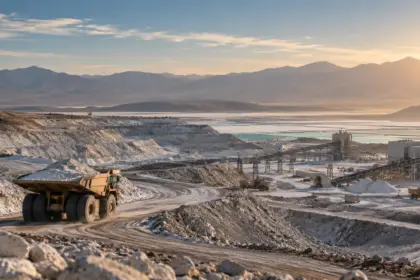
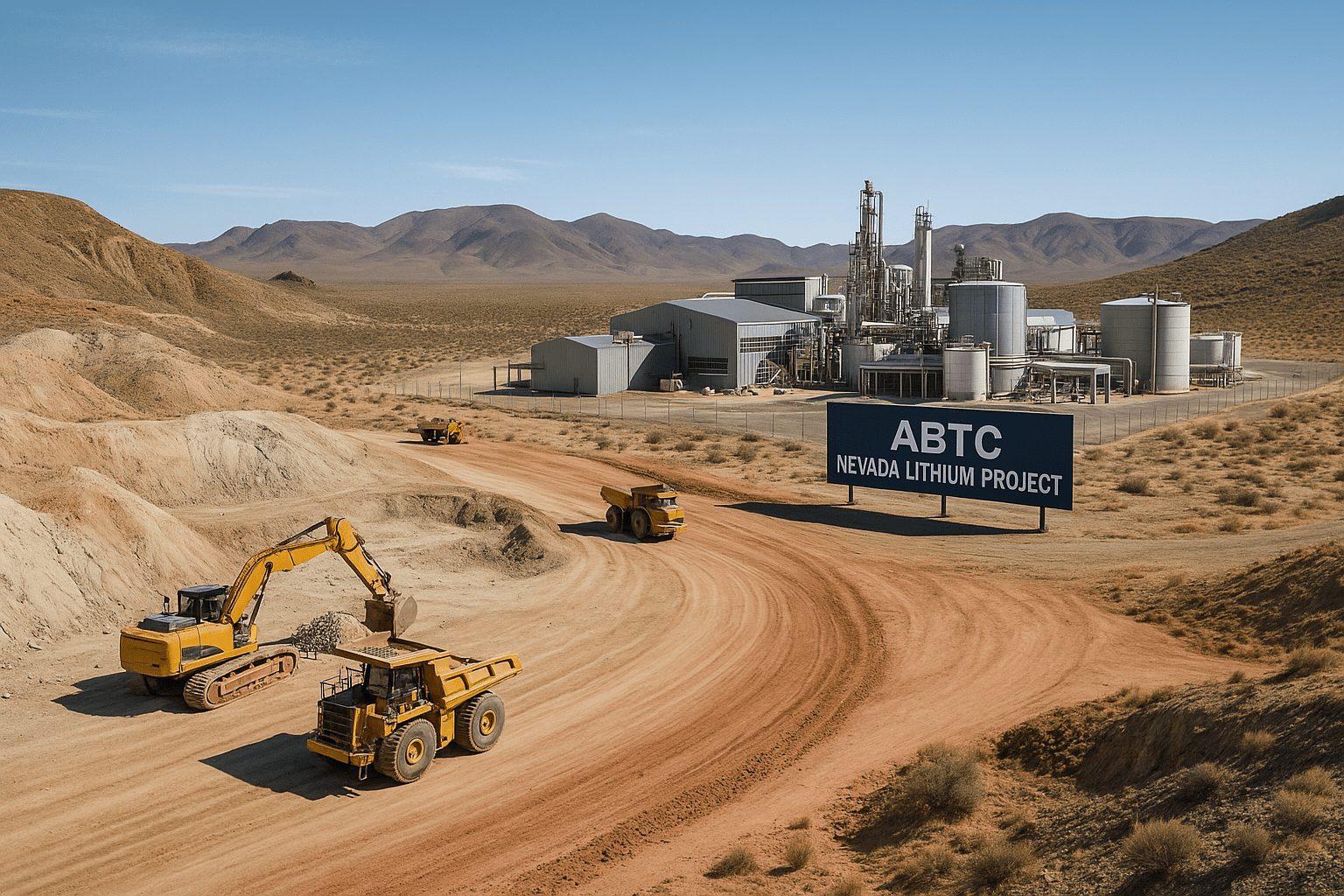
In the high desert outside Tonopah, Nevada, an expanse of claystone and scrubland is poised to become a symbol of America’s strategy to rebuild its battery supply chain.
American Battery Technology Company has secured a $900 million Letter of Interest from the Export-Import Bank of the United States to develop the Nevada lithium project—an ambitious effort to establish domestic production of battery-grade lithium hydroxide at a scale not yet seen in the U.S.
The preliminary commitment, announced in June, reflects a sweeping federal industrial policy aimed at reducing dependence on Chinese processing capacity and reinforcing the resilience of the U.S. battery supply chain.
If fully financed and constructed, the Nevada lithium project could transform the economic fortunes of a region long reliant on precious metals mining while positioning the U.S. as a credible competitor in the global battery materials race.
“This proposed financial support can greatly accelerate the commercialization of our domestic critical mineral mine and refinery,” said Ryan Melsert, ABTC’s chief executive.
A Shift in Industrial Policy
The scale of proposed financing underscores Washington’s intent to deploy public capital to reestablish strategic mineral capabilities. President Trump’s executive order this year directed agencies to prioritize domestic lithium development, citing risks to national security and supply chain continuity.
Today, nearly all lithium refining occurs in China, despite the U.S. accounting for roughly 15% of global battery demand. Policymakers see projects like ABTC’s as foundational to a broader push to build a secure U.S. battery supply chain.
“Lithium is no longer just a commodity—it’s a strategic asset,” said Emily Hersh, chief executive of Luna Lithium, a Nevada-based exploration firm. “This project represents a major step toward domestic independence.”
Economic Promise—and Uncertainty
The Nevada lithium project could generate over 300 permanent jobs and deliver significant economic stimulus to Tonopah, a community shaped by the booms and busts of mining. ABTC projects it will produce 33,000 tons of battery-grade lithium hydroxide annually—enough to support roughly 500,000 electric vehicles each year and strengthen the U.S. battery supply chain against global disruptions.
However, success hinges on technical execution and regulatory approvals. Claystone lithium extraction, which uses proprietary leaching methods optimized for Nevada’s geology, remains untested at commercial scale.
“This is a promising approach, but it must deliver consistent volumes and quality,” said Simon Moores, managing director of Benchmark Mineral Intelligence. “The global lithium market has little tolerance for underperformance.”
Domestic Production as a Strategic Priority
For U.S. automakers and battery manufacturers, the Nevada lithium project offers the potential to localize supply, reduce logistics costs, and lower carbon emissions compared to trans-Pacific shipping.
More than 80% of America’s lithium currently comes from overseas, leaving producers vulnerable to trade conflicts and supply shocks. While ABTC’s planned output alone won’t close the gap, it marks progress toward a more resilient U.S. battery supply chain.
“There’s no single project that solves the problem,” Hersh said. “But if this comes together, it sets a model others can follow.”
An Inflection Point—or a Mirage
ABTC aims to break ground in 2026 if financing and permits materialize. Full production could follow within four years.
Even with the Export-Import Bank’s preliminary commitment, the path is uncertain. ABTC must secure binding financing agreements, demonstrate economic viability, and navigate environmental reviews under Nevada and federal law.
For Nevada, the stakes are clear: a successful project could redefine the state’s role in the energy transition and embed lithium production as a pillar of the U.S. battery supply chain.
“This is about more than one company,” Hersh said. “It’s about whether the United States is willing to invest in the raw materials that underpin the electrification economy.”