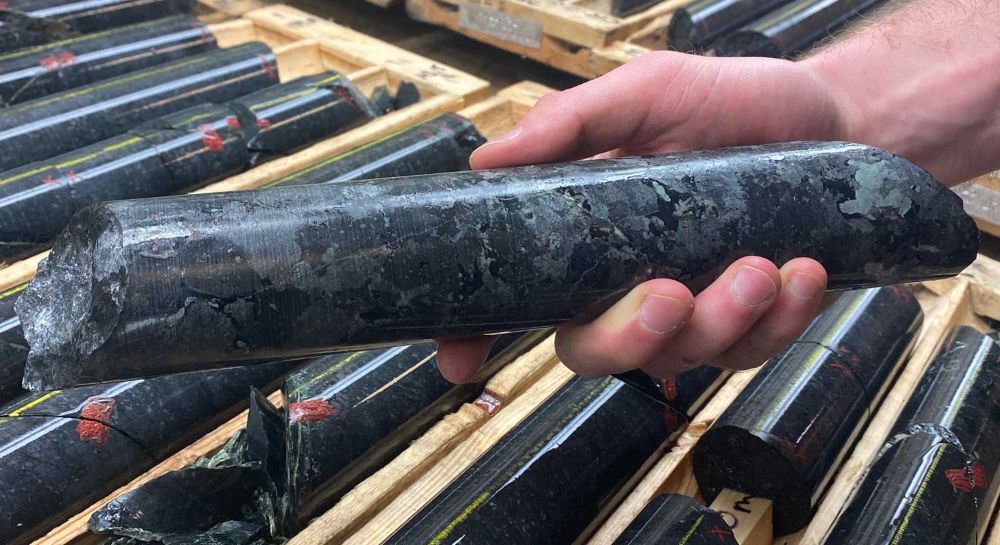
The nickel market outlook 2026 is defined by a high-stakes tug-of-war between dominant Indonesian supply engineering and a nascent Western movement toward sovereign critical mineral security. As global primary nickel production matures into an era of structural surplus, market participants are forced to navigate aggressive regulatory quota shifts in Southeast Asia alongside major project milestones in North America: most notably the federal approval pathway for Canada Nickel Company’s massive Crawford project.
For operators, investors, and policymakers, understanding the intersection of these forces requires moving past short-term price noise and examining the underlying fundamentals of supply-demand balances, cost curves, and ESG-compliant Class 1 nickel sourcing.
1. Global Supply-Demand Balance: Navigating the 2026 Surplus
Entering the second half of 2026, consensus among major commodity forecasters indicates that the global primary nickel market remains in a structural surplus, though the magnitude of that oversupply has moderated compared to previous years.
Data compiled from various market intelligence firms highlights divergent estimates for the 2026 surplus:
- International Nickel Study Group (INSG) & Industry Consensus: Estimates cluster around a global surplus of 261,000 tonnes, with primary production projected near 4.08 million tonnes against usage of 3.82 million tonnes.
- S&P Global / Global Carbon Fund Projections: Modeling a slightly tighter market balance, forecasting a surplus of approximately 156,000 tonnes.
- Shanghai Metals Market (SMM): Projects a wider oversupply range spanning 120,000 to 275,000 tonnes, depending heavily on second-half smelting run rates in Indonesia and China.
| Forecasting Institution | Projected 2026 Balance | Primary Price Assumption / Driver |
|---|---|---|
| CRU Group | Rebalancing Year (Supply down 1.5% YoY) | Policy-driven supply discipline |
| Goldman Sachs | Moderate Surplus | US$17,200/t average (revised upward) |
| Bernstein Research | Modest Surplus | US$17,357/t average |
| World Bank | Tightening Trajectory | US$15,500/t average, rising into 2027 |
Despite persistent oversupply, demand drivers remain resilient. Global consumption continues to expand at roughly 6% to 7% annually, propelled by stainless steel manufacturing and high-nickel cathode formulations in the electric vehicle (EV) sector. While the surplus has prevented runaway price rallies, it has also established a firmer cost floor as high-cost marginal producers face margin compression.

2. Indonesia’s RKAB Quota Strategy: The Ultimate Market Swing Factor
Indonesia remains the undisputed center of gravity for global nickel markets, accounting for roughly half of worldwide primary production. However, government intervention via the RKAB (Work Plan and Budget) mining quota system has transformed the archipelago from a predictable volume engine into a dynamic regulatory variable.
The Quota Squeeze and Policy Shifts
At the close of 2025 and heading into 2026, Indonesia’s Ministry of Energy and Mineral Resources signaled an intent to enforce strict production discipline. Initial proposals for 2026 mining quotas slashed allowable nickel ore extraction to a range of 250 to 270 million wet metric tonnes (wmt), down significantly from the 379 million wmt approved for 2025. This 34% reduction was explicitly designed to curb oversupply, support domestic pricing, and crack down on environmentally unregulated processing operations.
However, mid-year administrative updates introduced new complexities. Reports circulated that Jakarta was weighing adjustments to raise quotas toward 300 to 360 million wmt during mid-year evaluations, responding to pressure from domestic rotary kiln-electric furnace (RKEF) operators facing feedstock starvation. This policy volatility explains why nickel trading has oscillated within a persistent mid-teens range rather than establishing a decisive breakout trend.
- Annual Approval Mechanisms: The shift from three-year mining approvals to strict annual reviews grants regulators direct leverage over global supply.
- Environmental Compliance: Mandated allocations for mine rehabilitation and tailings management have raised operating expenditures for local miners.
- Export Control: Strict alignment between mine gate quotas and downstream National Interest processing projects ensures value-addition stays onshore.
3. The Western Response: Crawford Project Approval and Alternative Sulphide Supply
While Indonesian laterite production dominates volume, Western automotive supply chains and defense planners face acute exposure to geopolitical and ESG risks associated with Southeast Asian supply. This dynamic has elevated the strategic importance of developing alternative, large-scale nickel sulphide deposits in stable jurisdictions like Canada, Australia, and the Nordic region.

A pivotal milestone in this sovereign supply push is Canada Nickel Company’s Crawford nickel-cobalt project in Timmins, Ontario. Securing federal approval milestones moves Crawford closer to becoming one of the largest nickel sulphide operations globally.
Why Crawford Matters to the 2026 Landscape
- Scale and Longevity: Crawford is designed to produce large volumes of high-grade nickel concentrate, filling a critical void for Western Class 1 nickel required by zero-carbon battery manufacturers.
- Low Carbon Footprint: Leveraging ultramafic rock formations that naturally sequester carbon dioxide, Crawford represents a new benchmark for low-emission mining essential for automakers complying with stringent Scope 3 carbon accounting standards.
- Replacement Velocity: Industry analyses underscore that meeting projected long-term demand growth requires bringing online approximately seven “Crawford-scale” projects over the next decade. Consequently, project approvals in Tier-1 jurisdictions are treated by market strategists as vital structural signposts rather than immediate 2026 volume shocks.
4. Price Outlook and Strategic Implications for Operators
Nickel prices in 2026 have generally traded within a resilient corridor of US$15,000 to $18,000 per tonne, occasionally testing higher boundaries during periods of acute regulatory tightening in Indonesia.
Institutional price forecasts reflect this balanced equilibrium:
- BMI (Fitch Solutions): Estimates a 2026 annual average of US$15,800/t.
- Goldman Sachs: Maintains a higher target averaging US$17,200/t, citing elevated cost support and realized Indonesian quota compliance.
- World Bank: Projects a baseline of US$15,500/t, stepping up to US$16,000/t by 2027 as global demand absorption gradually erodes remaining surplus inventories.

Strategic Takeaways for Industry Stakeholders
For mining executives, investors, and industrial consumers, navigating the 2026 nickel environment demands operational agility and rigorous supply chain mapping:
- Monitor Regulatory Signals: Indonesian RKAB approvals remain the single most volatile input for short-term price discovery. Mid-year quota expansions can quickly soften the market, while strict enforcement preserves price floors.
- Prioritize ESG and Grade Differentiation: The market increasingly bifurcates between carbon-intensive Indonesian NPI/matte and premium, low-carbon Western sulphide concentrate. Securing offtake from permitted projects like Crawford is becoming a core risk-mitigation strategy for battery OEMs.
- Capital Discipline: With surplus conditions capping explosive price gains, operators must focus on all-in sustaining costs (AISC) and technological efficiencies: such as fleet electrification and automated ore sorting: to protect operating margins.
As the industry moves toward the latter half of the decade, the interplay between Indonesian resource governance and North American project execution will continue to redraw the global supply map.