The global nickel market enters 2026 at a critical juncture. After several years of persistent oversupply driven by an unprecedented production boom in Southeast Asia, the narrative is shifting from “volume at any cost” to strategic supply management. Indonesia, which now accounts for approximately two-thirds of global nickel supply, has effectively become the “OPEC of nickel,” wielding significant influence over global pricing through quota adjustments and downstream processing mandates.
For operators and investors, the 2026 horizon is defined by the tension between a statistical surplus and a tightening physical market for specific nickel intermediates. While headline data from the International Nickel Study Group (INSG) suggests a surplus, the reality on the ground: marked by Indonesian ore quota cuts and the complex ramp-up of High-Pressure Acid Leach (HPAL) facilities: paints a more nuanced picture.
The Indonesian “Quota Squeeze” and Market Control
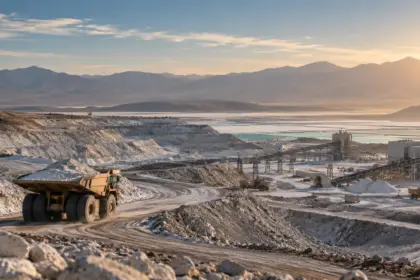
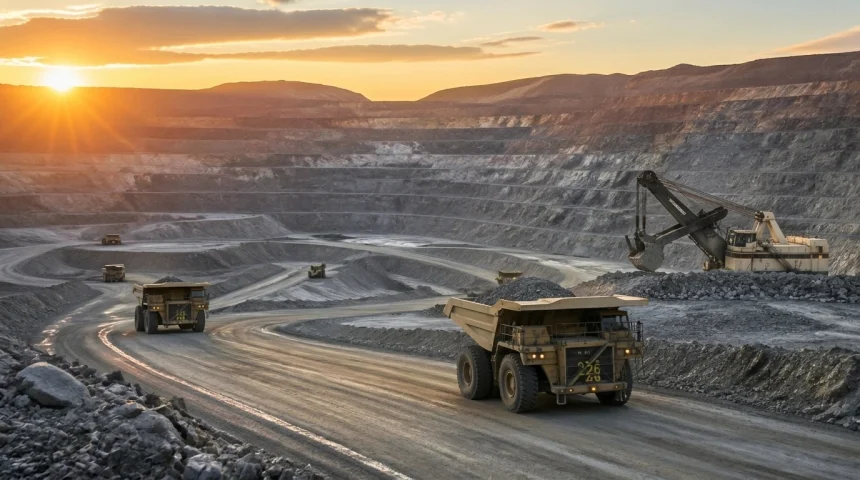
The most significant driver for the nickel market outlook 2026 is Indonesia’s transition from a high-growth producer to a market stabilizer. In late 2025 and early 2026, the Indonesian government implemented a rigorous new quota system (RKAB), slashing ore production targets to approximately 250–270 million wet metric tonnes. This is a sharp reduction from the 364 million tonnes seen in 2025.
This policy shift aims to achieve two primary objectives: supporting LME (London Metal Exchange) prices to maximize state royalty revenues and curbing the rapid depletion of high-grade saprolite ores. By moving from a three-year to a one-year quota cycle, Jakarta has gained the agility to respond to market fluctuations in real-time.
Furthermore, the government has placed a moratorium on new Nickel Pig Iron (NPI) smelters and HPAL plants that do not include significant downstream value-add components. This “cap” on future capacity ensures that the massive supply glut of the early 2020s does not repeat, providing a firmer floor for global prices.

HPAL Technology: The Bridge to Battery Grade
The divergence between Class 2 nickel (primarily for stainless steel) and Class 1/Battery-grade nickel (for EVs) remains a central theme. The industry’s solution to the battery-grade deficit has been the rapid deployment of HPAL technology.
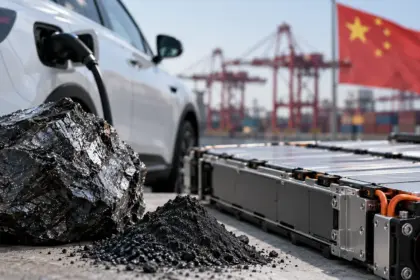
HPAL allows for the processing of low-grade limonite ores into Mixed Hydroxide Precipitate (MHP) and nickel matte, which are then refined into nickel sulfate for lithium-ion batteries. However, HPAL projects are notoriously capital-intensive and technically volatile. Throughout 2026, the market will be watching the operational performance of several major Indonesian hubs.
Key risks associated with the HPAL surge include:
- Operational Reliability: Many plants are operating below nameplate capacity due to technical bottlenecks in the high-pressure circuits.
- Waste Management: Deep-sea tailing placement (DSTP) remains a contentious ESG issue, potentially limiting the “green” premium for Indonesian nickel in Western markets.
- Input Costs: High consumption of sulfuric acid and energy makes these facilities sensitive to regional commodity inflation.
Despite these hurdles, MHP has become the preferred feedstock for the battery supply chain, often trading at a premium to NPI when LME inventories are tight.
Price Forecast 2026: Base, Bull, and Bear Cases
As we look toward the second half of 2026, analyst consensus is coalescing around a “constructive” price environment, though volatility remains high. Goldman Sachs recently upgraded its 2026 average forecast to US$17,200/t, citing the higher marginal cost floor established by Indonesian supply discipline.
| Scenario | LME Price Range (Avg US$/t) | Key Drivers |
|---|---|---|
| Bear Case | $14,000 – $16,000 | Indonesian quotas loosen; HPAL ramps exceed expectations; stagnant EV demand in Europe/China. |
| Base Case | $17,000 – $19,000 | Disciplined Indonesian quota enforcement; moderate surplus contraction; steady stainless/EV growth. |
| Bull Case | $20,000 – $22,000+ | Strict 250Mt ore cap; significant HPAL technical failures; supply deficit in battery-grade nickel. |
Recent trading data indicates that the market is already testing the upper bounds of the base case, with prices occasionally spiking toward US$20,000/t on news of permit delays or logistical disruptions in the Obi Island and Morowali regions.

Demand Dynamics: Beyond the EV Hype
While electric vehicles are the fastest-growing demand segment, stainless steel remains the bedrock of the nickel market, accounting for over 65% of total consumption. In 2026, the recovery of global manufacturing and infrastructure spending in India and Southeast Asia is expected to offset any cooling in the Chinese real estate sector.
In the battery sector, the “chemistry war” continues. While Lithium Iron Phosphate (LFP) has gained market share in entry-level vehicles, high-nickel ternary batteries (NMC 811) remain the standard for long-range and performance models. The 2026 outlook assumes a stable split, with nickel-rich chemistries benefiting from the rollout of next-generation solid-state and semi-solid-state cells.
ESG and the Western Response
For miners outside of Indonesia, 2026 is a year of survival and differentiation. Western producers in Canada and Australia are increasingly leaning into “Green Nickel” certifications, hoping to capture a price premium from automakers concerned with supply chain transparency.
The USGS report on critical minerals highlights that while Indonesia dominates volume, the geopolitical risk of such concentrated supply is pushing North American and European policymakers to incentivize domestic projects. However, without a significant price premium or government subsidies, many high-cost Western mines remain at risk of care-and-maintenance if prices dip below the $16,000/t mark.
Operational efficiency is the primary defense. Companies are increasingly integrating real-time data and remote monitoring to lower their All-In Sustaining Costs (AISC).

Conclusion: Navigating the 2026 Landscape
The nickel market in 2026 is no longer a simple story of oversupply. It is a market undergoing a fundamental structural shift. Indonesia’s emergence as a sophisticated “swing producer” has introduced a level of supply management that the industry has not seen in decades.
Investors and operators should focus on three key indicators throughout the year:
- RKAB Quota Fulfillment: Are Indonesian miners hitting the 250–270 Mt target, or are they finding “backdoor” production routes?
- MHP Export Volumes: Are HPAL plants delivering consistent battery-grade feedstock to the global market?
- LME Inventory Levels: Do we see a sustained drawdown in Class 1 stocks, signaling a genuine move toward a deficit?
By staying informed through daily intelligence and market analysis, industry professionals can navigate the pricing pressures and supply surges that will define this critical metal’s future. For more in-depth coverage on critical minerals and the energy transition, visit our latest market outlook reports.