The global uranium market is entering a phase of structural realignment where legacy supply constraints are colliding with an unprecedented demand profile driven by the artificial intelligence (AI) revolution. As Kazatomprom, the world’s largest producer, navigates systemic production hurdles, the narrative for uranium is shifting from a slow recovery to a high-stakes race for secure, baseload power.
While spot prices have historically been dictated by utility contracting cycles, the emergence of “Big Tech” as a primary financier of nuclear infrastructure has introduced a new price floor. The path to $200 per pound: once considered a “tail-risk” scenario: is now being actively mapped by analysts as supply deficits widen and the race for Small Modular Reactors (SMRs) accelerates.
The Kazatomprom Constraint: Sulphuric Acid and Budenovskoye
At the heart of the supply-side crunch is Kazakhstan, which accounts for approximately 40% of global uranium production. Kazatomprom has recently signaled that its ability to meet previous production targets is being hampered by two critical factors: a regional shortage of sulphuric acid and construction delays at major growth projects like Budenovskoye.
Sulphuric acid is the lifeblood of Kazakhstan’s in-situ recovery (ISR) mining method. Without adequate supplies of this reagent, the company cannot maintain the necessary acidification of the ore bodies to extract the uranium. In its latest guidance, Kazatomprom revised its 2025 production targets down to 25,000–26,500 tonnes of uranium (tU) on a 100% basis. For 2026, the company has set a range of 27,500–29,000 tU, but this remains explicitly “subject to sulphuric acid availability.”

These cuts represent a removal of approximately 13 million pounds of U3O8 from the market compared to original estimates. For operators and investors, this confirms that the supply curve is not just tight: it is fragile. The delays at the Budenovskoye project, which was expected to be a major contributor to global supply by 2026, further extend the timeline for any significant supply relief.
The AI-SMR Nexus: Tech Giants Underwrite the Future
While supply struggles to keep pace, the demand side is being redefined by hyperscalers like Microsoft, Amazon, and Google. These firms are no longer just purchasing power; they are actively funding the development of the next generation of nuclear energy.
The AI-Uranium nexus is built on the reality that data centers require 24/7 carbon-free baseload power that wind and solar alone cannot provide at the necessary scale. Microsoft’s landmark deal to restart Three Mile Island Unit 1 and Amazon’s $500 million investment in X-energy are clear signals that the tech sector is willing to pay a premium for energy security.
Key Big Tech Nuclear Commitments
- Amazon: Targeting over 5 GW of SMR capacity with X-energy by 2039.
- Microsoft: 20-year PPA with Constellation Energy for the restart of Three Mile Island.
- Google: Partnership with Kairos Power to deploy a fleet of SMRs totaling 500 MW by 2035.
As discussed in our analysis of the AI power race, these “direct checks” from tech giants are moving SMRs from conceptual designs to fully funded commercial pipelines. This long-term demand visibility allows producers like Cameco to demand higher realized prices in their contracting, a trend we highlighted in our report on uranium contracting cycles.

Mapping the Path to $200
For uranium to hit the $200/lb mark by late 2026 or early 2027, the market would need to transition from its current “stalemate” between producers and utilities into a state of panic-buying. The “base case” for most institutions remains in the $100–$150/lb range, but several catalysts could push the price into extreme territory.
- Inventory Depletion: Many utilities have relied on inventory buffers built up during the 2019–2023 period. As these buffers exhaust by 2026, utilities will be forced back into a spot market where mobile inventory is increasingly held by financial vehicles like the Sprott Physical Uranium Trust (SPUT).
- Conversion and Enrichment Bottlenecks: Supply isn’t just about the mine; it’s about the fuel cycle. Geopolitical tensions involving Russian enrichment services have created a premium on Western-sourced fuel, further tightening the available supply of ready-to-use uranium.
- Secondary Supply Drought: The long-standing era of “underfeeding” (where enrichers provided extra uranium back to the market) has ended. The market is now in an “overfeeding” phase, where the enrichment process itself consumes more natural uranium.
Market Snapshot: 2025-2026 Outlook
| Metric | 2025 Forecast | 2026 Forecast | Impact |
|---|---|---|---|
| Kazatomprom Production (100%) | 25.0k – 26.5k tU | 27.5k – 29.0k tU | High Risk (Acid supply) |
| Global Annual Deficit | ~20M lbs U3O8 | ~22M lbs U3O8 | Structural Tightness |
| Big Tech Nuclear PPA Targets | 3.5 GW | 10.0 GW+ (Cumulative) | Price Floor Support |
| Consensus Spot Price | $90 – $115/lb | $110 – $155/lb | Upside toward $200 |
Operational Realities and Technical Risks
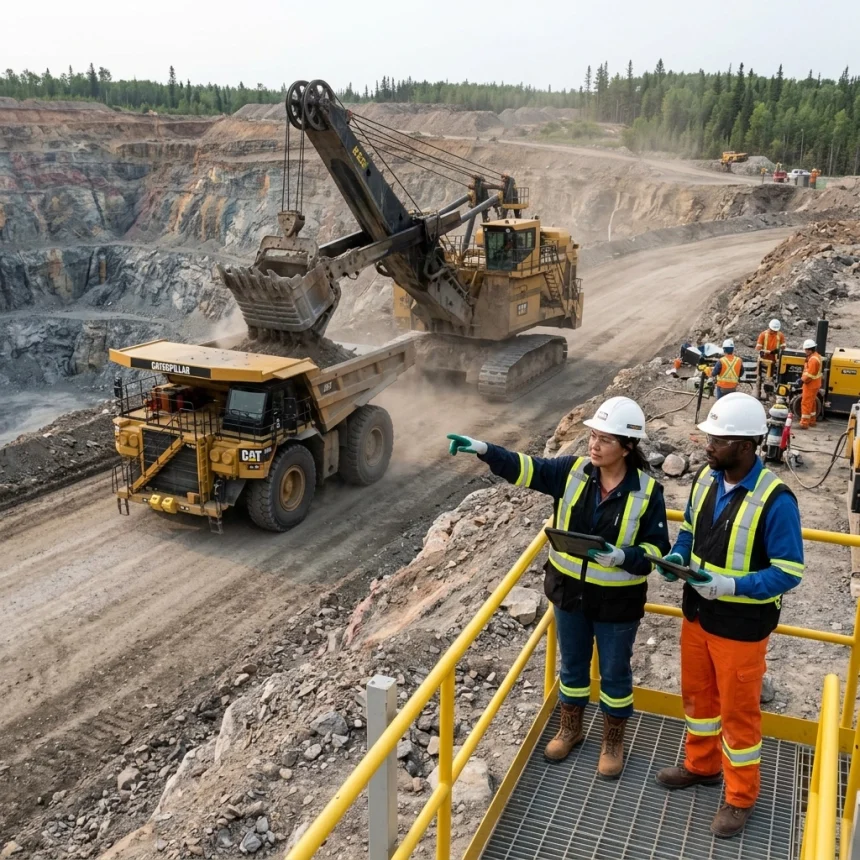
Despite the bullish outlook, the mining industry faces significant operational headwinds. The cost of reagents, specialized labor, and equipment has risen sharply. In the control rooms of major operations, the focus has shifted from maximizing volume to managing the logistical complexity of extraction in an inflationary environment.

Furthermore, the SMR “surge” is a post-2030 volume story for actual reactor demand. In the 2026 window, the demand is primarily “contractual”: it sets the price for future delivery. If SMR licensing faces further regulatory delays or if the “first-of-a-kind” (FOAK) technology costs exceed expectations, some of the speculative heat could leave the market. However, with the physical deficit in primary mine supply remaining the dominant factor, the downward risk appears limited compared to the upward potential.
Conclusion: A Structural Reset
The uranium market is no longer in a standard commodity cycle; it is undergoing a structural reset. The combination of Kazatomprom’s supply constraints and the tech industry’s desperate need for firm power has created a scenario where $200 uranium is a mathematical possibility if supply disruptions continue.
For decision-makers in the mining and energy sectors, the focus must remain on the long-term fundamentals: a cumulative deficit of 300 million pounds by 2035 and a supply chain that is struggling to react to the new reality of the energy transition.