As the mining sector enters the second half of 2026, the convergence of the energy transition, geopolitical supply chain de-risking, and the “AI-Energy Nexus” has created a high-stakes environment for institutional investors and operators alike. With gold holding steady near the $4,700/oz mark and copper supply chains facing unprecedented pressure from new tariff structures, the “Weekly Power List” identifies the companies most effectively navigating these complexities through M&A, technological adoption, and strategic resource positioning.
The following five tickers represent the apex of operational resilience and growth potential for July 2026.
1. BHP (NYSE: BHP) – The Autonomy Leader
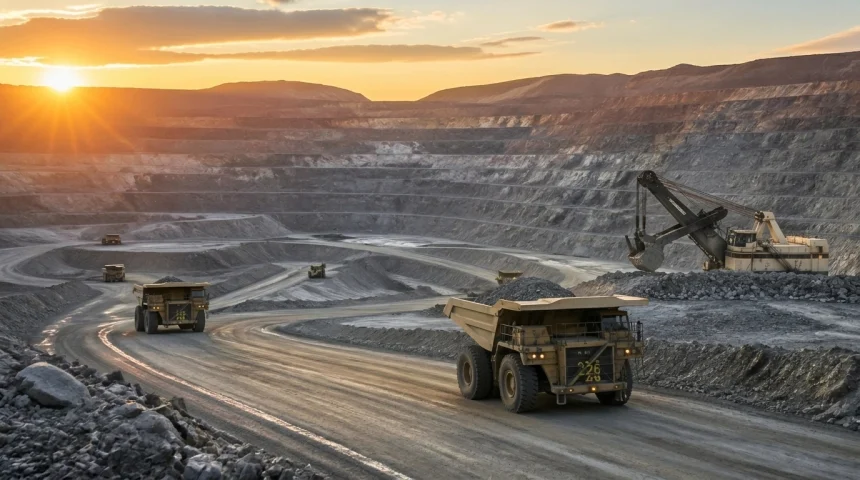
BHP remains a primary focus for July as the company completes its full-scale transition to autonomous operations in Western Australia. The South Flank iron ore mine has recently finalized its autonomous haulage rollout, with 41 Komatsu 930E trucks now operating within five specialized Autonomous Operating Zones.
Beyond iron ore, BHP’s strategic pivot toward copper is the core of its 2026 bull case. Following the high-profile consolidation efforts of the previous year, the company is now focusing on organic growth and brownfield expansions. The safety record of its autonomous fleet: recording zero haul-truck fatalities over a seven-year period: is more than a social metric; it is a clear indicator of the future of remote and autonomous mining and its impact on lowering the total cost of ownership (TCO) in tier-one jurisdictions.

2. Freeport-McMoRan (NYSE: FCX) – Copper’s Supply Guardian
Freeport-McMoRan enters July 2026 with a revised copper sales forecast of approximately 3.4 billion pounds for the year. The company’s long-term stability was significantly bolstered earlier this year by the agreement in principle to extend PT Freeport Indonesia’s resource rights at Grasberg through 2041.
In the current market, where copper is increasingly viewed as a national security asset due to its role in high-performance computing and grid electrification, Freeport’s mastery of large-scale leaching technology and underground block caving provides a competitive moat. Investors are watching for further updates on the Lobito Corridor’s impact on global logistics, which continues to reshape how copper concentrates reach Western markets. For a deeper look at these shifts, see our analysis on the Lobito Corridor’s strategic impact.
3. Agnico Eagle Mines (NYSE: AEM) – Operational Discipline in a High-Gold Era
With gold prices sustaining record levels, Agnico Eagle has emerged as the preferred “safe haven” for gold exposure without the geopolitical risks associated with other major producers. The company’s midpoint production guidance of 3.4 million ounces for 2026 remains on track, with the LaRonde complex expected to contribute 340,000 ounces.
Agnico’s 2026 strategy is defined by “back-half weighted” production, meaning the third and fourth quarters are expected to deliver the bulk of the year’s free cash flow. Their focus on the Canadian Malartic/Odyssey project and the high-grade Detour Lake expansion exemplifies a commitment to low-risk, high-margin jurisdictions that appeal to institutional mandates.

4. Cameco (NYSE: CCJ) – Navigating the Uranium Supply Crunch
Uranium remains one of the most supply-constrained commodities in the 2026 portfolio. Cameco, alongside its partnership with Brookfield and the acquisition of Westinghouse, has positioned itself as a full-cycle nuclear energy provider. Spot prices for uranium have fluctuated between $85 and $95 per pound through the first half of the year, driven by Kazatomprom’s 2026 production resets and reduced guidance at McArthur River.
The structural deficit in the uranium market is no longer a forecast; it is a reality. As utilities scramble to secure long-term contracts, Cameco’s ability to manage its world-class assets at Cigar Lake and McArthur River while integrating its downstream nuclear services provides a unique value proposition. For those tracking the pricing trajectory, our uranium price forecast 2026 explores the path toward higher sustained valuations.
5. Perpetua Resources (NASDAQ: PPTA) – The Critical Minerals Strategic Play
Perpetua Resources makes the Power List this month due to its vital role in the U.S. defense supply chain. In May 2026, the company secured a landmark $2.9 billion loan from the U.S. government to accelerate construction at the Stibnite Gold Project in Idaho.
The project is not only a significant gold play but also the primary domestic source for antimony: a mineral essential for military munitions, large-scale batteries, and semiconductors. Following China’s continued export restrictions on critical minerals, Perpetua’s transition from “early works” into full-scale construction makes it a critical ticker to watch as the U.S. seeks to decouple its defense needs from adversarial supply chains. Learn more about the antimony defense squeeze and why Perpetua is at the center of this trend.

July 2026 Mining Market Snapshot
The following data points reflect the current market conditions for the top-tier mining equities as of July 2, 2026.
| Ticker | Primary Commodity | 2026 Guidance/Metric | Key Driver for July |
|---|---|---|---|
| BHP | Copper / Iron Ore | 41 Autonomous Trucks (WA) | AHS operational ROI & Copper M&A |
| FCX | Copper | 3.4B lbs Copper Sales | Grasberg extension stability |
| AEM | Gold | 3.4M oz (Midpoint) | Record Gold prices (~$4,700/oz) |
| CCJ | Uranium | $85-$95/lb Spot Range | Structural supply deficit |
| PPTA | Antimony / Gold | $2.9B US Gov Loan | Strategic defense supply chain |
2026 Outlook: Technological ROI and ESG Reporting
As operators continue to deploy capital into mine electrification and diesel displacement, the return on investment is becoming clearer. Companies that successfully integrated AHS and electric fleets early are now seeing a 15-20% reduction in maintenance costs and a significant boost in their ESG reporting metrics. The winners in the second half of 2026 will be those who can marry these technological gains with disciplined capital allocation in an increasingly volatile geopolitical landscape.