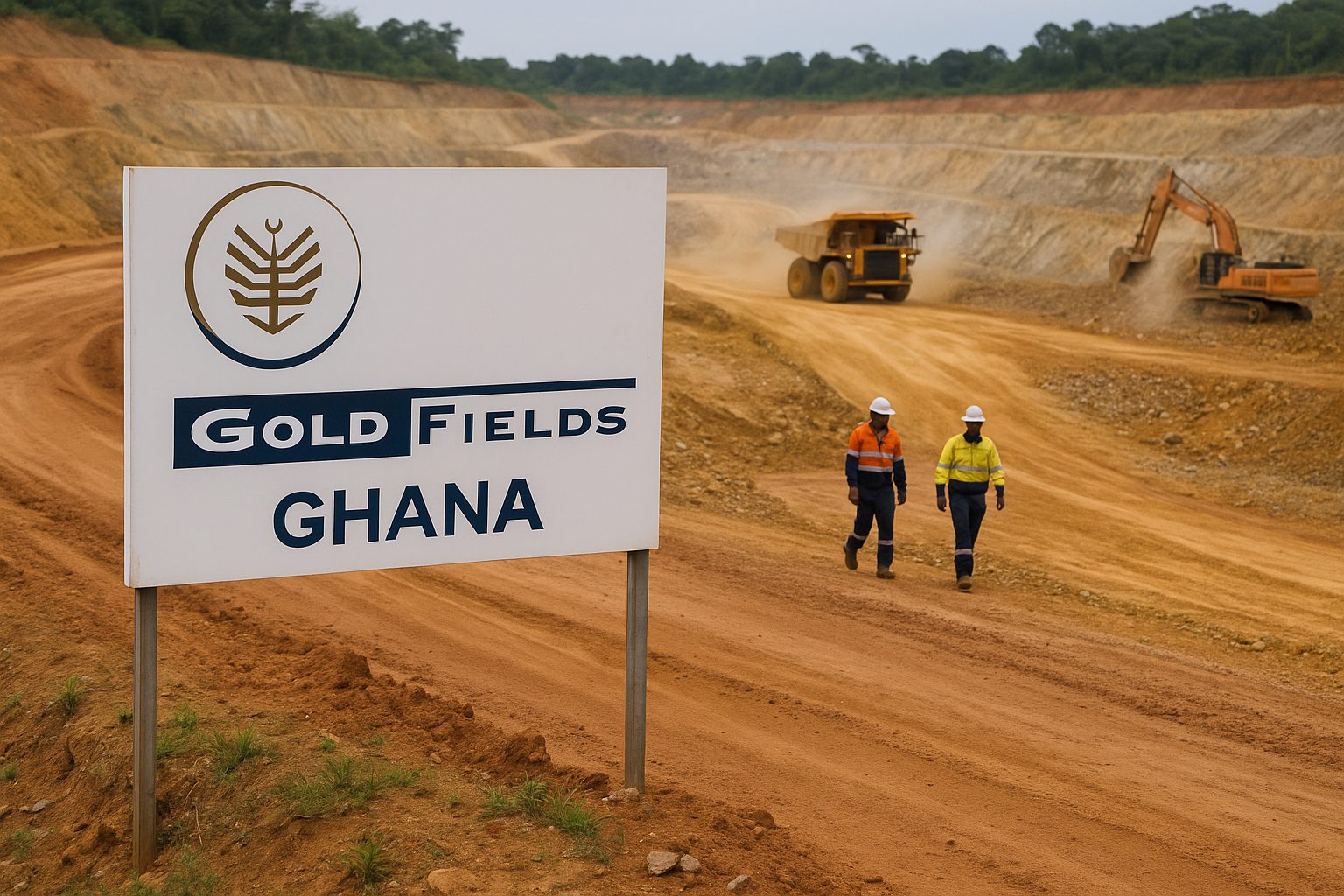
Gold Fields Ghana has secured a critical 12-month lease extension for its Damang mine, after weeks of tense negotiations with the Government of Ghana over the site’s future.
The new agreement, announced Friday, allows Gold Fields to resume mining operations at Damang, one of its two assets in the country, alongside the larger Tarkwa mine. The lease is contingent on approval by Ghana’s Parliament on May 16, 2025, and reflects growing government efforts to increase local ownership of key mining assets.
“This is an important day for Ghanaian mining,” said President John Mahama. “We are strengthening our partnership with Gold Fields Ghana while advancing opportunities for Ghanaians to take ownership of their natural resources.”
Ghana’s Break From Tradition
Until this year, Gold Fields Ghana had enjoyed near-automatic lease renewals at Damang, reflecting a broader pattern of regulatory stability that made Ghana a preferred destination for mining investment. However, the government’s recent rejection of an earlier renewal application — and its temporary assumption of operational control — signaled a sharp departure.
Industry analysts see the Damang mine lease extension as a compromise that gives Gold Fields breathing room while aligning with Ghana’s policy goals.
“Ghana is moving toward a model where foreign miners are expected not just to operate here but to create pathways to eventual local ownership,” said Kwame Ofori, a mining consultant based in Accra.
Related News
- Critical Study Warns of Deep Sea Mining Risks, Highlights Environmental Impact of DSM
- New Cobalt Alternative Alloy Developed by U.S. Lab to Curb Reliance on China
- Ghana Tightens Resource Control with Takeover of Damang Mine in Mining Policy Shift
- U.S. Targets Cobalt Mining and Mineral Resources in Congo for Strategic Supply Chain Security
Damang’s Next Chapter
Under the new lease terms, Gold Fields Ghana will conduct a detailed bankable feasibility study to assess the potential for extending Damang’s mine life beyond 2025. The company will also accelerate an infill exploration drilling program aimed at boosting resource confidence.
In the interim, Damang will continue to process surface stockpiles, maintaining minimal production while long-term plans are developed.
The company and the Ghanaian government will jointly form a transition team to oversee Damang’s gradual move toward Ghanaian ownership, officials said.
“This agreement ensures Damang remains productive and continues contributing to the local economy,” said Yunus Suleman, Gold Fields’ board chairman. “We are committed to a responsible transition process that benefits Ghana and Gold Fields alike.”
Eyes on Tarkwa
The developments at Damang could foreshadow challenges ahead for Gold Fields Ghana at its larger Tarkwa mine. The leases for Tarkwa are due to expire in 2027, and early signals suggest that similar negotiations — with an emphasis on local participation — may be required.
For now, the Damang mine lease extension represents a temporary reprieve, allowing Gold Fields Ghana to plan for future operations while navigating an increasingly complex regulatory environment.
“The message is clear: Ghana values mining investment, but future partnerships will need to reflect deeper local engagement,” said Peter Major, mining director at Modern Corporate Solutions.
As Gold Fields Ghana adapts to the shifting landscape, investors will watch closely to see whether the company can maintain its position as a trusted partner in a country seeking to take fuller control of its mineral wealth.